


More news on this day
Passengers across the UK are facing widespread disruption after CrossCountry cancelled scores of services on Sunday 6 September, with a shortage of train drivers triggering last-minute timetable cuts on key intercity routes.
Get the latest news straight to your inbox!
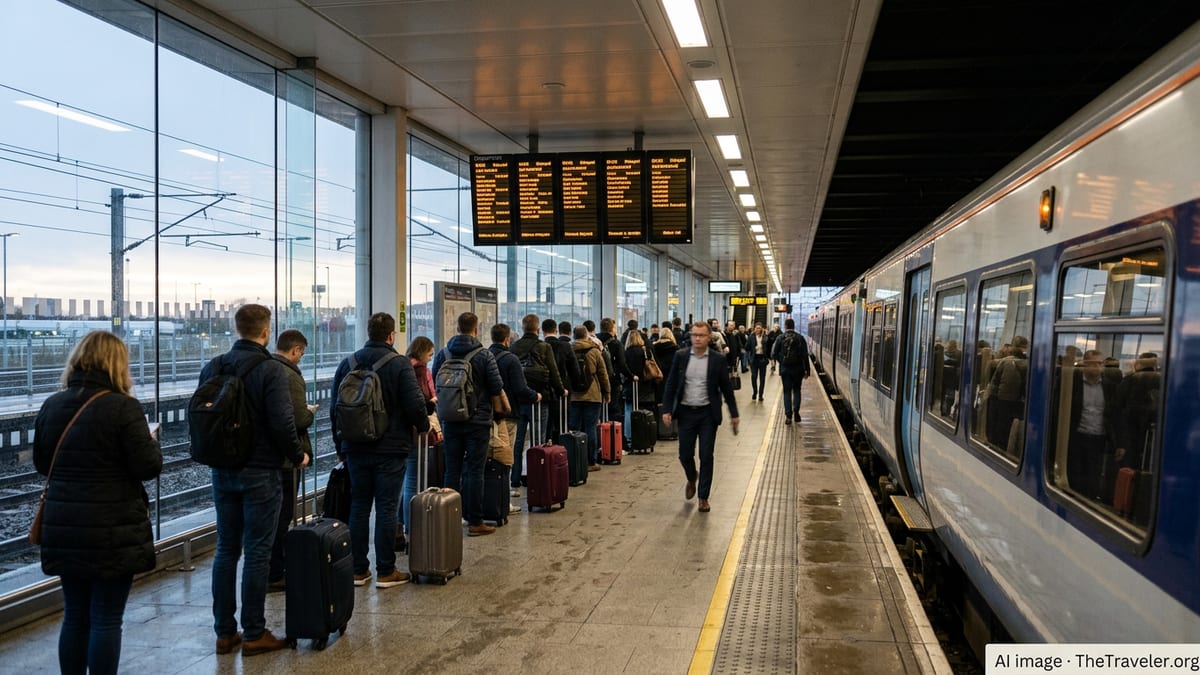
Late-notice cancellations hit national CrossCountry network
Publicly available information from National Rail Enquiries shows that CrossCountry is operating a reduced timetable across its network on Sunday 6 September because of train crew constraints, with warnings of late-notice cancellations and part-journey curtailments on multiple routes.
The disruption affects long-distance north-south corridors linking cities such as Manchester, Birmingham, Bristol, Leeds, Reading and the South Coast, where CrossCountry is often the primary operator for through services. Journey planners indicate that some trains have been withdrawn entirely while others are running only on sections of their normal routes, forcing passengers to change or wait for alternative services.
Coverage on UK news platforms reports that nearly 70 CrossCountry trains were removed from the schedule during the day due to driver shortages, with Birmingham New Street and Manchester Piccadilly among the worst affected hubs. Cancellations at these interchanges have had a knock-on impact for connections, particularly for travellers relying on single-change itineraries across regions.
Passenger data collated by independent performance trackers also points to a spike in cancellations and delays for CrossCountry over the first weekend of September, following what had appeared to be a relatively typical operating day on Saturday 5 September. The contrast has left many travellers scrambling to rebook or reroute at short notice.
Driver availability at the heart of the disruption
National Rail’s disruption summary attributes the reduced service primarily to “constraints on train crew availability,” and other public-facing information explicitly links many of today’s withdrawn CrossCountry services to a “shortage of train drivers.” This wording appears repeatedly on service update pages and in journey planners for affected trains.
On CrossCountry’s own service update pages, lists of early cancellations and alterations show multiple entries citing a driver shortage for services across the network. These notices sit alongside other common rail issues such as trespassers, infrastructure faults and engineering work, but the volume of traincrew-related cancellations stands out for 6 September.
Historical performance reports from CrossCountry and official rail statistics indicate that traincrew availability, including both drivers and on-board staff, has been a recurring factor in reliability over recent years. Company reports for 2024 and 2025 show an increase in full and part cancellations attributed to the operator compared with earlier periods, with driver and other staffing constraints highlighted among the causes.
Industry-level documents from the Office of Rail and Road have also noted that traincrew-related issues remain a significant driver of cancellations across Britain’s rail network, even as infrastructure managers forecast gradual improvement. Today’s events on CrossCountry illustrate how sensitive the timetable can be to local shortages when operators already run relatively intensive diagrams and long-distance services.
Key routes affected and limited alternatives for travellers
Journey planners and regional travel alerts show disruption spanning many of CrossCountry’s core corridors, including services linking Manchester and the South Coast via Birmingham, cross-Bristol flows, and routes from the Midlands into the North East and Scotland. In some cases trains are omitted between major nodes, while in others replacement options involve slower connections or lengthy waits.
While National Rail’s disruption advisory notes that the line between Birmingham New Street, Leicester and Stansted Airport is expected to operate normally, the broader CrossCountry network is experiencing significant gaps. For passengers on corridors where CrossCountry is the only direct operator, this can mean reliance on slower stopping services run by other companies, or the need to travel via London to complete cross-country journeys.
Additional complications arise where planned engineering work is already reducing options. Separate National Rail notices highlight bus replacements and amended services on certain regional lines this weekend, which can further restrict the ability of passengers to divert around cancelled CrossCountry trains, particularly in parts of the North and South West.
For travellers holding advance tickets tied to specific CrossCountry services, booking engines and operator guidance advise checking for updated itineraries, as many passengers are being rebooked onto alternative operators or later trains at no extra cost. However, reports from recent weekends suggest that crowding on remaining long-distance services can be severe when multiple trains are consolidated into fewer departures.
Longer-running concerns over CrossCountry reliability
The latest wave of cancellations comes against a backdrop of sustained concern about CrossCountry’s performance. Public complaint forums and social media posts over the past year have frequently cited overcrowding, short-formed trains and on-the-day cancellations on busy routes such as Cardiff to Nottingham and Manchester to Bournemouth, often linked to stock and crew availability.
Regulatory performance statistics for the year to early 2026 show CrossCountry recording one of the higher cancellation rates among long-distance operators, with around one in ten planned services either cancelled or significantly curtailed in some reporting periods. These figures place the operator among the less reliable brands in Britain’s rail market, despite efforts to stabilise the timetable.
CrossCountry’s own customer reports for 2025 describe timetable changes and selective removal of weaker-performing services as measures intended to “reduce cancellations by deploying train crews more effectively.” The events of 6 September suggest that, notwithstanding those adjustments, the operator remains vulnerable when driver availability tightens, whether because of sickness, training backlogs or other rostering pressures.
Passenger advocacy groups and rail commentators have repeatedly questioned whether the current franchise structure and rolling stock mix allow CrossCountry sufficient resilience, particularly on routes that routinely run near capacity. Episodes like today’s network-wide disruption are likely to intensify scrutiny from policymakers already reviewing the future ownership and structure of several train operating companies.
What passengers should do if their train is cancelled
National Rail’s advice to passengers is to check journey planners before travel and to continue to monitor services on Sunday, as further alterations may be made at short notice while the driver shortage persists. Digital tools are being updated through the day, and some services may reappear or change calling patterns as operators reallocate available crews.
Published guidance on passenger rights explains that travellers whose journeys are disrupted by cancellations or severe delays may be entitled to compensation, typically under the Delay Repay schemes offered by most train operators. Passengers are advised to keep tickets and records of their intended and actual journeys, as claims generally require evidence of the disruption experienced.
Where a CrossCountry service is cancelled, journey planners indicate that tickets are often being accepted on alternative operators over reasonable routes. This can include travelling via different hubs or using slower regional services in place of direct intercity trains. However, passengers should confirm acceptance conditions in real time, as arrangements may vary by route and operator.
With the driver shortage already impacting a substantial portion of Sunday’s timetable and no firm indication yet of when full service will resume, travellers booked on CrossCountry in the coming days are being urged by publicly available information sources to check for updates before leaving for the station and to allow extra time in case of missed connections or diversions.
National Rail disruption summary for CrossCountry
CrossCountry live service updates
UK news coverage of CrossCountry driver shortage cancellations