


More news on this day
A U.S.-flagged cruise ship sailing an Alaska itinerary has recorded its third gastrointestinal illness outbreak in just six weeks, according to multiple public reports, intensifying scrutiny of onboard hygiene practices and raising fresh concerns among travelers about health risks at sea during the busy summer season.
Get the latest news straight to your inbox!
Third Outbreak on Same Ship in a Compressed Timeframe
Publicly available information from cruise-tracking sites and industry coverage indicates that the latest outbreak was reported on July 16, 2026, during an Alaska sailing from a U.S. West Coast port. Cruise-focused outlets report that this is the third gastrointestinal illness incident linked to the same vessel in roughly a month and a half, following two earlier outbreaks attributed to norovirus.
Reports describe the ship as U.S.-flagged and operating regular Alaska voyages, a region that has seen several high-profile illness events this year. In the two earlier cases, cruise news summaries note that norovirus was identified as the likely cause, although exact case counts varied by voyage and some passengers reportedly recovered before disembarkation.
For the most recent outbreak, coverage indicates that the precise pathogen has not yet been confirmed. The pattern of symptoms, however, has been described as consistent with common gastrointestinal illnesses associated with cruise travel, including sudden-onset vomiting, diarrhea and stomach cramps.
The succession of three outbreaks in a six-week window is unusual for a single ship and is drawing attention because it suggests that either the virus has persisted in the onboard environment or that new introductions are occurring faster than sanitation and control measures can fully break transmission chains.
What Is Known About the Latest Illness Cluster
According to cruise news reports published on July 16, several dozen passengers have reported gastrointestinal symptoms on the current voyage, though the numbers remain below the threshold typically used by federal health agencies for formal outbreak postings. Publicly available summaries indicate that illness appears to be concentrated in the middle portion of the cruise, consistent with a short incubation period typical of norovirus and similar pathogens.
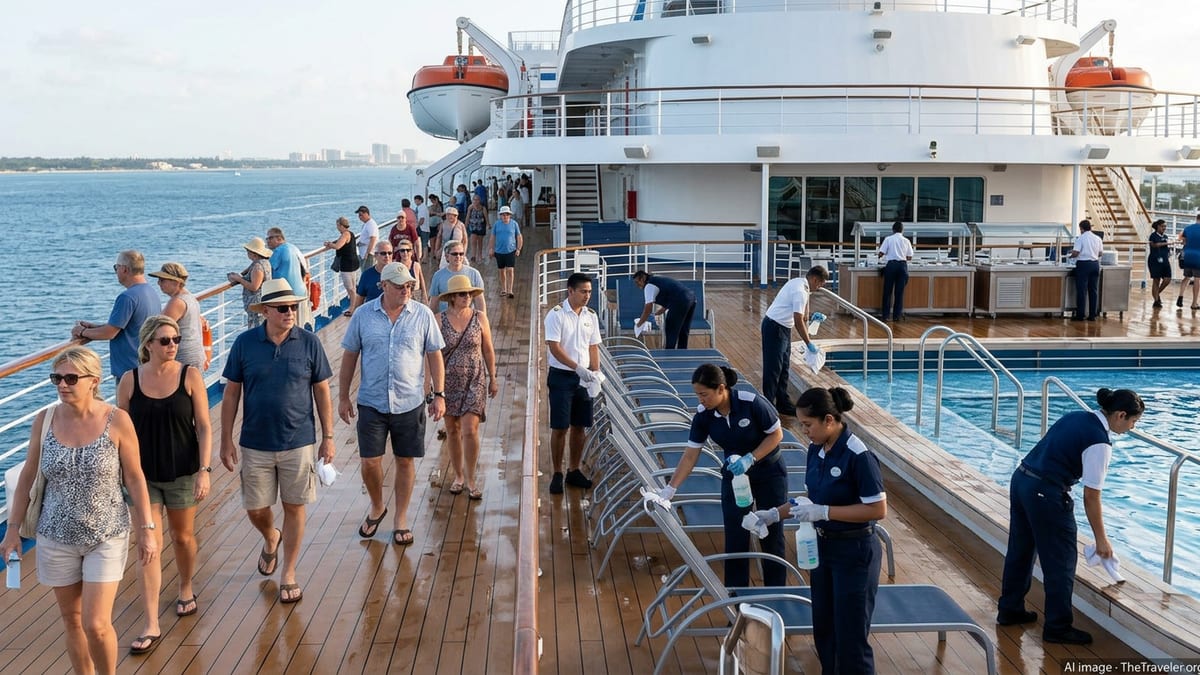
Onboard communications described in passenger accounts reference intensified cleaning, the temporary removal of some self-service food options, and reminders about frequent handwashing. These steps align with standard practices widely documented in cruise health guidance when ships experience suspected gastrointestinal outbreaks.
There is currently no public indication that the ship has altered its itinerary or cancelled future voyages. Industry coverage notes that cruise lines generally attempt to complete affected sailings while implementing additional disinfection, unless illness becomes severe or widespread enough to warrant early return to port.
Health agencies in the United States typically publish outbreak summaries only when case counts meet specific reporting thresholds. As of July 16, publicly accessible outbreak lists had not yet been updated with this latest incident, suggesting that official tallies and pathogen confirmation may still be in progress.
Norovirus, Cruise Ships and Why Outbreaks Repeat
Background information from the U.S. Centers for Disease Control and Prevention describes norovirus as the most common cause of gastrointestinal outbreaks on cruise ships under U.S. jurisdiction. Recent coverage of other 2026 cruise incidents, including an outbreak on the Ruby Princess during a San Francisco to Alaska voyage, has underscored how quickly norovirus can spread in confined, highly social environments.
Norovirus is known to be extremely contagious, requiring only a small number of viral particles to cause infection. Public health explanations emphasize that the virus can persist on surfaces for days or even weeks and that it resists some commonly used disinfectants. These characteristics mean that even aggressive cleaning between voyages may not fully remove all traces, particularly on high-touch surfaces such as railings, elevator buttons and buffet tongs.
Historical analyses of prior cruise seasons, including Morbidity and Mortality Weekly Report case studies, have documented situations in which the same ship experienced consecutive gastrointestinal outbreaks over several weeks. Investigators in those cases pointed to a combination of persistent environmental contamination and the constant introduction of new passengers as key factors that allowed transmission to continue despite enhanced cleaning.
In the current situation, disease specialists quoted in earlier cruise outbreak coverage have stressed that repeat incidents on a single ship do not necessarily mean sanitation is failing completely. Instead, they note that the crowded nature of cruise travel, rapid passenger turnover and behaviors such as inadequate handwashing can allow viruses that are already difficult to eradicate to keep finding new hosts.
Passenger Experience and Traveler Concerns
Social media and cruise forums discussing this latest Alaska sailing describe a mix of anxiety and resignation among passengers. Some travelers report seeing crew members constantly wiping down railings, elevator buttons and restroom doors, as well as regular public announcements about hygiene. Others note that salad bars and beverage stations have shifted away from self-service models toward staff service during peak illness periods.
A number of experienced cruisers commenting on the situation say they are not surprised to see another norovirus-type event, given the high traffic on Alaska routes this summer and recent headlines about outbreaks on multiple lines. However, the fact that the same vessel has now been linked to three illness events in six weeks is prompting some to reconsider near-term bookings on that ship and to scrutinize cancellation policies more closely.
Travel industry analysts quoted in broader coverage of 2026 cruise illness events have observed that modern passengers are quick to share real-time experiences online. This dynamic can magnify the profile of any outbreak, even when case numbers are limited, and can influence consumer perceptions of specific ships or brands well beyond the immediate incident.
At the same time, publicly available data from federal health agencies show that, in a typical year, only a small fraction of cruises experience reportable gastrointestinal outbreaks. For many travelers, this statistical context, combined with personal risk tolerance, shapes decisions about whether to proceed with Alaska sailings in the coming weeks.
Health Guidance and What Travelers Can Do
Public health guidance related to cruise travel consistently emphasizes basic hygiene as the most effective way for passengers to reduce their risk of gastrointestinal illness. The CDC and other health authorities highlight thorough handwashing with soap and water before eating and after using the restroom as a critical step, noting that alcohol-based hand sanitizers are less effective against norovirus compared with other germs.
Travel medicine specialists writing in major health outlets recommend that passengers consider bringing disinfectant wipes for cabin surfaces, avoid self-serve buffets during outbreaks, and promptly report symptoms such as vomiting or diarrhea to onboard medical staff. Early reporting can help ships implement containment measures more quickly, potentially reducing overall case numbers.
For travelers with upcoming bookings on the affected Alaska ship, consumer advocates suggest monitoring official health bulletins and the cruise line’s public statements in the days ahead. They also advise reviewing trip insurance and cancellation options, particularly for passengers with underlying health conditions that could make dehydration and gastrointestinal illness more serious.
As the summer cruise season continues, the situation on this U.S.-flagged vessel will likely be closely watched as an indicator of how effectively cruise operators can contain repeated outbreaks in a short timeframe and how much such incidents may influence traveler confidence in the broader Alaska cruise market.