


More news on this day
Royal Caribbean is reportedly eyeing another dedicated cruise terminal at the Port of Galveston, signaling a fresh wave of investment in Texas as the line moves to capture growing Gulf Coast demand.
Get the latest news straight to your inbox!
Renewed expansion push on the Texas Gulf Coast
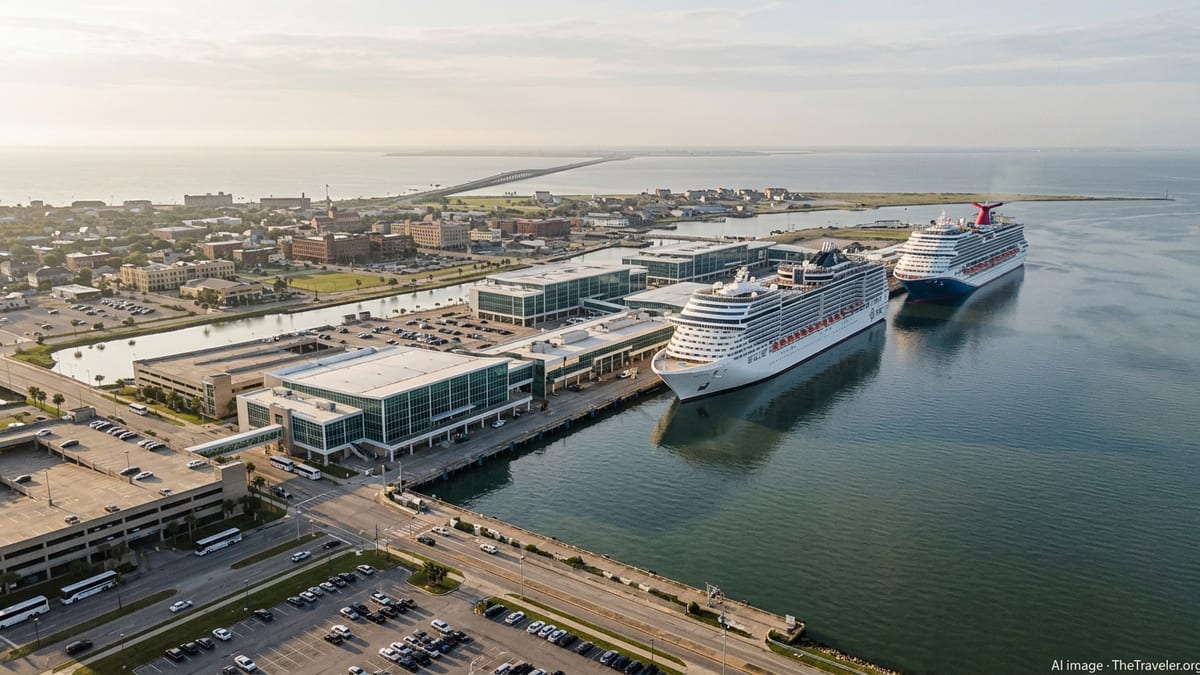
Published coverage from cruise industry outlets in recent weeks indicates that Royal Caribbean is exploring the feasibility of an additional Galveston terminal, only a few years after opening its $125 million facility at Pier 10 in 2022. That building, often referred to as Terminal 10, was designed as a next-generation homeport for some of the company’s largest ships and has since become a core hub for its Caribbean itineraries from Texas.
Industry analysis notes that Royal Caribbean’s leadership has repeatedly highlighted the importance of the Texas source market, framing Galveston as a strategic counterpart to the company’s dominant presence in Florida. Recent reporting on the line’s North American deployment strategy describes Texas as a key growth pillar, supported by new destinations in the western Gulf and a pipeline of larger ships aimed at drive-to cruisers from Houston, Dallas and surrounding states.
The reported interest in a second Galveston terminal reflects how quickly the initial investment has filled up. Publicly available port documents show that Galveston’s cruise passenger counts have climbed sharply in the past several years, helping solidify its position as the fourth-busiest cruise port in the United States. With berths and check-in facilities at the existing Royal Caribbean terminal nearing practical capacity on peak days, a new project would give the line more room to grow ship deployments and itinerary variety.
How another terminal could reshape Galveston traffic
According to recent coverage focused on Galveston’s long-range planning, the port is already evaluating a broader expansion that would eventually bring its total cruise terminal count to five. A mobility and traffic study for a potential new facility between existing terminals has been flagged as a priority, reflecting concerns about congestion on the island’s waterfront streets and bridges as more ships call on the same days.
Any additional Royal Caribbean terminal would likely be folded into that wider planning effort, with a focus on separating passenger traffic streams and adding structured parking close to the piers. Port communications over the past two years have emphasized on-site parking and dedicated access roads at the current Royal Caribbean complex as a model for how to keep vehicles moving during the busiest embarkation and debarkation windows.
Local tourism reports also point out that hotel demand tied to cruise operations is rising, with new and renovated properties clustering along the seawall and in the historic downtown. A second dedicated Royal Caribbean facility could extend that trend, encouraging more passengers to stay overnight before or after sailings and spreading visitor spending across restaurants, attractions and transportation services.
Royal Caribbean’s bid to “own” the Texas cruise market
Cruise trade publications have recently framed Royal Caribbean’s Texas strategy as an attempt to “own” the market, using Galveston as a launchpad for larger ships, longer itineraries and new private-destination offerings in the Gulf of Mexico. Reports on the company’s destination development pipeline highlight a planned private island-style project in the region scheduled for late this decade, which would pair naturally with expanded homeport capacity in Galveston.
Bringing more Oasis- and Icon-class vessels to Texas would require both berth availability and terminal infrastructure capable of processing thousands of passengers per hour. The current Galveston facility was built with mega-ship operations in mind, but fleet growth and shifting deployment patterns mean that Royal Caribbean could quickly outgrow a single dedicated building, especially if multiple large vessels are homeported seasonally in the region.
Analysts tracking cruise deployment trends suggest that a second Galveston terminal could open the door to new combinations of western Caribbean routes, short getaway cruises and longer sailings that reach deeper into Central America. That variety is seen as a way to keep loyal Royal Caribbean guests in the Texas market rather than pushing them to fly to Florida when they want different itineraries.
Economic stakes for Galveston and Texas
Economic impact studies cited in port presentations show that cruise operations already generate billions of dollars in direct spending and support tens of thousands of jobs across Texas. A larger Royal Caribbean footprint would add to that, feeding work not only on the island but also in supply chains that stretch into Houston and beyond, from food and beverage vendors to fuel suppliers and ground transportation companies.
Galveston civic and business groups have long viewed cruise traffic as a stabilizing force for the island’s tourism economy, complementing beach, conference and events business. A new terminal tied to one of the world’s largest cruise brands could provide another layer of predictability, anchoring year-round visitor flows even as broader travel patterns shift.
At the same time, some community discussions highlighted in local reporting raise questions about balancing growth with quality of life. Concerns range from increased congestion and parking pressures on cruise days to environmental impacts associated with larger ships calling more frequently. How a second Royal Caribbean terminal is designed, and how it connects to the city’s transportation network, is likely to shape local perceptions of the project.
Next steps and timeline remain fluid
As of mid-July 2026, no formal construction timeline for a new Royal Caribbean terminal in Galveston has been publicly detailed. Port planning documents and industry reports instead describe the project as part of a broader vision, with feasibility work and traffic analysis underway to determine how and when a fifth cruise terminal area could be developed on the waterfront.
Observers expect that any new agreement would resemble the public-private structure used to deliver the existing Royal Caribbean facility, where the company invested heavily in the terminal building while the port handled site and infrastructure improvements. That model has allowed Galveston to expand its cruise capacity without shouldering the full cost of large-scale terminals on its own.
For now, the prospect of another Royal Caribbean terminal underscores how quickly the Texas cruise market is evolving. With passenger counts rising, new ships entering service and competition among lines intensifying, Galveston’s role as a homeport appears set to grow, and Royal Caribbean’s reported interest in an additional facility suggests it intends to be at the center of that expansion.