


More news on this day
Austin’s long‑planned light rail system cleared a significant milestone this week as Austin Transit Partnership selected Stadler U.S. to design, build and deliver the city’s first fleet of modern light rail vehicles, positioning the Swiss-founded manufacturer at the center of Project Connect’s new tram-style network.
Get the latest news straight to your inbox!
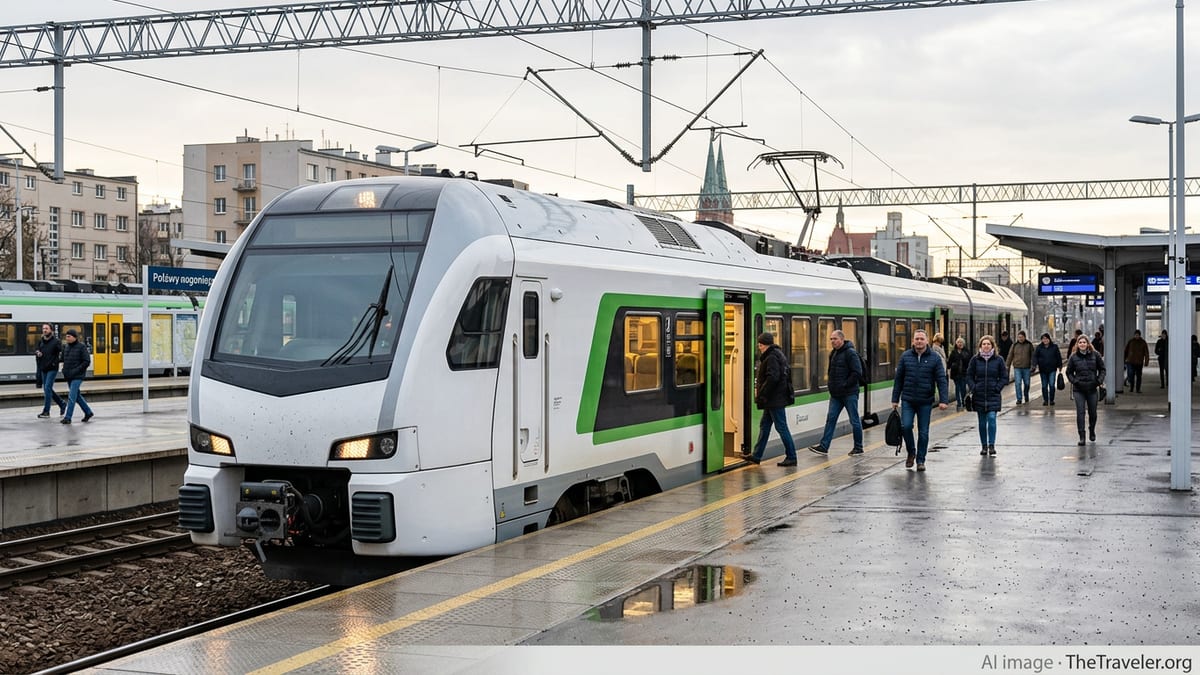
A Major Supplier Chosen for Austin Light Rail
According to publicly available information from Austin Transit Partnership, the board has approved Stadler U.S. as the preferred supplier of light rail vehicles for the Austin Light Rail project, the core rail component of the broader Project Connect program. The decision, recorded in mid-July 2026, clears the way for a fixed-price contract covering vehicle design coordination, manufacturing, testing and delivery.
Published coverage in local business media indicates that the Stadler contract is structured as a base order with options, aligning with common practice in large U.S. transit procurements. Reports describe an initial design and pre-production phase, followed by assembly of the vehicles at Stadler’s U.S. facilities, which are already producing trains for other North American systems.
The award is described in project updates as the last of three major contracts needed to advance Austin Light Rail toward construction. In recent months, Austin Transit Partnership has named a construction consortium for civil works and selected a design-build contractor for the system’s operations and maintenance facility, creating a clearer picture of how rolling stock, infrastructure and depot functions will come together.
Public project documents frame the Stadler selection as a critical move to keep Austin Light Rail on schedule for a planned construction start around 2027. By confirming a vehicle supplier now, planners can finalize station layouts, power systems and maintenance facilities around a specific tram platform instead of relying on generic design assumptions.
Contract Scale and Vehicle Specifications
Board materials and external reporting suggest that the Stadler contract will ultimately cover a fleet sized for the 9.8 mile initial Austin Light Rail corridor, with room to expand if future extensions or higher frequencies are funded. Local analysis circulating in public forums places the potential value of the full vehicle program in the hundreds of millions of dollars, consistent with recent light rail procurements in other U.S. cities.
While final specifications are still being refined, Austin Transit Partnership’s planning documents have long emphasized level boarding, wide doorways and generous standing space to support high passenger throughput in a compact urban corridor. Stadler’s existing light rail and tram families, used in several European and North American cities, are typically low-floor, articulated vehicles that can be tailored to platform height, curve radius and clearance constraints unique to each system.
Project Connect reference materials describe an all-electric fleet, which would align with Austin’s broader climate and air quality goals. The exact power supply configuration for Austin Light Rail has been the subject of previous technical studies, with options ranging from conventional overhead wires to partial off-wire segments supported by onboard energy storage. Securing a vehicle supplier now gives engineers a concrete platform around which to finalize these choices.
Stadler’s North American track record also appears to have weighed into the selection. Publicly accessible industry sources note that the company already provides diesel and electric multiple units for commuter services in Texas and across the United States, and it operates a major manufacturing complex in the Salt Lake City area. That existing footprint is expected to support assembly and testing for Austin’s trams under domestic content requirements.
What the Decision Means for Project Connect
The Stadler award arrives at a delicate moment for Project Connect, the multi-billion-dollar transit expansion that Austin voters endorsed in 2020. Over the past year, financial pressures, cost escalation and political debate have reshaped the program’s scope, with particular scrutiny on the light rail segment that is intended to anchor high-capacity transit through central Austin.
Recent presentations to the Austin Transit Partnership board portray the light rail vehicle contract as a tangible sign of progress after several rounds of redesigns and funding negotiations. By locking in a tram supplier, project leaders can show visible movement toward a real system, even as ridership projections, station designs and financing plans continue to be refined.
For riders, the selection begins to answer one of the most visible questions about Project Connect: what the trains themselves will be like. Renderings shared in media coverage depict multi-car, walk-through trams serving street-level platforms in the city center, with a design vocabulary closer to European-style light rail than to the existing diesel-powered Red Line commuter service.
The contract also establishes long-term relationships around maintenance, spare parts and lifecycle support. Public procurement notices associated with Austin-area rail services already show Stadler’s involvement in upkeep for commuter vehicles. Extending that relationship into light rail gives transit agencies a consistent counterpart for managing fleets that are expected to remain in service for 30 years or more.
Regional and Industry Context
Austin’s choice of Stadler fits into a broader pattern of U.S. transit agencies turning to a relatively small group of global manufacturers for new rail fleets. Over the past decade, Stadler has expanded its presence in North America through contracts for commuter lines, airport connectors and, increasingly, tram and light rail systems. Industry observers note that this growing portfolio can lower risk for new clients by drawing on proven platforms and shared components.
Within Texas, the decision reinforces a shift toward modern rail transit in several metropolitan areas. Existing commuter services around Austin and Fort Worth already operate Stadler-built trains, and other Texas corridors are evaluating new rail investments that could eventually look to similar suppliers. Austin’s high-profile light rail project may therefore have an outsized influence on how other agencies approach future rolling stock decisions.
From an economic development perspective, the contract creates potential for local and regional supply-chain activity. While the core manufacturing work will take place at Stadler’s established U.S. facilities, large rolling stock programs typically involve a network of component suppliers, consultants and testing providers. Austin Transit Partnership’s public communications emphasize opportunities for local firms to participate in installation, commissioning and long-term maintenance work associated with the new fleet.
The award also carries symbolic weight for the broader public conversation about transit investment in Austin. With major contracts now awarded for construction, depot facilities and vehicles, Project Connect’s light rail line is shifting from abstract planning into tangible procurement and implementation. The performance of Stadler’s trams in the coming years, from delivery schedules to ride quality, will likely influence public perceptions of whether the city’s investment was worthwhile.
Next Steps on the Road to Service
Following the Stadler selection, project timelines published by Austin Transit Partnership point to a multiyear sequence of design finalization, prototype production and testing before passenger service can begin. Early vehicles will undergo acceptance testing on dedicated tracks to validate safety systems, braking performance, energy use and compatibility with Austin’s new infrastructure.
In parallel, civil construction led by the Austin Rail Constructors partnership is scheduled to advance through detailed design, utility relocation and guideway building. Coordination between the vehicle supplier and construction team will be central to aligning station platform heights, curve geometry and signaling interfaces with the trams’ technical capabilities.
Publicly available milestone schedules indicate that Austin Light Rail is aiming for a mid-2020s late-decade construction window, with service commencement to follow after integrated testing of vehicles, tracks, power and control systems. The precise opening date will depend on how quickly design, permitting, funding agreements and procurement tasks progress over the next several years.
For residents watching Project Connect’s evolution, visible signs of Stadler’s work are likely to emerge gradually, beginning with updated renderings and mockups and eventually building toward full-size vehicles on test tracks. The supplier decision marks a turning point in that journey, shifting Austin’s tram ambitions from conceptual drawings to a defined fleet that will shape how the city moves for decades.