


More news on this day
Persistent low water levels on several stretches of the Danube River are disrupting one of Europe’s most popular cruise corridors, prompting ship swaps, bus substitutions, and in some cases outright cancellations as operators race to keep itineraries intact during the peak summer season.
Get the latest news straight to your inbox!
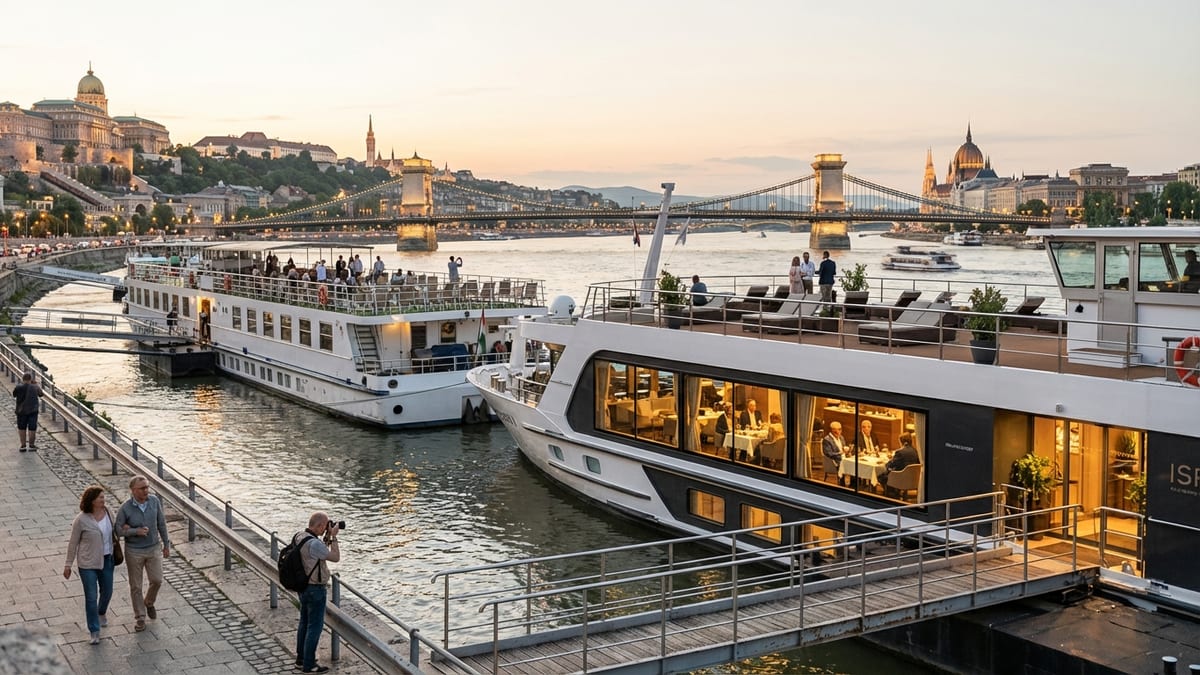
Low Water Turns Signature Sailings Into Logistical Puzzles
Reports from shipping authorities and river users indicate that sections of the Upper and Middle Danube, particularly between southern Germany and western Hungary, have entered a prolonged spell of below-normal water levels this summer. Notices to skippers in multiple countries highlight stretches where depths have dropped to the point that fully loaded river vessels risk running aground, restricting both cargo and passenger traffic.
The pattern fits a broader hydrological shift described in recent briefings from the Danube Commission, which notes that extended low-water periods are becoming more frequent and more severe. Experts there characterize low levels and volatile swings as a “new normal” for Danube navigation, with climate-linked heatwaves and irregular rainfall complicating what was once a relatively predictable summer cruising season.
At the same time, passenger numbers on the river continue to grow, magnifying the impact when sections become impassable. Annual navigation reports from Austria and other states along the river show steady increases in river cruise calls and embarkations in recent years, underscoring how even short-lived bottlenecks can cascade across tightly scheduled itineraries.
For travelers who booked seamless journeys between cities such as Regensburg, Vienna, Bratislava, and Budapest, the result is a season where the headline attractions remain, but the way guests reach them can change with only a few days’ notice.
Ship Swaps Become a Standard Contingency Tool
One of the most visible workarounds is the so-called “ship swap,” a contingency described in detail in river cruise guides and traveler reports. When low water makes a stretch temporarily unnavigable, operators position a second vessel on the far side of the shallow section. Guests disembark from the first ship, travel overland around the bottleneck, and then board the waiting ship carrying the same itinerary in the opposite direction.
Because many fleets deploy near-identical vessels on the Danube, including a large number of standardized longships, cruise lines can often assign guests the same cabin number and near-identical onboard layout on the replacement ship. Industry explainers describe this as a key reason the practice has become commonplace: passengers still enjoy the river-cruise product, even if the specific hull beneath them has changed.
Recent online accounts from Rhine and Danube cruises indicate that ship swaps are being used not just for low water, but also when other disruptions such as mechanical issues coincide with constrained river conditions. Travel alerts from major brands now explicitly list transferring guests to a sister ship as one of the primary tools to “maintain the overall integrity of the itinerary” when water levels do not cooperate.
While the process can be operationally complex for cruise lines, many travelers describe it as a manageable mid-trip adjustment, provided communication is clear and luggage transfers are handled behind the scenes.
From River Cruise to Bus Tour When Depths Drop Too Far
When water levels fall beyond the point where even lightly loaded vessels can safely clear shallow sections, operators increasingly turn to buses to keep sightseeing programs running. Consumer travel forums over the last two seasons feature multiple examples of Danube itineraries that became part-cruise, part-coach tour as ships were unable to reach marquee ports such as Budapest.
River cruising guides explain that in these scenarios ships may effectively become floating hotels, remaining moored in a small town while guests travel by motor coach to planned excursions and city tours. In more severe cases, passengers are transported between ports entirely by road for one or more days, meeting another vessel farther downstream or overnighting in land-based hotels.
Travel advisors and trade surveys suggest that this possibility is weighing on would-be customers. A recent outlook on river cruising found that nearly half of respondents cited concerns about rerouting or disruptions due to low water levels as a key hesitation in booking European river cruises. For those already on board, the shift from leisurely sailing to highway transfers can be jarring, particularly in peak summer heat.
Operators emphasize in public information that such steps are a last resort, but planners also acknowledge that the choice is increasingly between creative overland substitutions and canceling entire voyage segments when the river simply becomes too shallow.
Canceled Cruises and Local Transport Interruptions
In some parts of the basin, the impact of low water goes beyond tourism. Regional media in Bulgaria and Romania, for example, have documented repeated suspensions of cross-Danube ferries serving local passengers and freight when levels drop and strong winds complicate docking. Such interruptions highlight how thin the operational margins can be on sections where depth regularly dips below seasonal norms.
Cruise operators are not immune. Recent schedule updates from regional day-cruise providers show full cancellations of popular sightseeing routes in Vienna when adjoining waterways become temporarily unnavigable. Elsewhere, travel alert pages for international river cruise brands have, at various points, carried notices about amended embarkation points, trimmed itineraries, and cancelled departures linked to low water on the Danube and its connecting rivers.
For travelers arriving from long-haul markets, this can translate into last-minute itinerary changes announced just days before departure. In some reported cases, guests whose river segments were canceled were offered hotel-based land tours or alternative sailings, illustrating how operators are attempting to balance safety and practicality with expectations shaped by glossy brochure imagery of ships gliding past riverside castles.
The net effect is a Danube cruise season that looks more fragmented than in the past, with clear variations between stretches that remain reliably navigable and bottlenecks where a single shallow sandbar can derail a week’s schedule.
Industry Rethinks Routes, Design, and Traveler Expectations
The current pattern of disruptions is prompting a broader rethink of Danube cruising strategy. At a March 2026 expert meeting in Budapest, specialists convened under the Danube Commission banner reviewed hydrological data and concluded that infrastructural and operational adjustments would be needed to preserve navigation reliability as low-water episodes lengthen.
Published industry guides already note the Danube’s vulnerability to summer drought and flag certain segments, such as between Straubing and Vilshofen in Germany or between Bratislava and Budapest, as recurring pinch points. Cruise planners are responding by fine-tuning schedules, adjusting seasonal deployment, and, in some cases, designing vessels with shallower drafts or reduced capacity specifically for low-water resilience.
At the same time, consumer-facing materials from cruise lines and trade associations increasingly stress the importance of flexibility. Prospective guests are encouraged to understand that river cruises differ from ocean voyages in their sensitivity to both low and high water, and that contingency plans like ship swaps and coach transfers, while disruptive, are now part of the expected risk profile.
For now, creativity remains the order of the day along Europe’s second-longest river. As climate patterns shift, the Danube cruise experience is evolving into a more dynamic blend of river sailing, overland routing, and rapid-fire logistics, with success measured by how seamlessly operators can bridge the growing gaps left by the river itself.