


More news on this day
A CSX freight train derailment near South Charleston, West Virginia, is under federal review, drawing attention to long-standing rail safety concerns along the Kanawha River corridor and its busy mix of industrial, freight and community uses.
Get the latest news straight to your inbox!
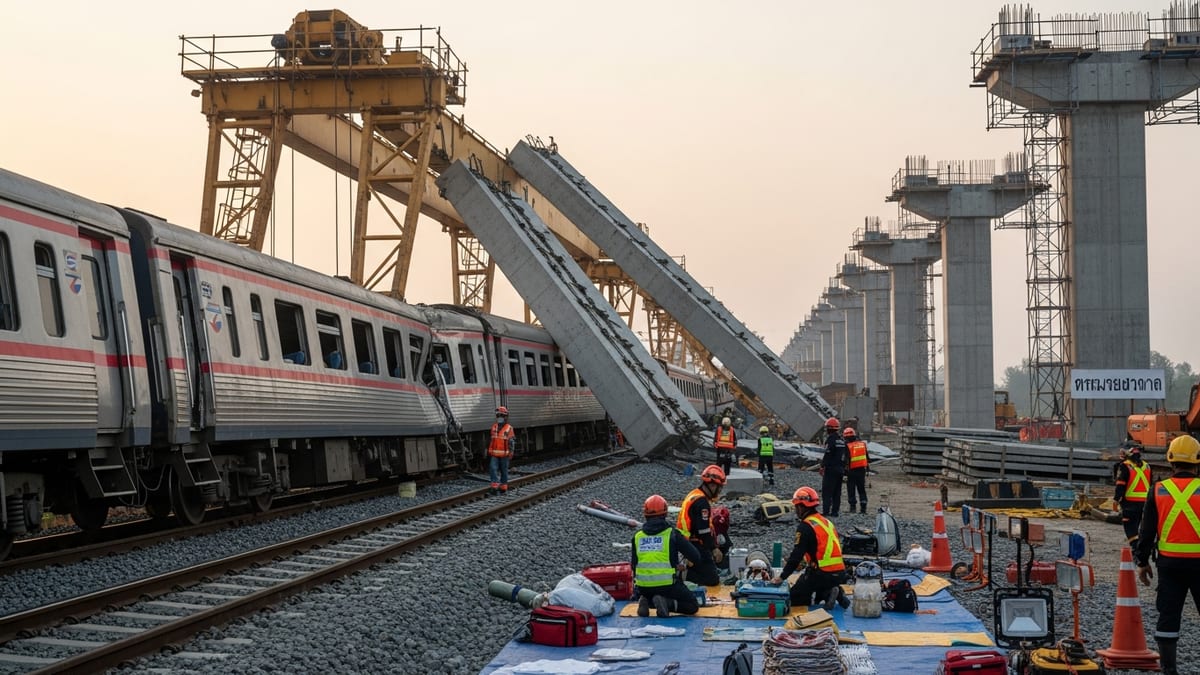
Derailment investigation focuses on track and train conditions
Publicly available information indicates that investigators are examining the condition of the track, recent inspection records and the operating characteristics of the CSX freight train in the moments before it left the rails near South Charleston. Similar case files from earlier CSX derailments in the Kanawha River valley show that federal reviews typically look closely at rail integrity, prior defect detections and whether any speed or handling issues may have contributed to a loss of stability.
Documents from past federal accident findings on CSX routes in West Virginia describe extensive use of ultrasonic and visual rail inspections, with attention to internal flaws that can develop under heavy unit trains. Those records show that investigators routinely compare inspection data with the exact rail segments involved in a derailment to determine whether any defects were missed or whether conditions on the ground changed in the time between inspections and the incident.
For the South Charleston case, the current review is expected to follow a similar pattern, drawing on track geometry measurements, locomotive event recorder data and crew reports to reconstruct the sequence of events. Historical derailment reports in the region suggest that this process can take months before a formal determination of probable cause is released.
Environmental risks along the Kanawha River corridor
The derailment location near South Charleston places the incident within one of West Virginia’s most heavily industrialized river corridors. The Kanawha River hosts multiple rail bridges, chemical facilities and power infrastructure, and earlier CSX derailments elsewhere along the river have highlighted how close freight operations run to water, roadways and residential areas.
Environmental response records from prior Kanawha Valley rail accidents show that derailments involving fuel or chemical cargo can trigger shoreline cleanup, soil removal and ongoing groundwater monitoring. In some earlier cases, oil sheens and contaminated soils required engineered barriers and long term treatment systems to prevent pollutants from migrating into the river.
While the full cargo profile of the South Charleston train is still being clarified in public reporting, the proximity of the tracks to the Kanawha River raises familiar questions for residents and travelers about spill risk. Past events in the broader Charleston area, including unrelated riverborne contamination incidents, have already sensitized local communities and visitors to how quickly a transportation problem can escalate into a water quality issue.
Travel disruptions and rail corridor reliability
For travelers, the most immediate impact of the South Charleston derailment has been disruption to rail operations along a key east west freight corridor. Reports indicate that CSX traffic through the area was temporarily halted or rerouted while damaged cars and track segments were secured and cleared, a standard procedure that can ripple through freight schedules far beyond West Virginia.
Highway users may also experience intermittent delays when derailments occur close to bridges or grade crossings that provide access into South Charleston and neighboring communities such as Dunbar. In previous Kanawha Valley rail incidents, local roads near the tracks were periodically closed to accommodate heavy cranes, cleanup equipment and replacement rail deliveries, constraining access to riverfront businesses and recreational areas.
Even after traffic resumes, railroads sometimes operate at reduced speeds over reconstructed sections while final inspections and monitoring continue. For regional industries that rely on just in time deliveries of raw materials, and for ports and intermodal terminals downstream, that sort of temporary speed restriction can affect logistics planning and reliability for weeks.
Rail safety debates intensify after repeated incidents
The South Charleston derailment arrives against a backdrop of heightened national scrutiny of freight rail safety. Research on derailment risk notes that heavy unit trains carrying bulk commodities can have outsized consequences when accidents occur, especially where tracks run close to waterways and dense communities. That risk profile has led to calls for more conservative operating practices and enhanced oversight on routes that handle hazardous materials.
Past accident dockets from federal rail regulators involving CSX have documented a range of contributing factors, including track defects, extreme weather, landslides and mechanical failures. Safety advocates often point to these patterns as evidence that multiple layers of protection are required, from more frequent inspections in geologically sensitive valleys to improved detection of broken rails and shifted loads before trains reach populated corridors.
In the Kanawha River valley specifically, the combination of steep hillsides, older infrastructure and intense industrial use creates challenges for both prevention and emergency response. The latest derailment under investigation near South Charleston is likely to feed into ongoing debates over what level of investment and regulatory change is appropriate for busy freight routes that share space with residential neighborhoods, commuter arteries and a river that supports both commerce and recreation.
Implications for visitors and regional image
South Charleston sits just upstream from the state capital and serves as a gateway for travelers headed to the New River Gorge, the Greenbrier Valley and other destinations in southern West Virginia. While the region has been working to grow its profile as an outdoor and cultural tourism hub, recurring rail and industrial incidents along the Kanawha corridor can complicate that narrative.
Travelers arriving by car or bus encounter prominent rail infrastructure at river crossings and interchanges, and visible aftermath from a derailment, such as damaged freight cars or ongoing shoreline work, can shape perceptions of the area. Tourism promoters in West Virginia generally emphasize the state’s landscape and revitalized riverfronts, but each new transportation accident near Charleston risks reinforcing concerns about environmental quality and safety among potential visitors.
At the same time, the attention generated by the South Charleston derailment may prompt renewed investment in riverfront resilience projects, improved emergency access routes and communication plans designed to keep both residents and visitors informed during transportation disruptions. For a region that relies increasingly on tourism alongside its industrial base, balancing freight efficiency with visible commitments to safety remains a central challenge brought into focus by the latest CSX derailment investigation.