


Shenandoah National Park is rich with waterfalls, but two names come up again and again for first‑time visitors: Dark Hollow Falls and Overall Run Falls. They are very different experiences. One is short, steep, and family‑friendly, starting right off Skyline Drive near Big Meadows. The other demands a half‑day commitment to reach the park’s tallest waterfall in a remote gorge. If you only have time for one, choosing the right trail can make the difference between a quick scenic leg‑stretch and a serious backcountry adventure.
Get the latest updates straight to your inbox!
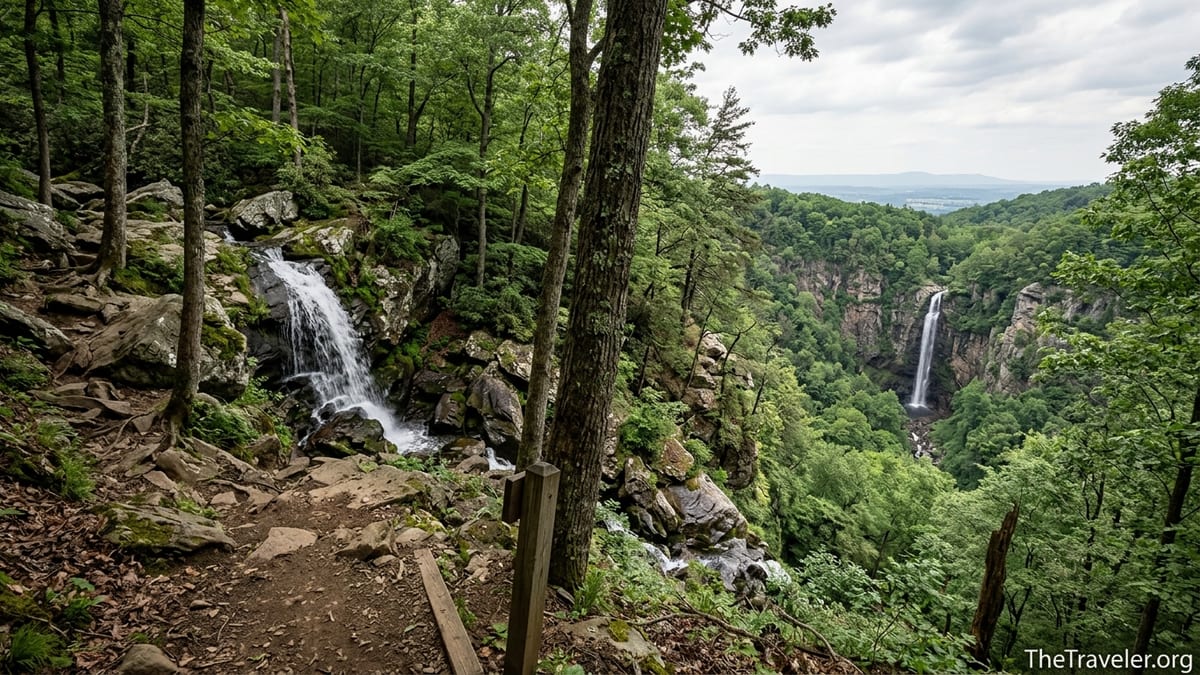
Meet the Contenders: Two Very Different Shenandoah Waterfalls
Dark Hollow Falls and Overall Run Falls both sit in the heart of Shenandoah National Park in Virginia, but they offer very different kinds of waterfall hikes. Dark Hollow Falls is the classic, closest‑to‑the‑road option, dropping about 70 feet through a lush ravine just below Skyline Drive at mile 50.7. The trail is only about 1.4 to 1.5 miles round trip with roughly 440 feet of elevation gain, which puts it in the “short but steep” category rather than a full‑day trek.
Overall Run Falls is almost the opposite experience. Reached from near Hogback Overlook around mile 22 on Skyline Drive, it is the tallest waterfall in the park at about 93 feet. The hike usually runs 5 to 6.5 miles round trip depending on the route and can take 4 to 5 hours including breaks. The trail drops steadily from the ridge into federally designated wilderness, then climbs back out, making it a significantly more strenuous outing.
For a typical weekend visitor staying at Big Meadows Lodge or the campground, Dark Hollow Falls is often the spontaneous choice: a trailhead bathroom nearby, a clearly signed parking lot, and an hour to ninety minutes of effort. Overall Run Falls, by contrast, resembles the sort of hike you plan your day around. You are committing to a longer drive to the northern part of Skyline Drive, packing extra water and snacks, and making sure everyone in the group is comfortable with remote, rocky terrain.
Because the two experiences are so different in distance, remoteness, and effort, deciding which waterfall to visit is less about which is “better” and more about what kind of day you want to have in Shenandoah.
Trail Basics: Distance, Difficulty, and Time Commitment
On paper, Dark Hollow Falls looks straightforward: a 1.4‑mile out‑and‑back, typically rated moderate, with most hikers finishing in about 1 to 1.5 hours. The path is well worn and well marked, but it is steep and rocky in places. You start by heading downhill the entire way to the falls, which means the hardest work comes at the end as you climb back out. The National Park Service specifically cautions that the return climb can be challenging, especially when the trail is wet and slippery.
Overall Run Falls requires a different mindset. Most ridge‑top approaches from Skyline Drive come in at 5 to about 6.4 miles round trip, with elevation changes that can feel punishing on the return. Trail descriptions often place this hike in the moderate‑to‑strenuous category. Many hikers report needing 4 hours or more once they factor in time at the rocky overlooks and photo stops. If you are starting from lower‑elevation trailheads outside the park boundary, such as near Thompson Hollow, the total distance and elevation can increase further, turning the outing into a full‑day adventure.
Think of the time commitment in practical terms. If you are driving down from Washington, D.C. for a single day in Shenandoah and plan to explore a few overlooks, grab lunch at a wayside, and maybe catch sunset, Dark Hollow Falls fits neatly into a flexible schedule. You can park, hike, and be back at your car in time to continue north or south on Skyline Drive. Overall Run Falls is better paired with a day where the hike is the main event, with an early‑morning start and fewer other stops.
Fitness level matters as well. A reasonably fit person who walks regularly can usually manage Dark Hollow Falls with breaks. For Overall Run Falls, the same person will want to be comfortable with long uphill climbs and uneven footing and should bring at least 1.5 to 2 liters of water, especially on warm days. Hiking poles can make a noticeable difference on the long descent and ascent at Overall Run.
Location & Access: Parking, Facilities, and Logistics
Dark Hollow Falls is one of the most accessible waterfall hikes in the park. The trailhead is at the Dark Hollow Falls parking area directly on Skyline Drive at mile 50.7, not far from the Big Meadows area. This cluster of services includes Big Meadows Lodge, a large campground, a wayside restaurant and camp store, and the Byrd Visitor Center. That means you can grab breakfast at the lodge, fill water bottles at the campground spigots, and then drive just a few minutes to start your hike.
Because Dark Hollow is so convenient, parking can be competitive on peak fall weekends and in mid‑day during summer. If you are visiting on a foliage weekend in October or a sunny Saturday in June, it pays to arrive before 9 a.m. to improve your odds of finding a spot in the small lot. Otherwise, you may have to circle or opt for an alternative nearby hike like the Rose River Loop, which shares some of the same ravine but offers a longer, pet‑friendly option.
Overall Run Falls is accessed primarily from the Hogback Overlook area around mile 22 on Skyline Drive. Parking here tends to be less hectic than at Big Meadows but still fills up on busy days. Facilities are far more limited in this northern stretch. You may find vault toilets at nearby picnic or overlook areas depending on season, but you should not count on water or food services being close at hand. Many visitors stock up at Front Royal or Luray before entering the park, then drive south along Skyline Drive to reach the trailhead.
Both waterfalls lie within fee areas, so factor in the park entrance pass when you plan your budget. As of mid‑2026, private vehicle entrance fees are typically in the range you would expect for major U.S. national parks, and passes are valid for multiple days. For Overall Run Falls, always verify current road and trail conditions at an entrance station or ranger contact point, especially in early spring or after major storms when sections of Skyline Drive can close.
Scenery & Experience: What You Actually See on the Trail
Dark Hollow Falls delivers dense, classic Shenandoah scenery in a compact package. The trail follows Hogcamp Branch as it tumbles down the mountain, with smaller cascades and pools visible even before you reach the main drop. In spring, the ravine often feels lush and damp, with wildflowers and mossy rocks framing the water. At high flows, the 70‑foot cascade fans out beautifully over the rock ledges, and even in lower water you can usually count on a photogenic stream.
The tradeoff is that Dark Hollow rarely feels solitary. In peak season you will likely share the trail with families carrying small daypacks, college students in sneakers, and photographers with tripods. Expect conversations in multiple languages, lots of photo stops, and occasionally a line of people waiting for a clear background at the main viewing area. For many visitors, especially first‑time park guests, that lively atmosphere is part of the charm. It feels like a signature Shenandoah experience, particularly when combined with a picnic at Big Meadows or an evening ranger program at the campground amphitheater.
Overall Run Falls offers a more expansive, big‑landscape experience. Instead of hiking right up to the base of a falls tucked in a tight ravine, you approach Overall Run from above and reach rocky outcrops that look across a deep gorge. The main waterfall drops nearly ten stories down a cliff, with additional cascades and the smaller Twin Falls upstream. On clear days, you not only see the falls but also broad views of the Shenandoah Valley and Massanutten Mountain in the distance.
In practice, this can feel dramatically different from Dark Hollow. You might spend 20 or 30 minutes sitting on a rock ledge, listening to the water and the wind, with only a handful of other hikers in sight. Birdsong replaces road noise. On summer afternoons, you may watch distant rain showers sweep across the valley while the gorge stays in sun. If you enjoy big vistas as much as waterfalls, Overall Run is the more rewarding destination, especially in spring and after sustained rain when the flow is strongest.
Seasonality & Water Flow: When Each Hike Shines
Season matters more than many first‑time visitors realize. Dark Hollow Falls, because it drains a relatively small but reliable watershed and sits at mid‑elevation, usually has decent flow from early spring through late fall. Late March through May is often ideal, when snowmelt and spring rains keep Hogcamp Branch lively but temperatures are still cool enough for the climb back to the trailhead to feel manageable.
Summer can still be lovely at Dark Hollow, though afternoon thunderstorms can leave rocks slick and muddy. By late August, during extended dry spells, the waterfall may shrink but rarely disappears entirely. Autumn adds bright foliage to the scene, which is why October weekends can see shoulder‑to‑shoulder traffic on the trail. Winter brings ice and occasional snow; experienced hikers with traction devices sometimes enjoy seeing the falls partly frozen, but casual visitors are better served in the warmer months.
Overall Run Falls is more variable. At its best, typically in April and after multi‑day spring or early summer storms, the 93‑foot drop is spectacular, with plumes of water free‑falling into the gorge and spray visible even from the overlook rocks. However, in late summer and during dry autumn periods, the main falls can reduce to a thin ribbon or even a trickle. Hikers who make the 5‑plus‑mile round trip in August sometimes report that the falls are underwhelming, even though the views down the gorge and across the valley remain impressive.
If you are visiting in high summer or late fall and can only commit to one waterfall, Dark Hollow is the safer bet for dependable water. If your trip falls during a rainy spring week or right after a soaking storm system, Overall Run may be at peak power. In practical terms, a traveler staying in Luray or Front Royal the night before can check recent local rainfall and ask rangers at the entrance station which falls are currently running strongest before deciding where to go.
Crowds, Safety, and Regulations: What to Know Before You Go
Because Dark Hollow Falls is so popular and close to Skyline Drive, crowd management and safety are ongoing concerns. The combination of steep, rocky footing and a constant stream of visitors in varied footwear means you should move carefully, step aside for uphill hikers, and keep children close. Pets are not allowed on this particular trail, a rule that surprises some visitors who assume dogs are welcome everywhere. If you are traveling with a dog, rangers often suggest nearby alternatives like Rose River Loop, which starts near Fishers Gap Overlook and allows pets.
At the falls themselves, stay behind railings and obey any posted closures. It is tempting to climb out on wet rocks for a better angle, especially when taking photos, but park rescue teams respond to injuries in this area every year. Simple precautions help: wear sturdy hiking shoes or trail‑worthy sneakers, carry at least one bottle of water per person even on cool days, and avoid flip‑flops and smooth‑soled sandals.
Overall Run Falls, while less crowded, presents more backcountry‑style risks. Portions of the trail are rocky, narrow, and can become muddy after rain. Cell service is spotty to nonexistent in the gorge, and rescue response times are longer than at a busy site like Dark Hollow. You should treat this hike like any remote mountain trail: sign the trail register if provided, let someone outside the park know your route and estimated return time, and carry the Ten Essentials scaled to a half‑day outing, including extra water, snacks, an insulating layer, rain shell, and a basic first‑aid kit.
Across Shenandoah, regulations and safety efforts continue to evolve. As of early summer 2026, the park is conducting a sustained traffic safety campaign on Skyline Drive, including periodic checkpoints aimed at reducing speeding and impaired driving. That means you should budget a little extra time for driving between trailheads, keep your speed within posted limits, and have your park pass or payment method accessible at entrance stations. Always check the most current park advisories for trail closures, bear activity, and backcountry permit requirements if you plan to connect Overall Run with longer overnight routes.
Who Should Choose Which: Matching Each Falls to Your Travel Style
For many travelers, Dark Hollow Falls is the right choice if you are seeking a quick, classic Shenandoah waterfall with minimal planning. Families with elementary‑age kids, couples on a Skyline Drive road trip, and visitors staying one night at Big Meadows Lodge often gravitate here. If you have an hour or two between check‑in and dinner, you can hike down, enjoy the falls, and still have time to watch sunset from an overlook like Stony Man or Bearfence earlier in the day.
Dark Hollow also suits travelers who value amenities. If your group includes someone who might want to sit out the hike, they can relax at the Big Meadows picnic area or browse the Byrd Visitor Center exhibits while others tackle the trail. You are never far from restrooms, food, or a ranger desk, which offers peace of mind for newer hikers or those traveling with older parents.
Overall Run Falls is best for hikers who want a workout and are comfortable with longer, less‑crowded routes. If you are spending a long weekend based in Front Royal or camping at Mathews Arm Campground and you enjoy four‑ to five‑hour hikes, this trail belongs on your list. It is particularly appealing to photographers who appreciate grand, layered views, or to visitors who have already done Dark Hollow, Rose River, and perhaps Whiteoak Canyon and are looking for a deeper cut in the park’s trail network.
Bargain‑minded travelers should consider the value of time as well as money. The park entrance fee is the same whether you spend an hour at Dark Hollow or a full day exploring the Overall Run gorge and nearby overlooks. If you are a once‑in‑a‑decade visitor, giving yourself the time for Overall Run might feel like making the most of your pass. If you are a repeat visitor from Northern Virginia dropping into the park for a few hours on a Sunday, the convenience of Dark Hollow probably wins out.
The Takeaway
If your priority is a short, iconic Shenandoah waterfall that fits neatly into a flexible day of driving Skyline Drive, visiting overlooks, and enjoying Big Meadows, choose Dark Hollow Falls. You will trade solitude for convenience, but you will gain an easy‑to‑navigate trailhead, dependable water flow across much of the season, and a compact hike that almost anyone with moderate fitness can manage.
If you want the park’s tallest waterfall, broad valley views, and a true sense of being out in Shenandoah’s backcountry, Overall Run Falls is the better choice. You will invest more time and effort, endure a longer climb out of the gorge, and need to be more self‑sufficient, but your reward is a dramatic, less‑crowded landscape that feels a world away from the pavement of Skyline Drive.
In the end, the best strategy for waterfall lovers is to think of these trails as two chapters in the same Shenandoah story. On a first visit, start with Dark Hollow Falls to get your bearings and experience the park’s most famous cascade. On a return trip, or later in the same week when your legs are warmed up and you are craving a challenge, set aside a full morning or afternoon for Overall Run Falls. Either way, you will come away with a clearer sense of why Shenandoah’s waterfalls, from roadside ravines to deep wilderness gorges, keep travelers coming back year after year.
FAQ
Q1. Which waterfall is better for first‑time visitors to Shenandoah?
Dark Hollow Falls is better for most first‑timers. The trail is shorter, the trailhead is easier to find near Big Meadows, and facilities are close by, making the logistics simple even if you only have a few hours in the park.
Q2. How long does it take to hike Dark Hollow Falls versus Overall Run Falls?
Most visitors complete Dark Hollow Falls in about 1 to 1.5 hours, including photo stops. Overall Run Falls usually requires 4 to 5 hours round trip, depending on your pace, route choice, and how long you linger at the overlooks.
Q3. Are the trails to Dark Hollow Falls and Overall Run Falls suitable for young children?
Dark Hollow Falls is often hiked by families with school‑age children, but the trail is steep and rocky, so close supervision and sturdy shoes are essential. Overall Run Falls is generally too long and demanding for most young children and is better suited to experienced teen hikers and adults.
Q4. Can I bring my dog on these waterfall hikes?
Dogs are not allowed on the Dark Hollow Falls trail, although service animals are permitted. Overall Run Falls trails accessed from Skyline Drive typically do allow leashed dogs, but you should always confirm current regulations with the park before hiking.
Q5. When is the best time of year to see each waterfall at its best?
Both waterfalls are usually at their best in spring, from roughly late March through May, when snowmelt and rain keep flows high. Dark Hollow tends to hold decent water into summer and fall, while Overall Run Falls can shrink significantly in late summer dry spells, making timing and recent rainfall more important.
Q6. Which waterfall hike is less crowded?
Overall Run Falls is generally less crowded because it is longer, more strenuous, and farther from the park’s central services. Dark Hollow Falls, being short and close to Big Meadows, often sees heavy foot traffic, especially on weekends and during fall foliage season.
Q7. Do I need special gear for either hike?
For Dark Hollow Falls, sturdy walking shoes or light hiking shoes and a bottle of water are usually sufficient in fair weather. For Overall Run Falls, plan on proper hiking boots or trail shoes, at least 1.5 to 2 liters of water per person, snacks, and ideally trekking poles and basic rain and warmth layers, since you will be out for several hours.
Q8. Are there good photo opportunities at both waterfalls?
Yes. Dark Hollow Falls offers intimate close‑up shots of a classic cascade framed by rocks and forest, while Overall Run Falls provides dramatic wide‑angle views of the 93‑foot drop and the Shenandoah Valley beyond. Photographers who like long‑exposure shots of flowing water will find compelling compositions at both locations.
Q9. Can I swim or wade at Dark Hollow Falls or Overall Run Falls?
Neither site is designed as a swimming area, and wading near waterfalls in Shenandoah can be hazardous due to slippery rocks and strong currents after rain. For safety and resource protection, it is best to enjoy the water visually and keep to established viewpoints and dry rocks.
Q10. If I only have one day in Shenandoah, is it realistic to do both waterfalls?
It is possible but ambitious. You could hike Dark Hollow Falls in the morning, drive north along Skyline Drive, and then tackle Overall Run Falls in the afternoon. However, that would make for a very long, tiring day. Most visitors with only one day are happier choosing Dark Hollow Falls plus a few scenic overlooks, or dedicating the bulk of the day to Overall Run Falls and a relaxed post‑hike drive.