


More news on this day
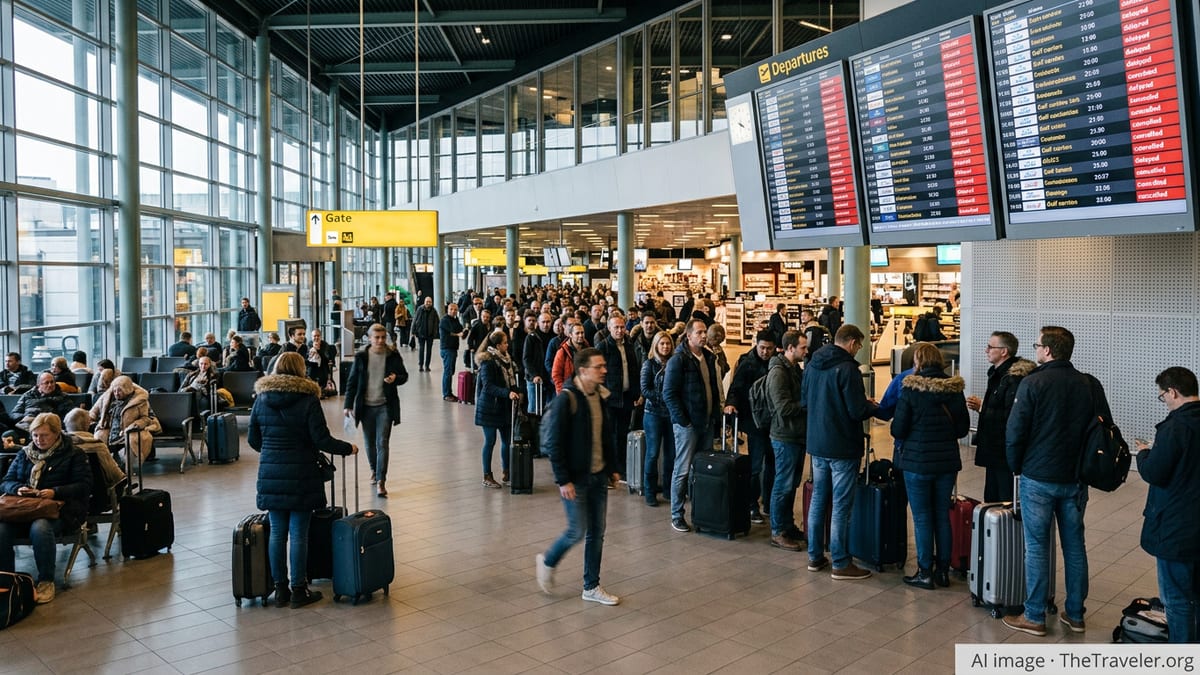
Passengers at Copenhagen Airport in Denmark faced significant disruption on 9 June as around 135 flights were reported delayed and at least two services cancelled, affecting operations by SAS, Cityjet, Norwegian Air Sweden, Ryanair and several other carriers on routes across Europe and to long haul destinations.
Get the latest news straight to your inbox!
Widespread Delays Across Major Carriers
Publicly available flight-tracking data and airport information boards showed a sharp increase in delays at Copenhagen Airport on 9 June, impacting short haul and long haul services throughout the day. The disruption affected departures and arrivals operated by SAS, its regional partner Cityjet, Norwegian Air Sweden, Ryanair and additional European airlines using the airport as a key Nordic hub.
Operational data reviewed for the day indicated that approximately 135 flights experienced delays of varying length, from modest schedule slips to hold ups of more than an hour. Two services were recorded as cancelled, contributing to crowding at gates and customer service desks as passengers sought rebooking options.
The slowdown was visible across a broad mix of routes, including services to major European cities such as Berlin and Manchester, as well as popular Mediterranean destinations including Barcelona. With Copenhagen functioning as an important connection point for both business and leisure travel in Northern Europe, the knock-on effect extended well beyond Denmark.
The disruption contrasted with the airport’s typical punctuality statistics, where regular monthly punctuality reports usually show a relatively high share of on-time departures for most based and visiting airlines. On this occasion, however, congested departure sequences and late inbound aircraft combined to reduce reliability for a large portion of the day’s schedule.
Long Haul Impact on Copenhagen to Mumbai Route
Among the most affected long haul links was the relatively new Copenhagen to Mumbai service. According to published schedules and passenger accounts, SAS flight SK969 between Copenhagen and Mumbai was cancelled for 9 June, with additional cancellations reported on nearby dates.
The interruption on the India route added complexity for travelers connecting from across Scandinavia and Northern Europe, many of whom rely on Copenhagen as a transfer point en route to South Asia. Passengers reported being offered rebookings on later dates or rerouting via other European hubs, lengthening travel times and in some cases disrupting onward domestic connections in India.
The Mumbai cancellation occurred alongside delays and schedule changes on other long haul operations into and out of Copenhagen, intensifying pressure on airline and ground handling resources. For travelers with tight itineraries, the combination of delayed European feeder flights and disrupted intercontinental services increased the risk of missed connections.
While some passengers opted to postpone their trips, others sought alternative routings using partner airlines or competing carriers, underscoring how quickly irregular operations at a single hub can ripple across regional and global networks.
Short Haul Routes to Berlin, Manchester and Barcelona Affected
Short haul services were also heavily affected, particularly on popular city routes that normally see multiple daily frequencies. Flights linking Copenhagen with Berlin and Manchester experienced delays, according to real time flight information platforms, with late arriving aircraft and congested departure slots cited as contributing factors.
Barcelona services, typically busy with both leisure travelers and cruise passengers, also saw schedule disruption. Delayed departures from Copenhagen resulted in later-than-planned arrivals into Spain, limiting same-day onward connection options and complicating transfers to rail and road services.
Because many of these European routes are served by a mix of network airlines and low cost carriers, passengers faced differing rebooking conditions and compensation rules depending on the airline and fare type. Travelers on flexible tickets often had more options to move to alternative departures, while those on restricted fares were in some cases left with limited same-day choices.
The uneven recovery of operations through the day meant that some later flights departed close to schedule, while others continued to accumulate delays as aircraft and crew remained out of position. For travelers, the unpredictability made it harder to plan ground transport and meeting times at their destinations.
Multiple Airlines Grapple With Irregular Operations
The disruption exposed how quickly strain can build when several carriers operating from the same hub experience irregular operations at once. SAS and regional partner Cityjet, which handle a large share of Scandinavian and intra-European traffic at Copenhagen, were joined by Norwegian Air Sweden, Ryanair and other airlines reporting delayed departures.
Airport punctuality data for previous months typically shows SAS operating hundreds of planned flights with comparatively modest levels of cancellation, while Ryanair and other carriers also maintain generally high completion rates. On 9 June, however, the combination of delayed rotations and at least two cancellations diverged from those baseline patterns.
For airlines, managing such days often involves balancing aircraft availability, crew duty limits and gate capacity. When one or more long haul services are cancelled or heavily delayed, aircraft and crew schedules on connecting short haul routes can also be affected, creating a cascade of adjustments across the network.
Low cost carriers and charter operators, which tend to operate tighter schedules with shorter turnarounds, may have limited slack to absorb delays, resulting in later departures throughout the day. Network carriers similarly face challenges when key feeder flights into Copenhagen run late and miss intended connections.
What Passengers Can Do When Delays Mount
Travel rights information provided by consumer groups and claims companies notes that passengers departing Copenhagen on European carriers may be entitled to assistance or compensation in defined circumstances, depending on the cause and length of a delay or cancellation. The specific entitlements can include meals, hotel accommodation where necessary and, in some cases, monetary compensation.
On a day with extensive disruption such as 9 June, travelers are advised by public guidance to monitor airline apps and airport displays frequently, keep boarding passes and receipts, and document delay times. Where flights are cancelled, passengers are generally encouraged to explore rebooking options directly through airline channels and to review applicable conditions of carriage.
For those with onward connections, especially on separate tickets, contingency time becomes critical. Travel planners often recommend allowing a generous buffer when connecting through major hubs like Copenhagen, particularly during peak travel periods when any operational disturbance can quickly lead to queues at check in, security and customer service counters.
While operations at Copenhagen Airport typically stabilise as airlines work through delayed rotations, the events of 9 June highlight how even a single day of irregular operations can affect hundreds of flights and thousands of passengers across Europe and beyond.