


More news on this day
Travelers across Portugal faced widespread disruption on June 9 as a fresh wave of operational problems led to 328 delayed flights and 16 cancellations across Lisbon, Porto, Madeira, Ponta Delgada, and Terceira, affecting a broad mix of European and long-haul routes operated by TAP Air Portugal, Ryanair, easyJet, Lufthansa, and other carriers.
Get the latest news straight to your inbox!
Weather and Recent Labor Turmoil Feed New Wave of Disruption
Publicly available data for Portugal’s main airports on June 9 indicate a sharp spike in disrupted operations following several turbulent weeks for the country’s aviation sector. Aggregated figures from airport and flight-tracking dashboards point to 328 delayed services and 16 outright cancellations across Lisbon, Porto, Madeira, Ponta Delgada, and Terceira, creating knock-on problems for connecting passengers throughout Europe and on transatlantic links.
The latest difficulties come on the heels of a recent nationwide general strike that affected airport staffing and ground handling, prompting airlines serving Portugal to issue travel waivers and rebooking options in late May and early June. Passenger accounts and airline advisories in recent days describe a patchwork of schedule changes, diversions, and late-notice cancellations involving both mainland and island operations, setting the stage for renewed instability just as summer travel demand accelerates.
On June 9, the combined effect of residual staffing pressures, congested slots, and weather-linked constraints at island airports contributed to busy apron operations and longer turnaround times at Lisbon and Porto. Flight status feeds for carriers such as TAP Air Portugal and Azores Airlines show delays rippling across key domestic trunk routes connecting the mainland to the Azores and Madeira, as well as on European city pairs like Lisbon to Luxembourg.
Industry observers note that Portuguese airports are entering the peak summer period while still absorbing the impact of recent labor action and operational readjustments. That backdrop has left little margin for error when adverse weather or air traffic constraints emerge, increasing the likelihood that seemingly isolated issues can trigger broad network disruption.
Madeira’s Strong Winds Force Cancellations and Diversions
Operations at Madeira’s Cristiano Ronaldo International Airport have been particularly affected, with strong winds again restricting landings and takeoffs on June 9. Local and national coverage report that by mid-morning, eight inbound flights had already been canceled after being unable to land safely, following a similarly challenging day of operations on June 8, when multiple arrivals were diverted or scrubbed due to gusty conditions.
Reports indicate that cancellations on June 9 included flights originating in Terceira in the Azores, as well as services from Porto, Lisbon, Basel, Lyon, and London. Weather-related instability at Madeira is not unusual given the airport’s cliffside setting and demanding approach procedures, but the back-to-back days of strong winds have come at a sensitive moment, with aircraft and crews already tightly scheduled across Portuguese and European networks.
Coverage from Portuguese outlets on June 8 described a complex operational picture for Madeira, including four diversions and at least five canceled arrivals during a single afternoon window as winds intensified. Several of the affected flights were operated by leisure carriers and regional airlines linking the island to major European hubs and to Ponta Delgada in the Azores, illustrating how quickly a localized weather event can affect routes spanning the broader Atlantic region.
By June 9, airlines were again forced to adjust, with the cumulative effect of diversions, repositioning flights, and cancellations filtering back to departure boards at Lisbon and Porto. With aircraft held at alternates or returning to origin points, schedules across the day became increasingly compressed, contributing to the elevated number of overall delays nationwide.
Mainland Hubs See Knock-On Delays on European and Domestic Routes
Lisbon Humberto Delgado Airport and Porto Airport, the two busiest gateways in Portugal, experienced extensive knock-on delays on June 9 as weather issues at Madeira intersected with dense summer traffic and recently disrupted rosters. Flight-tracking platforms show a long list of services departing late from Lisbon, including European rotations operated by TAP Air Portugal and partner carriers, as well as short-haul domestic legs to Porto, Ponta Delgada, and Terceira.
On routes such as Lisbon to Porto and Lisbon to Luxembourg, real-time status tools recorded departures running significantly behind schedule, in some cases more than half an hour late, even where flights ultimately completed their journeys the same day. Delays affecting early-wave departures from Lisbon and Porto made it harder for airlines to recover punctuality as the day progressed, with subsequent legs pushed back as aircraft and crews arrived late from earlier services.
Ryanair, easyJet, Lufthansa, and other European carriers operating in and out of Portugal’s main hubs also appeared in delay statistics on June 9, as late-arriving aircraft from weather-affected or congested origins struggled to meet scheduled departure times. While many of these flights eventually departed, the rolling impact on connections was significant for passengers relying on tight transfer windows to reach onward European or transatlantic services.
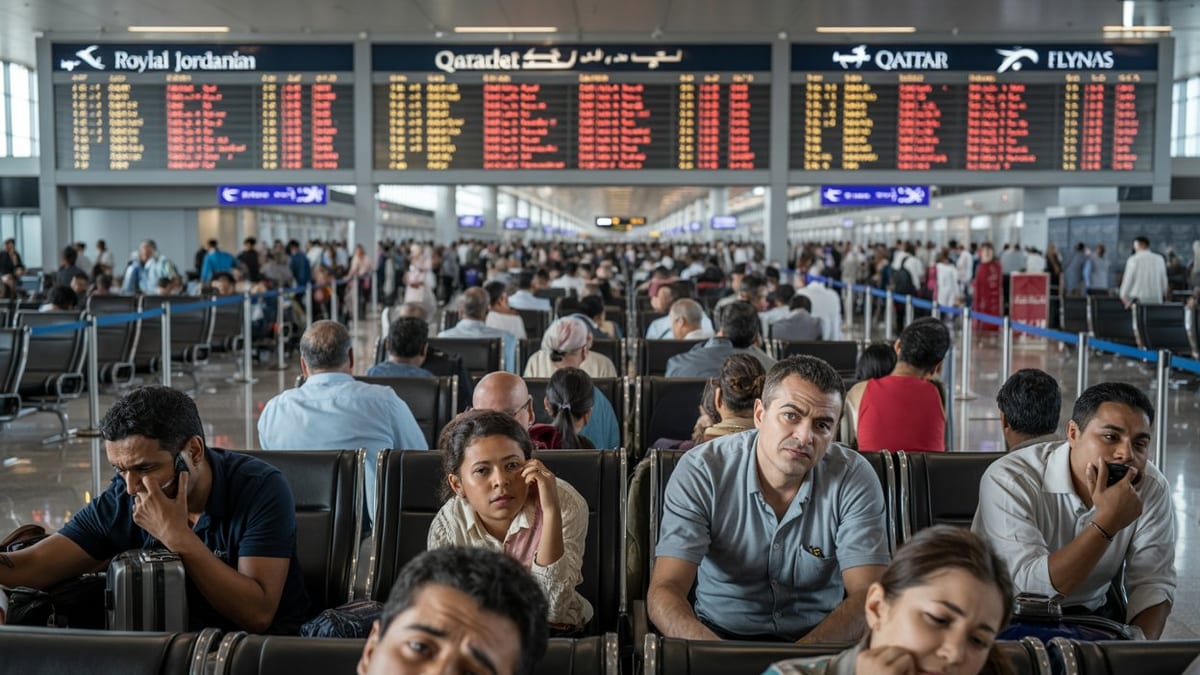
Domestic trunk routes between Lisbon and the Azores, as well as services linking the mainland to Madeira, remained under particular pressure. Recent passenger accounts from trips through Lisbon describe crowded terminals and extended waits at gates, reflecting how a combination of weather, labor-related disruption, and peak-season volumes has strained normal operating buffers.
Azores Links Ripple Out From Ponta Delgada and Terceira
Ponta Delgada and Terceira, the main air gateways for the Azores archipelago, have also been drawn into the latest round of disruption. Flight schedule and status information for June indicates repeated delays on routes linking the islands with Lisbon and Porto, as well as on inter-island services that depend on tight aircraft rotation patterns and favorable local weather conditions.
Reports from recent travelers describe cancellations and diversions affecting flights between Ponta Delgada and mainland Portugal in the context of the early June general strike, with some island-to-island services reportedly hit harder than the mainline connections. Although much of that strike-related disruption has passed, the residual schedule adjustments and aircraft positioning challenges continue to influence punctuality several days later.
Azores Airlines, TAP Air Portugal, and low-cost carriers serving Ponta Delgada and Terceira have been managing a fragile operating environment in which fog, wind, and thunderstorms around the Atlantic can rapidly upend planned rotations. In at least one widely shared travel account, a thunderstorm in Frankfurt delayed a European feeder flight bound for the islands, only for the onward journey to be further complicated by weather and capacity constraints, underscoring how conditions across the continent can combine to affect Portugal’s most remote airports.
With Ponta Delgada and Terceira acting as critical connectors for transatlantic flights to North America and for tourism across the archipelago, even modest disruptions can have disproportionate consequences for travelers. Missed connections and overnight delays in the islands can cascade back into mainland airports as airlines work through aircraft shortages and crew duty limits.
Passengers Face Rebookings, Missed Connections, and Full Flights
The cumulative impact of 328 delayed flights and 16 cancellations across Portugal on June 9 has been felt most acutely by passengers confronting missed connections, rebookings, and limited alternative options during a busy travel period. Recent days have seen numerous traveler reports describing late-notice cancellations on Portugal-bound flights from North America and Europe linked to the nationwide strike and subsequent operational constraints.
Publicly available airline advisories issued around the strike period in late May and early June offered fee-free changes for flights touching Lisbon, Porto, and Ponta Delgada over several days, reflecting expectations of substantial disruption. Passenger experiences shared online since then highlight inconsistent communication, long waits for rebooking assistance, and difficulties securing seats on replacement flights as carriers juggle full loads and constrained aircraft availability.
For travelers caught up in the latest round of delays and cancellations, consumer advocates typically recommend documenting disruption, monitoring flight status tools closely, and reviewing applicable European Union passenger rights regulations that may offer compensation or assistance for significant delays and cancellations not directly caused by extraordinary circumstances such as severe weather. In practice, separating weather-related impacts from operational or staffing issues can be complex, especially when multiple factors converge on the same travel day.
With the peak summer season still building and Portugal’s airports facing continued pressure from strong demand, the disruption registered on June 9 serves as a reminder that travelers to and through the country may encounter further schedule volatility. Industry watchers suggest that those with upcoming trips should allow generous connection times, stay alert to changing conditions at Madeira and the Azores, and remain prepared for last-minute adjustments as airlines work to stabilize their operations.