


More news on this day
Travellers moving through Melbourne, Sydney and Auckland this week are encountering significant disruption, with publicly available tracking data pointing to 249 delayed services and three cancellations across major Australian and New Zealand carriers, including Virgin Australia, Jetstar, Qantas and Air New Zealand.
Get the latest news straight to your inbox!
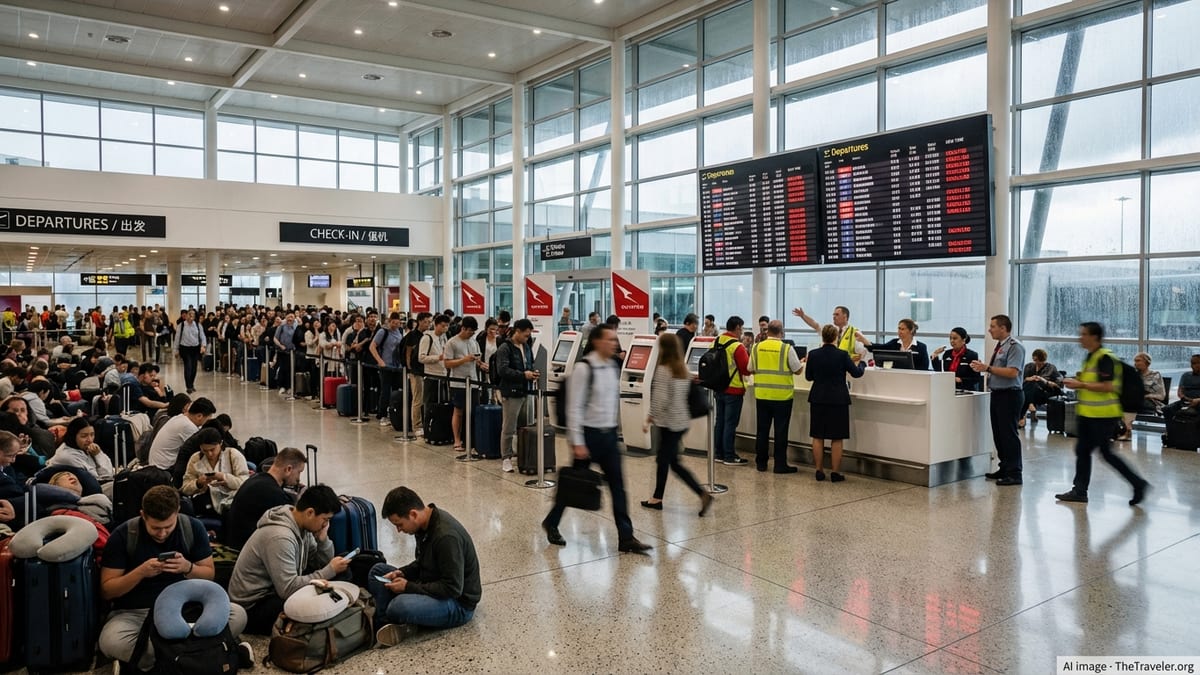
Busy Trans-Tasman Corridor Strains Under Disruption
The latest disruption has been concentrated on some of the region’s busiest corridors, including Sydney to Melbourne and multiple routes linking Australia with Auckland. These city pairs rank among the most heavily trafficked in the Southern Hemisphere, and even moderate operational issues can quickly ripple through schedules. Flight boards at major terminals have shown clusters of late departures and arrivals, particularly during peak morning and evening waves.
Tracking platforms covering services operated by Qantas, Jetstar, Virgin Australia and Air New Zealand indicate that short-haul domestic routes have borne much of the impact, but trans-Tasman services have also seen knock-on effects. Flights between Melbourne and Auckland, as well as Sydney and Auckland, have reported delays ranging from minor schedule slips of around 30 minutes to extended waits of more than an hour.
Operational timetables published by airports and airlines show that a dense pattern of departures along the east coast and across the Tasman leaves limited slack in the system. When a single aircraft runs behind schedule on one leg, it is often turned around for subsequent services, causing late running to cascade through the day. The result for passengers in Melbourne, Sydney and Auckland has been longer dwell times in departure halls and pressure on connecting itineraries.
The 249 delays and three cancellations recorded across Australia and New Zealand represent a relatively small share of total scheduled movements, but they are highly visible because they affect key trunk routes. Travellers booked on early morning departures have been among the most affected, with some services pushed back as airline operations teams reshuffle aircraft and crews.
Multiple Airlines, Shared Challenges
Publicly available performance data compiled by government agencies in both countries show that on-time running remains a challenge for the region’s main carriers. Recent reports tracking domestic and trans-Tasman performance indicate that Qantas and Jetstar have tended to record higher cancellation rates than some competitors, while Virgin Australia and Air New Zealand have battled patchy punctuality on certain routes, especially during busy seasonal peaks.
On trans-Tasman sectors such as Sydney to Auckland and Melbourne to Auckland, past aviation on-time performance bulletins from New Zealand’s transport authorities have highlighted inconsistent punctuality across all operators, with on-time departure rates on some routes dropping below long-term averages. Those reports also show that while outright cancellations sit in the low single digits as a percentage of flights, even a handful of scrubbed services can cause noticeable disruption when aircraft are near full and alternative seats are scarce.
In Australia, competition and infrastructure reports examining domestic aviation have previously noted that the country’s major airlines have, at times, cancelled or significantly delayed a higher proportion of flights than before the pandemic recovery phase. Market analysis has pointed to tight capacity, strong demand and ongoing resource constraints as factors contributing to fragile timetables, particularly at hub airports such as Sydney and Melbourne.
The current pattern of 249 delays and three cancellations appears consistent with that broader backdrop of strained reliability. While the figures do not represent a system-wide breakdown, they underscore how sensitive major domestic and trans-Tasman networks remain to relatively modest operational pressure.
Weather, Congested Airspace and Operational Pressures
Recent operational advisories and media coverage across Australia and New Zealand point to a familiar combination of triggers behind the latest disruption. Short bursts of adverse weather along the east coast and over the Tasman, including low cloud and strong winds, have required aircraft to hold, reroute or operate under stricter spacing in already busy airspace. Even when conditions improve quickly, the backlog created during those windows can take hours to clear.
In addition to weather, air traffic control constraints and runway works at key airports have periodically reduced available capacity. Travel updates published by airlines and airport operators in recent days describe temporary changes to terminal arrangements and airfield operations at Sydney, which can slow the flow of aircraft during peak times. These constraints, layered on top of heavy schedules, have discouraged aggressive recovery of lost time once delays begin to build.
Operational bulletins and regulatory data over the past year have also highlighted ongoing staffing challenges across ground handling, engineering and cabin crew roles. While conditions have improved compared with the most acute shortages seen during early post-pandemic recovery, the system remains vulnerable when unplanned absences or technical issues arise. A late inbound aircraft awaiting maintenance clearance in Melbourne or Sydney can set off a chain reaction affecting services to Auckland and other destinations.
Collectively, these pressures contribute to a pattern where delays cluster on certain days and at particular times rather than being spread evenly throughout the schedule. The current tally of 249 delayed flights and three cancellations is one such cluster, concentrated around high-demand city pairs and peak travel windows.
What Passengers in Affected Cities Are Experiencing
For travellers passing through Melbourne, Sydney and Auckland, the practical impact of the disruption is being felt most acutely in extended waiting times at departure gates, missed connections and last-minute itinerary changes. Airport information boards and airline apps have been showing repeated estimated departure time adjustments, with some flights moved in small increments before finally boarding.
Reports from passengers on social media and in local coverage describe congested seating areas, longer than usual lines at customer service desks and increased demand for same-day rebooking on alternative services. Those travelling on complex itineraries that combine domestic legs with long-haul flights have been particularly exposed, as delays on short sectors risk jeopardising onward connections to Asia, North America and Europe.
Publicly available airline policies indicate that travellers whose flights are delayed or cancelled may be rebooked on later services, subject to availability, or offered refunds in certain circumstances. However, where alternative flights are already heavily subscribed, some passengers may find themselves waiting many hours for a new departure time or being rerouted via intermediate cities to reach their final destination.
The strain on airport infrastructure is also evident in crowding around security checkpoints and baggage reclaim zones during compressed arrival and departure waves. As a series of delayed flights land in quick succession in Auckland or Sydney, ground services must manage large groups of passengers at once, further adding to perceived disruption even when overall cancellation numbers remain low.
How Travellers Can Navigate Ongoing Disruption
While the current spike in delays and cancellations reflects broader structural pressures within Australasian aviation, passengers can take practical steps to reduce the risk of serious disruption to their own journeys. Airlines across the region provide real-time flight status updates and travel alerts via their websites and mobile apps, and publicly available advice encourages travellers to monitor these tools closely in the 24 hours before departure.
Industry guidance and consumer advocacy commentary also suggest allowing extra connection time when planning itineraries involving Melbourne, Sydney or Auckland, especially during school holidays and other peak periods. Booking longer layovers, particularly when linking domestic flights with overseas departures, can provide a buffer if earlier segments are delayed.
For those already affected by the current wave of disruption, travel experts often recommend documenting delays and keeping records of boarding passes and receipts. Depending on the cause of a delay or cancellation and the conditions of carriage, some passengers may be eligible for refunds, credits or other assistance such as accommodation and meal vouchers. Publicly available consumer advice stresses that policies vary between airlines and by route, so travellers may benefit from reviewing the specific terms attached to their tickets.
With key east coast and trans-Tasman routes operating close to capacity, any short-term operational issues are likely to continue producing noticeable pockets of disruption. The latest tally of 249 delays and three cancellations underscores that reality for passengers in Melbourne, Sydney and Auckland, even as airlines work to keep the majority of services operating broadly on time.