


More news on this day
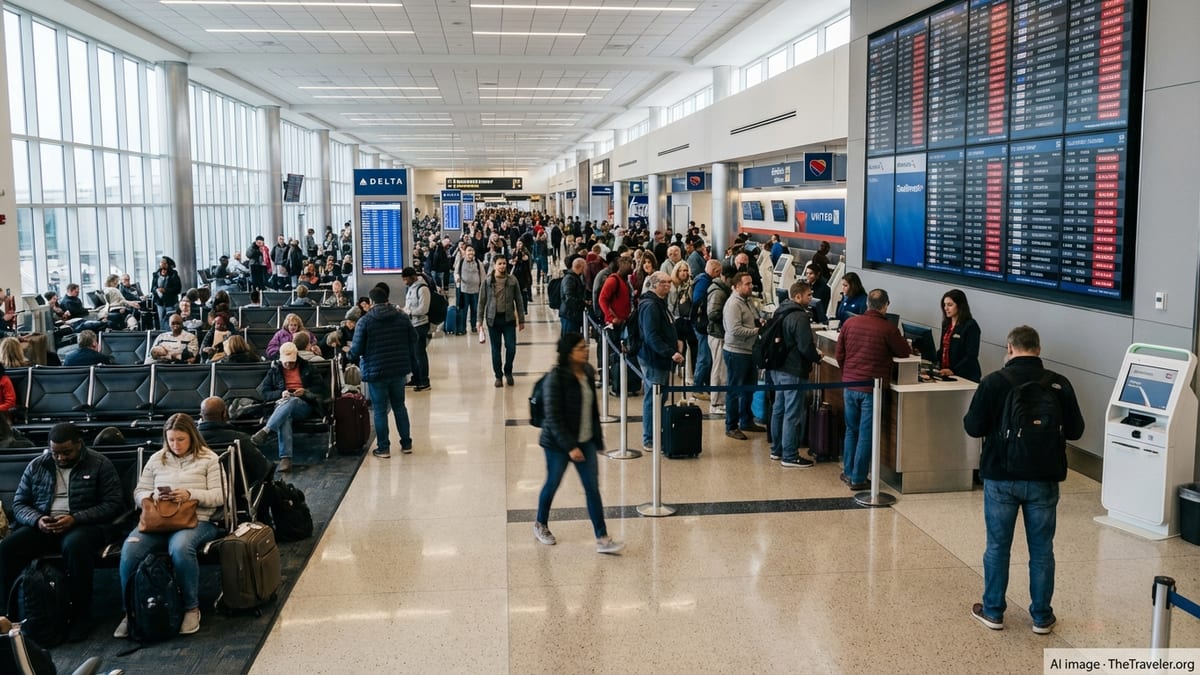
Travelers departing Salt Lake City International Airport encountered a fresh wave of disruption as around 25 flights were delayed across several major U.S. routes, affecting passengers on Delta Air Lines, Southwest Airlines, American Airlines and other carriers, although no cancellations were immediately reported.
Get the latest news straight to your inbox!
Cluster of Delays Hits Key Western Routes
Publicly available tracking data and airport information on Saturday and Sunday indicated a pocket of disruption centered on departures from Salt Lake City International Airport, with about two dozen flights pushed back from their scheduled times. The impact was concentrated on some of the airport’s busiest domestic corridors, including services to Denver, Los Angeles, Seattle and Phoenix, which together represent some of the highest-frequency routes in the western United States.
While the number of affected flights is modest compared with large nationwide disruption events, the pattern at Salt Lake City stands out because it appears to involve multiple airlines and several different departure banks across the day. Early morning and late-afternoon departures were among those most exposed, the periods when many travelers connect onward to other domestic and international destinations.
Despite the delays, publicly available data did not show a corresponding spike in cancellations out of Salt Lake City. Most affected services eventually departed, suggesting that operational pressures were significant enough to push back schedules but not severe enough to force airlines to scrub flights entirely.
Multiple Airlines Affected, With Delta Most Exposed
The disruption has touched a broad mix of carriers, with Delta Air Lines, Southwest and American Airlines among those with delayed departures. Delta remains the dominant operator at Salt Lake City, and past traffic statistics and schedule data show that the carrier and its partners account for a substantial share of daily departures, particularly on trunk routes to Denver, Los Angeles, Seattle and Phoenix. That heavy presence means even a handful of late aircraft or tight turnarounds can ripple across the schedule.
Southwest and American, both of which operate key connections between Salt Lake City and the large Western hubs, were also listed with delayed flights. These carriers play a critical role in feeding connections to the broader U.S. network via Denver, Phoenix, Los Angeles and other cities, so even short delays can complicate onward travel plans for passengers connecting to the Midwest, East Coast and Mexico.
Low-cost and regional operators that share codes with the major airlines have been indirectly drawn into the disruption as well. When mainline flights depart late from Salt Lake City, partner services feeding into or out of the hub frequently need to adjust gates, ground times or crew rotations, placing additional strain on what is typically one of the United States’ more punctual large airports.
No Cancellations but Knock-on Effects for Connections
Although no cancellations were immediately reported in connection with the 25 or so delayed departures, the secondary effects for travelers may still be significant. According to consumer flight disruption trackers and airport statistics, even short delays on hub-to-hub routes can cause missed or rushed connections for passengers with onward flights departing within an hour of their scheduled arrival.
Routes from Salt Lake City to Denver, Los Angeles, Seattle and Phoenix are particularly sensitive because they function as feeders into other major hubs. Denver and Phoenix serve as connection points for large domestic networks, while Los Angeles and Seattle link travelers to transpacific and Latin American services. A delayed departure from Salt Lake City can therefore trigger rebookings and itinerary changes far from Utah itself.
In many cases, airlines have been able to absorb schedule pressure by shortening ground times, adjusting aircraft swaps or assigning reserve crew. Publicly available information suggests that most delayed departures from Salt Lake City eventually operated, allowing travelers to complete their journeys the same day, albeit sometimes later than planned.
Operational Pressures at a Growing Mountain Hub
Salt Lake City International has expanded its facilities in recent years and typically ranks favorably for on-time performance among major U.S. airports, but the latest set of delays illustrates how quickly conditions can tighten. High aircraft utilization, complex hub operations and strong seasonal demand to and from Utah’s ski and outdoor destinations can all contribute to short-term bottlenecks.
Recent airport communications have highlighted construction work on access roads and airfield projects, along with continued strong traffic volumes. While there has been no single clear cause publicly identified for the latest round of delays, a combination of weather variations across the western network, crew and aircraft positioning, and ground congestion can all play a role in pushing departures behind schedule without triggering widespread cancellations.
The airport connects Salt Lake City to dozens of domestic destinations, and schedule data show particularly dense traffic to Denver, Phoenix, Los Angeles and Seattle. With such frequent services, even modest disruption during one departure bank can cascade into the next, creating the kind of rolling pattern of late departures reflected in current tracking data.
What Travelers Can Do if Their Flight Is Delayed
Consumer travel guidance sites note that passengers experiencing delays at Salt Lake City or elsewhere should first rely on their airline’s official app or website for real-time departure information and potential rebooking options. Many carriers now automatically reassign seats on later flights when a misconnection is likely, though travelers often see more choices if they proactively review alternatives as soon as a delay is posted.
Some disruption-tracking services also point out that under certain circumstances, especially on flights departing from or arriving in jurisdictions with strong passenger protection rules, travelers may be entitled to compensation or reimbursement when delays are lengthy and fall within the airline’s control. In the United States, eligibility is more limited and often depends on individual airline policies, but passengers may still receive meal vouchers, hotel accommodation or rebooking assistance during significant disruption.
With Salt Lake City’s latest wave of delays, travel analysts suggest that passengers departing in the coming days build in extra connection time when routing through major Western hubs and arrive at the airport well ahead of departure. As the airport continues to manage strong demand and ongoing projects, such precautions may help reduce the risk that a modest delay on departure turns into a missed onward flight.