


More news on this day
Delta Air Lines Flight DL894, a Boeing 737-932(ER) scheduled to operate from New Orleans to Detroit, diverted to Cleveland instead of completing its nonstop route, creating an unexpected interruption on a key domestic corridor and briefly stranding passengers between hubs.
Get the latest news straight to your inbox!
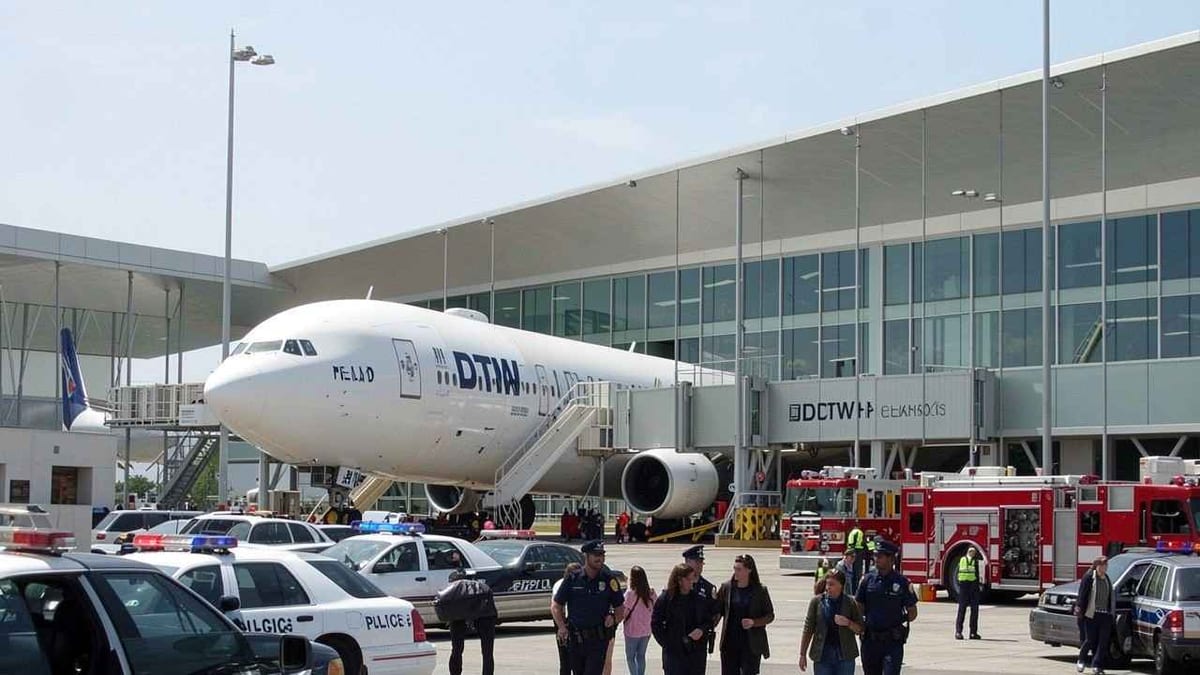
A Scheduled New Orleans–Detroit Run Takes an Unplanned Detour
Publicly available flight tracking data for Delta’s Boeing 737-932(ER) with registration N915DU shows that the aircraft has been operating Flight DL894 between New Orleans and Detroit during June 2026. On one of these rotations, the service did not complete its planned nonstop routing and instead diverted north to Cleveland Hopkins International Airport, interrupting the normal south–north flow into Detroit Metropolitan Wayne County Airport.
The DL894 routing is typically a straightforward domestic sector, connecting Louis Armstrong New Orleans International Airport with Delta’s Detroit hub. The scheduled block time is around two and a half hours, positioning the aircraft and crew for onward connections out of Detroit. The unexpected diversion, however, temporarily broke that pattern and required a reset of both the aircraft’s planned day and many passengers’ itineraries.
Tracking records indicate that the 737-900ER involved had recently been flying a mixture of domestic legs, including services touching Cleveland and Atlanta, before and after its New Orleans–Detroit duties. This pattern underscores how a single unexpected operational event on one leg can ripple across multiple airport pairs in Delta’s dense domestic network.
Although the flight ultimately continued on to Detroit from Cleveland after the diversion, the episode effectively turned a routine point-to-point service into a two-stage journey, with the added complexity of managing turnaround times, crew hours and missed connections.
Why Diversions Happen on Otherwise Routine Routes
Diversions such as the one affecting DL894 are relatively uncommon on short domestic flights, but aviation data and recent coverage of U.S. airline operations show that they can stem from a range of factors. Weather remains one of the most frequent causes, especially for flights inbound to hub airports like Detroit that handle intense arrival banks and can quickly become constrained when thunderstorms or low visibility move through the region.
Operational considerations can also play a role, including runway or taxiway closures, congestion from earlier delays, or temporary ground stops that slow arrivals into a hub. In those situations, dispatchers may route an aircraft to an alternate airport where it can safely land, refuel if necessary and wait for conditions at the destination to improve before proceeding.
Industry reports from recent months highlight how Delta and other major carriers have occasionally diverted multiple flights away from Detroit when weather systems or air traffic management programs have reduced arrival capacity. Cleveland, with its established Delta presence and relatively short distance from Detroit, is a logical diversion point for aircraft already in the upper Midwest region.
The Boeing 737-932(ER) variant used on DL894 is designed for longer domestic and transcontinental sectors, with range margins that normally offer flexibility for rerouting. Even so, once an alternate is chosen and the aircraft lands there, crew duty limits, ramp availability and passenger handling logistics all become central to deciding how and when the flight can resume.
Impact on Passengers and the Detroit–Cleveland–New Orleans Triangle
The diversion of DL894 had immediate consequences for passengers expecting a nonstop service into Detroit. Instead of arriving directly at a major hub where they could connect onward to other domestic or international destinations, travelers first had to wait out ground time in Cleveland while the flight’s next steps were coordinated.
For some, the delay may have led to missed connections at Detroit, particularly for evening bank departures to cities across the Midwest and East Coast. Historical schedule data shows that Delta links Detroit and Cleveland with a high-frequency shuttle-style operation using regional jets, making it possible to rebook some passengers via additional flights. Others on tighter itineraries might have found themselves forced to overnight, shift to alternative routings or change their travel plans altogether.
The disruption also echoes other recent operational challenges on the Detroit–Cleveland axis, where separate flights have experienced delays or cancellations for reasons ranging from weather to crew availability. While those events involve different flight numbers and aircraft types, they illustrate how closely intertwined the two airports are within Delta’s domestic system and how issues at one node can quickly propagate across the network.
For travelers, DL894’s diversion underscores the importance of monitoring real-time flight status and building buffer time into tight connections through hub airports, especially during peak travel periods or unsettled weather seasons.
What the Diversion Reveals About Delta’s Operational Strategy
The handling of the DL894 diversion offers insight into how Delta uses its Midwest footprint to manage irregular operations. By sending the Boeing 737-900ER to Cleveland instead of holding in the air near Detroit, the airline placed the aircraft at an airport with suitable facilities, maintenance support and existing Delta ground operations, improving the chances of a controlled recovery once conditions allowed.
Available route-mapping information for Delta’s 2026 network shows that Detroit remains one of the carrier’s most important hubs, complemented by spokes such as New Orleans and secondary stations like Cleveland. When operations are disrupted, these spokes can act as pressure valves, absorbing diverted aircraft and allowing the hub to stabilize arrival and departure flows.
The choice of a 737-932(ER) on DL894 also reflects Delta’s reliance on high-capacity narrowbodies for medium-haul domestic trunk routes. These aircraft carry significantly more passengers than the regional jets used between Detroit and Cleveland, meaning that a single diversion event can affect a larger group of travelers. That, in turn, places a premium on rapid decision-making and clear downstream planning to reposition both aircraft and passengers.
In the wake of multiple recent diversions and irregular operations across North American carriers, the DL894 incident reinforces how even advanced planning and sophisticated routing tools cannot fully eliminate the need for sudden, sometimes inconvenient route changes. For airlines, the priority remains maintaining safety and regulatory compliance; for passengers, episodes like this serve as a reminder that flight plans can change quickly, even on familiar and seemingly straightforward routes.