


More news on this day
A SkyWest Airlines Mitsubishi CRJ-550 operating as United Express flight SKW5964 between Denver and Fargo diverted from its planned route and returned to Denver, according to live flight-tracking data and publicly available airport information.
Get the latest news straight to your inbox!
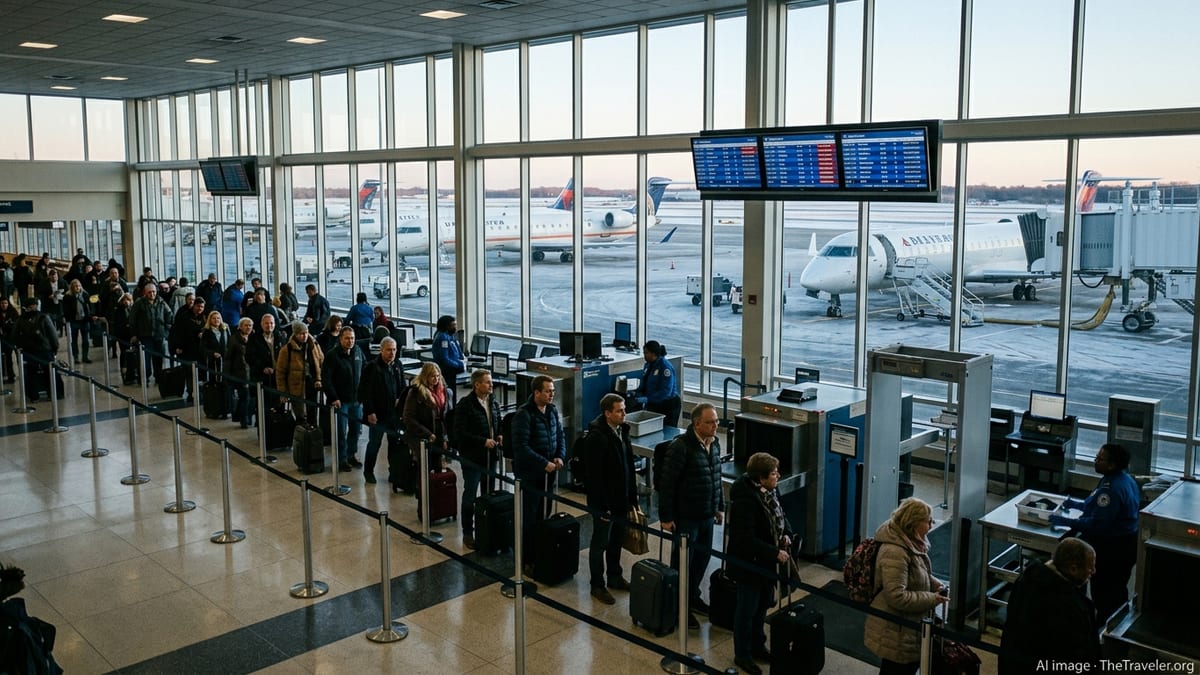
Regional Denver to Fargo Service Affected
The affected service involves a regularly scheduled United Express route between Denver International Airport and Fargo’s Hector International Airport that is contracted to SkyWest Airlines and flown with the Mitsubishi CRJ-550 regional jet. Airport timetable data for Fargo lists flight 5964 as an arrival from Denver, indicating it is part of United’s regional network linking the Upper Midwest with its Denver hub using this aircraft type.
Published flight schedules show the CRJ-550 used widely on shorter regional routes, including services into and out of Denver and Fargo, where the 50-seat configuration and premium-heavy cabin are positioned to connect smaller markets with United’s long-haul network. The aircraft, built on the CRJ700 platform and now supported by Mitsubishi as type-certificate holder, has become a mainstay on these contracts.
On the date of the incident, live flight-tracking feeds indicated that the SKW5964 leg from Denver to Fargo departed as planned before an unexpected route change occurred en route. Instead of continuing along the typical northeast track toward eastern North Dakota, the jet altered course and ultimately returned to Denver, where the flight concluded.
At the time, separate weather coverage for the Denver region pointed to unsettled conditions in and around the metro area and the central High Plains, with thunderstorms and operational constraints reported at Denver International Airport. While there is no single, definitive public explanation connecting this specific flight to weather or any other operational factor, the broader environment around the hub was described as active and occasionally disruptive.
Unplanned Route Change and Turnback to Denver
Flight-tracking records for SKW5964 show the aircraft climbing out of Denver along a northeasterly route broadly consistent with the usual profile for flights to Fargo. At a later stage of the journey, the recorded track begins to deviate from the direct routing, with changes in heading and altitude that differ from the standard cruise profile typically observed on this sector.
Shortly after this pattern of deviation, tracking data indicates that the aircraft initiated a turn that set it on a generally southwesterly heading back toward Colorado. The flight then proceeded toward Denver rather than continuing to North Dakota, with ground data later reflecting a completed arrival back at the origin airport instead of an arrival scan in Fargo.
Publicly accessible airport information from Fargo for the relevant operating period lists flight 5964 in the regular schedule as a Denver arrival on the CRJ-550, but same-day status pages and third-party trackers do not show a completed inbound leg consistent with the outbound departure from Denver. This pattern supports reports that the service did not reach Fargo and ended with a diversion back to the hub.
Available information does not provide detailed operational reasons such as technical, weather, crew, or air-traffic management factors specific to SKW5964. However, the combination of an in-flight route alteration, a recorded turnback, and the absence of a corresponding arrival in Fargo provides a clear outline of the disruption’s basic sequence.
Passenger Disruption and Network Ripple Effects
For passengers booked on SKW5964, the unplanned turnaround would likely have resulted in missed onward connections and overnight delays, particularly for those linking from Denver onto early-morning departures from Fargo or other regional airports. In the regional jet environment, even a single canceled or turned-back frequency can significantly affect travel plans because of limited same-day alternatives.
Denver and Fargo are both served by multiple carriers on overlapping city pairs, including other United Express frequencies and services by competing airlines on nearby routes. On a day with irregular operations, travelers might be rebooked onto later United Express flights, rerouted through alternative hubs such as Chicago O’Hare, or shifted to other airlines’ departures where interline agreements and available seats permit.
Operational disruptions of this sort can also ripple through airline networks, especially on regional equipment with tight daily utilization. A CRJ-550 that returns to its origin instead of completing a scheduled segment may delay or cancel subsequent flights assigned to that airframe, requiring schedulers to reposition aircraft or consolidate services. For passengers, that can lead to further schedule changes beyond the initially affected flight.
Travel industry guidance often encourages passengers on regional routes to monitor flight status closely on days with stormy weather or heightened operational complexity. In cases involving mid-flight diversions or returns, rebooking options can be more constrained than on trunk routes operated by larger mainline aircraft with multiple daily frequencies.
About the SkyWest-Operated Mitsubishi CRJ-550
The aircraft type involved, the Mitsubishi CRJ-550, is a specialized 50-seat configuration derived from the larger CRJ700 regional jet. Rather than maximizing seat count, the CRJ-550 layout prioritizes a mixed-class cabin and larger storage areas, with space for carry-on bags in lockers and overhead bins that are configured to minimize the need for gate-checking luggage.
United introduced the CRJ-550 several years ago as part of a broader move to offer a more consistent experience on shorter routes that feed its hubs, particularly from smaller markets in the Midwest and Mountain West. SkyWest, as one of United’s key regional partners, operates a substantial portion of the CRJ-550 fleet on United Express-branded services from hubs such as Chicago O’Hare and Denver.
The aircraft’s operating economics and cabin layout make it well suited to routes like Denver to Fargo, where passenger volumes may not support a larger narrowbody jet year-round but where demand for premium seating and reliable connections into a major hub remains strong. Schedules and fleet data for 2026 show the CRJ-550 deployed across multiple daily rotations linking Fargo with both Denver and Chicago under the United Express banner.
For travelers, the CRJ-550 is frequently highlighted for features such as extra legroom in premium sections and increased onboard storage relative to older 50-seat regional jets. Even so, as the SKW5964 incident illustrates, regional aircraft remain exposed to the same operational variables that affect larger jets, including weather-related constraints, airspace management decisions, and the occasional need to divert or return to origin for safety or logistical reasons.
Context: Weather and Operational Complexity in the Region
The turnback of SKW5964 occurred during a period when meteorological coverage for the central United States noted rounds of thunderstorms and unstable air affecting portions of Colorado and the northern Plains. Reports in the days around the incident described Denver International Airport managing ground stops and arrival delays at various points due to convective weather moving across the Front Range and adjacent regions.
In such conditions, regional flights are often among the first to experience schedule adjustments, as airlines and air-traffic planners prioritize longer-haul services and work within airspace flow programs designed to manage capacity. Diversions, holding patterns, and returns to origin are standard tools used by dispatchers and flight crews responding to changing forecasts and real-time radar imagery.
While publicly available information does not tie the SKW5964 turnaround to a singular documented cause, the broader context of active weather, complex hub operations, and the inherent constraints of regional flying helps explain why a routine Denver to Fargo sector on a Mitsubishi CRJ-550 could end with an unexpected return to Denver. For travelers across the network, it serves as another reminder that even familiar short-haul routes can be subject to rapid operational changes.