


More news on this day
Delta Air Lines is rapidly expanding its presence at Los Angeles International Airport, investing heavily in terminals and premium ground experiences even as its next-generation Delta One business-class seat remains years away from regular service.
Get the latest news straight to your inbox!
Sky Way Project Reshapes Delta’s LAX Hub
Los Angeles has become one of Delta’s most important strategic hubs, and the airline’s ongoing “Sky Way at LAX” project is at the center of that push. Publicly available information shows that Delta and Los Angeles World Airports are in the midst of a multibillion-dollar effort to connect and modernize Terminals 2 and 3, creating a consolidated check-in, security, and departures experience for the carrier’s growing local and connecting traffic.
Large portions of the redesigned Terminal 3 are already in operation, including a centralized check-in hall and a refreshed departures level that channels passengers more directly into security. The project is designed to streamline passenger flows and shorten transfer times between Delta flights and partner airlines, a key consideration at an increasingly crowded LAX.
Future phases call for more seamless connections to the Tom Bradley International Terminal, where many of Delta’s long-haul SkyTeam partners operate. For premium travelers, that connection will be crucial once more of Delta’s long-haul schedule, including transpacific services, is funneled through Los Angeles.
The construction has not been painless. Travelers continue to navigate intermittent lane closures, evolving wayfinding, and occasional congestion around the curbside areas. Reports indicate that airport and airline planners are banking on the long-term payoff: a more coherent, hub-style operation that can compete directly with American and United for high-spending travelers in Southern California.
Delta One Lounges Lead With Ground Experience
While the airline’s new business-class seat is still in development, Delta has moved more quickly on its ground product for premium passengers in Los Angeles. Publicly available information shows that Delta One customers at LAX already have access to a dedicated premium lounge in Terminal 3, positioned as a step above the existing Sky Club network with elevated dining and more private spaces.
Discussion among frequent flyers and local aviation observers indicates that a second Delta One-branded lounge is planned for Terminal 2, effectively bookending the combined complex with premium spaces. That configuration would align with the broader Sky Way vision of a unified Delta zone stretching across both terminals, with high-end lounges never far from departure gates.
The emphasis on ground amenities reflects a wider industry pattern in which airlines race to differentiate the entire premium journey, not just the seat on board. For travelers departing LAX, the result is that Delta’s most visible upgrades today are on the concourse and in the lounges, not yet in the aircraft cabins parked at the gates.
For now, Delta is leaning on its existing Delta One suite and traditional Delta One configurations from Los Angeles, with the lounge network doing much of the work in signaling a premium, hub-level presence in the market.
Next-Generation Delta One Suite Still Years From LAX
In April 2026, Delta formally unveiled its next-generation Delta One suite, confirming long-discussed plans to refresh the airline’s flagship business-class product. According to published coverage, the new suite will debut on Airbus A350-1000 aircraft arriving from early 2027, with additional installations planned as part of a broad retrofit of Airbus A330-200 and A330-300 jets.
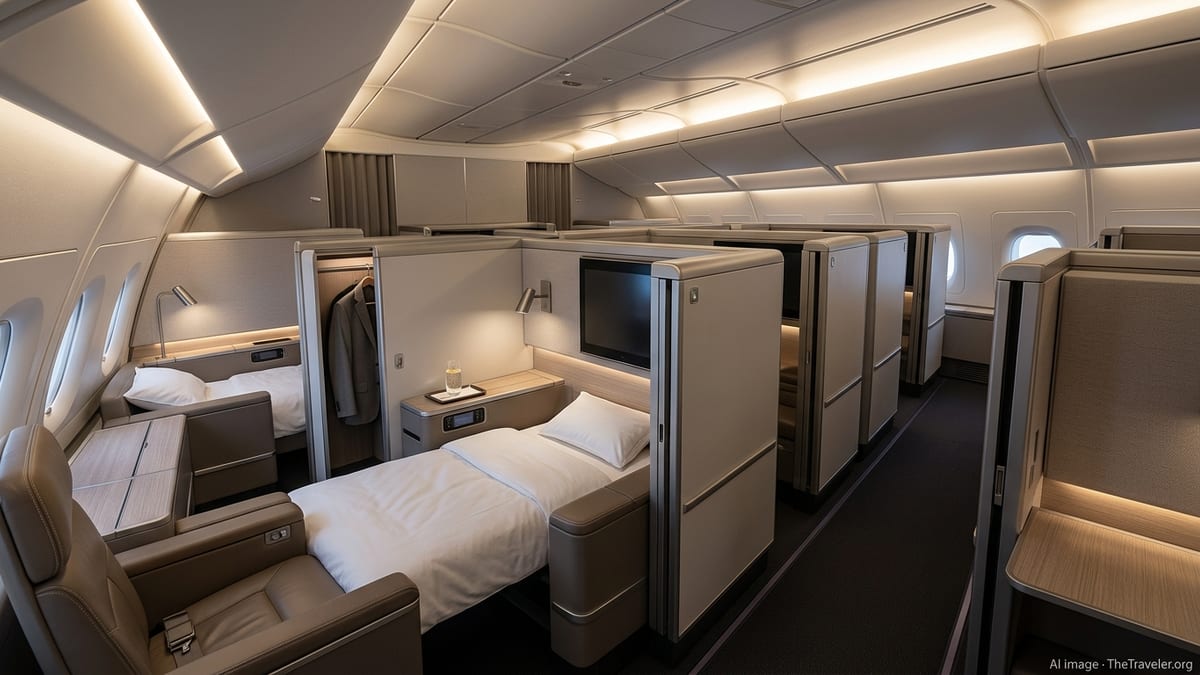
The redesigned suite is based on a modern staggered configuration with sliding doors, longer fully flat beds, extra storage, and significantly larger 24-inch seatback screens. Reports from industry outlets describe it as a step up from Delta’s existing Thompson VantageXL-based suites, bringing the carrier closer to the latest generation of high-walled, privacy-focused cabins seen on leading Asian and Middle Eastern airlines.
For LAX travelers, however, the reveal has not yet translated into a booking option. The A350-1000s are initially expected to be based at Delta’s primary hubs such as Atlanta and possibly Detroit or New York, and the airline has not publicly confirmed which specific long-haul routes from Los Angeles will first see the new product. That leaves LAX customers flying a mix of current-generation Delta One suites and older configurations, depending on aircraft type and routing.
Some aviation analysts note that this staggered rollout underlines a broader pattern at Delta, where cabin innovations tend to arrive first in the fleet and only later become reliably available from West Coast gateways. For now, the carrier’s marketing at LAX continues to lean on the Delta One brand without promising the forthcoming suite on specific routes.
A Growing Gap Between Terminal Upgrades and Cabin Consistency
The contrast between Delta’s polished new terminal spaces and its varied onboard product is increasingly visible at LAX. Travelers can check in at a modern hall, clear security in a streamlined checkpoint, and relax in a high-end lounge, only to board an aircraft where the business-class cabin might not match the latest renderings circulating in airline announcements and travel media.
Across its global network, Delta operates several different Delta One seat types, from the newest enclosed suites on select Airbus A350-900 and A330-900neo aircraft to older lie-flat products on Boeing 767s and legacy A330s. According to industry reports and enthusiast tracking, that variety is likely to persist for several years, even as the A350-1000 and refreshed A330 fleets gradually introduce the next-generation suite.
From LAX, this means that the business-class experience can differ markedly depending on the aircraft assigned to each route. Savvy travelers often study seat maps and aircraft types before booking, seeking out flights operated by jets equipped with existing Delta One suites rather than legacy 2-2-2 layouts. Until the new product enters service and rolls out more widely, such differences will remain a defining feature of Delta’s premium cabin strategy at Los Angeles.
The imbalance also highlights the broader challenge airlines face as they juggle long-term fleet plans, supply-chain constraints, and certification timelines while continuing to invest in high-profile airport projects. At LAX, the physical transformation of Delta’s terminals is visible now, while the upgraded seats that will eventually anchor the airline’s premium narrative are still confined to digital mock-ups.
Competitive Pressures in the LAX Premium Market
Delta’s strategy at LAX is unfolding against a backdrop of intensifying competition for premium travelers on the West Coast. American and United both operate large hubs at the airport, and international carriers from Asia, Europe, and the Middle East have their own next-generation business-class cabins already flying in and out of Los Angeles.
According to coverage in aviation and travel publications, United has been steadily rolling out its Polaris business-class product, while American is progressing with its latest suites with doors on new and refurbished widebodies. International airlines serving LAX, including Japanese, Korean, and Middle Eastern carriers, are fielding acclaimed business-class seats that set a high benchmark for privacy and comfort.
Delta’s answer so far has been to double down on the overall experience: upgraded terminals, strong lounge offerings, and a coming wave of new suites that will eventually give the airline one of the largest footprints of enclosed business-class seats among U.S. carriers. Yet until those cabins start flying regularly from Los Angeles, the carrier’s pitch rests more on promise than on what passengers encounter once they step on board.
For frequent travelers at LAX, the message is clear. Delta is deeply committed to building out its West Coast hub, pouring investment into the physical infrastructure and ground experience. The new Delta One business-class seat, however, remains the missing piece of the puzzle, still on the horizon while the airline continues building around it.