


More news on this day
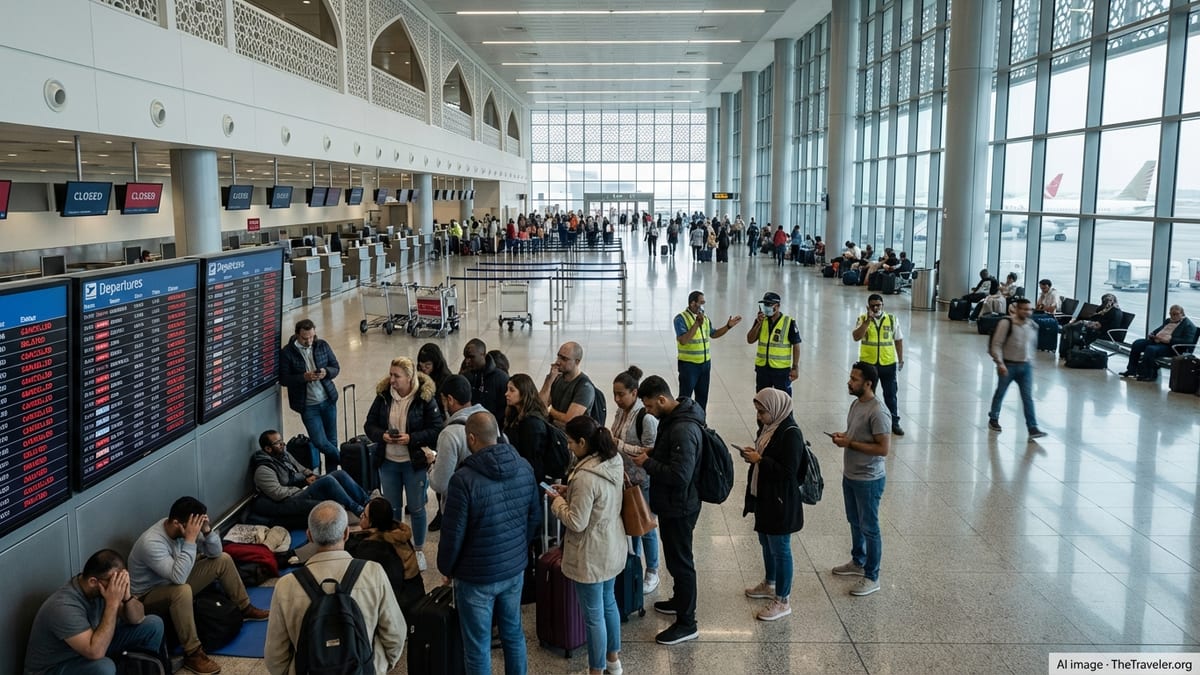
Travel across East and Southeast Asia faced fresh disruption today as Shenzhen Bao’an International Airport reported a cluster of cancellations and more than 170 delayed services, affecting flights operated by Shenzhen Airlines, China Eastern, Hainan Airlines, China Southern, XiamenAir and Air China across China, Japan, Thailand and Malaysia.
Get the latest news straight to your inbox!
Operational Strain at a Major South China Hub
Publicly available flight-tracking data for Shenzhen Bao’an International Airport on June 9 indicates a marked build-up of disruption, with 12 cancellations and 176 delayed services involving a mix of domestic and regional routes. The interruptions are concentrated among major Chinese full-service carriers that use Shenzhen as a hub or focus city, including Shenzhen Airlines, China Southern and Hainan Airlines, alongside trunk-line operators China Eastern, Air China and XiamenAir.
Shenzhen Bao’an serves as one of South China’s busiest aviation gateways and a key connector between mainland China and nearby markets in Japan, Thailand and Malaysia. When operations slow at this airport, knock-on effects are typically felt along popular leisure and business corridors such as Shenzhen to Bangkok, Phuket, Kuala Lumpur and Tokyo, as well as on dense domestic links to Shanghai, Beijing, Guangzhou, Chengdu and Xi’an.
The latest disruption follows a broader pattern of irregular operations reported at several Chinese airports in recent weeks, where combinations of weather, airspace congestion and tight scheduling have produced waves of delays and scattered cancellations. Shenzhen’s role as both an origin and transit point means even a moderate number of affected flights can ripple across airline networks serving East and Southeast Asia.
Available performance dashboards for Shenzhen Bao’an show that the airport generally maintains a mid-range on-time rating, but the current spike in delays underscores how quickly conditions can deteriorate when multiple carriers experience schedule pressures at the same time.
Domestic Routes Across China Bear the Brunt
The majority of today’s affected services are reported on domestic routes linking Shenzhen with key mainland cities. Shenzhen Airlines and China Southern, both of which maintain significant bases at Shenzhen Bao’an, are among the most visibly impacted operators, with delayed departures on trunk routes to Shanghai, Beijing and major provincial capitals.
China Eastern and Air China, which operate dense shuttle-style services between Shenzhen and their own hubs in Shanghai and Beijing, also appear within the roster of delayed flights. Published route and schedule data show that these carriers rely heavily on high-frequency narrowbody operations, leaving limited slack in their networks when a wave of delays builds up at a single airport.
Smaller clusters of disruptions are noted on services involving Hainan Airlines and XiamenAir, particularly on secondary domestic routes feeding into the larger hub system. While these carriers operate fewer daily frequencies from Shenzhen compared with the dominant local players, delays to even a handful of their flights can complicate onward connections for passengers traveling deeper into China.
For travelers on domestic itineraries, the pattern of delays at Shenzhen is likely to manifest in longer-than-expected ground times, missed same-day connections and, in some cases, rebookings onto later departures when connection windows cannot be met.
Knock-on Effects for Japan, Thailand and Malaysia
Although the numerical bulk of disruptions is on domestic sectors, the impact extends to international services linking Shenzhen with neighboring Asian markets. Flight-status boards and schedule data indicate that some of the delayed and cancelled flights feed into or out of routes serving Japan, Thailand and Malaysia, where connectivity often relies on tightly timed transfers.
Flights from Shenzhen to Japanese cities such as Tokyo and Nagoya, as well as popular leisure destinations in Thailand including Bangkok and Phuket, are particularly sensitive to upstream delays. Late arriving aircraft from inland Chinese cities can translate into outbound departures leaving behind schedule, reducing buffer time for passengers planning onward connections within Japan or Southeast Asia.
Similarly, routes between Shenzhen and Malaysian hubs such as Kuala Lumpur and other regional gateways can experience secondary disruption when aircraft rotations or crew schedules are disturbed. Even when international legs remain officially “on time,” extended boarding, congestion on taxiways or late-arriving connecting passengers can push actual departure and arrival times beyond timetable expectations.
The result for international travelers is an elevated risk of missed transfers, especially where itineraries combine different carriers or involve separate tickets, a common practice among price-sensitive passengers in the region.
Weather, Congestion and Tight Timetables Under Scrutiny
Publicly available information on airport conditions around Shenzhen Bao’an today points to unsettled but flyable weather, with broken cloud cover and warm, humid conditions typical of early summer in South China. While not extreme, such weather can contribute to air traffic flow restrictions when combined with saturated airspace and dense peak-hour schedules.
Shenzhen sits within one of the most heavily trafficked aviation corridors in Asia, sharing airspace with the busy hubs of Guangzhou, Hong Kong and Macau. Minor slowdowns in departure or arrival rates at any one of these fields can cascade across the region, leading to holding patterns, minor diversions and last-minute schedule adjustments. When multiple large airlines operate closely spaced departures to similar destinations, the system has limited capacity to absorb unexpected disruptions.
Industry data and recent coverage of China’s aviation sector have highlighted how post-pandemic capacity growth is increasingly pressing against airspace and airport constraints. At hubs like Shenzhen, airlines have rebuilt and in some cases expanded schedules to meet robust leisure and business demand, leaving little margin for delay recovery during peak travel periods.
The 12 cancellations reported today, while numerically modest compared with the airport’s total daily movements, illustrate how airlines may choose to consolidate or trim selected rotations in order to stabilize their broader operations once delays begin to stack up.
What Travelers Passing Through Shenzhen Can Expect
For passengers scheduled to travel through Shenzhen Bao’an on Shenzhen Airlines, China Eastern, Hainan Airlines, China Southern, XiamenAir or Air China, the day’s disruptions translate into a need for closer-than-usual monitoring of flight status. Airline and airport digital channels are updating departure and arrival times throughout the day as conditions evolve.
Travelers on domestic itineraries within China may face longer queues at check-in and security, especially around peak departure banks, as delayed flights overlap with later scheduled services. Gate changes and aircraft swaps are also more likely, which can add confusion for passengers unfamiliar with the airport layout.
International passengers bound for Japan, Thailand and Malaysia should be prepared for potential missed or compressed connection windows, particularly when transferring from delayed domestic feeders. Where itineraries involve separate tickets or non-allied airlines, re-accommodation options may be more limited, making proactive rechecking of flight times especially important.
While today’s disruption at Shenzhen Bao’an falls short of a system-wide shutdown, the combination of cancellations and a high volume of delayed flights underscores the continued fragility of regional aviation schedules during busy travel periods. For travelers, building extra time into connections and maintaining flexible plans remains the most reliable way to navigate an increasingly crowded sky.