


More news on this day
Recent back-to-back cancellations on Delta Air Lines’ Lagos–Atlanta service have left transatlantic travelers stranded at Murtala Muhammed International Airport, renewing scrutiny of the reliability of one of West Africa’s most important routes to the United States.
Get the latest news straight to your inbox!
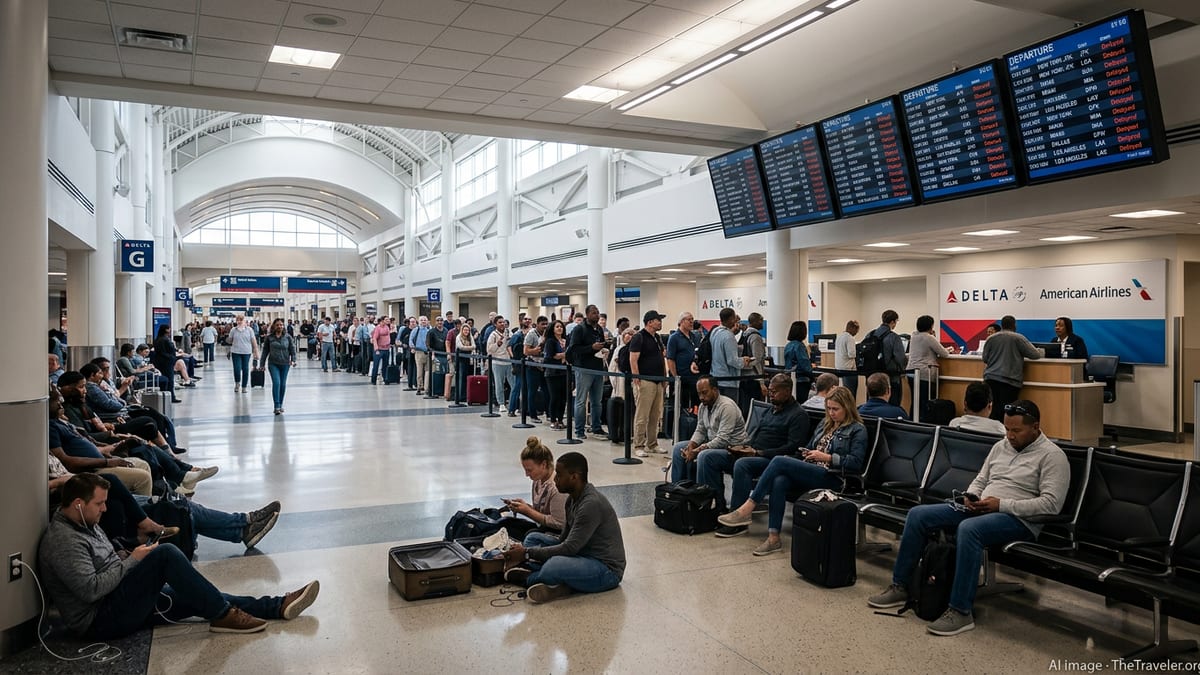
Back-to-back disruptions on a key transatlantic link
Delta’s nonstop service between Lagos’ Murtala Muhammed International Airport and Hartsfield-Jackson Atlanta International Airport is a critical corridor for business, leisure, and connecting traffic between Nigeria and the United States. Flight tracking data identifies DL55 as the carrier’s regular Lagos to Atlanta operation on the route, typically operated several times per week as part of a year-round schedule.
Published reports in Nigerian and international media indicate that the latest disruption began when a Lagos–Atlanta departure scheduled for late August 2026 was cancelled close to departure time, with passengers already at the airport. Coverage from Nigerian outlets describes travelers being instructed to disembark and collect their luggage after an extended wait at the gate, with no immediate replacement aircraft made available.
Subsequent coverage suggests that the following day’s service was also disrupted, effectively creating back-to-back cancellations on the Lagos–Atlanta leg. As a result, some travelers reported spending multiple days in Lagos while trying to secure new itineraries, either on later Delta flights or via alternative routings through European and Middle Eastern hubs.
The pattern of cancellations comes after years of intermittent reliability concerns on the route. Archive coverage from 2024 described at least one major disruption that stranded more than 300 passengers in Lagos after a mechanical issue grounded the scheduled aircraft shortly before departure, forcing an overnight stay and rebooking efforts that extended into the following days.
Stranded passengers face accommodation and rebooking challenges
Accounts compiled in local and regional media indicate that stranded travelers in Lagos encountered a mix of hotel arrangements, meal vouchers, and out-of-pocket costs following the recent cancellations. Some passengers reported receiving accommodation provided through the airline’s local partners, while others described paying for hotels and transport themselves while attempting to resolve new travel plans.
Publicly available information on Delta’s customer guidance notes that, in the case of significant delays or cancellations, rebooking options can include same-carrier flights on later dates, rerouting via other hubs, or in some circumstances refunds for unused segments. However, long-haul routes like Lagos–Atlanta often operate at high load factors, limiting the number of open seats available in the immediate days after a disruption.
For travelers bound for onward connections in Atlanta and beyond, the impact extended beyond the initial Lagos–Atlanta sector. Missed links to domestic U.S. destinations and other international gateways meant that some passengers had to reconstruct entire itineraries, sometimes with multiple additional stops. Reports also highlight prolonged waits in customer service lines, as well as heavy call volumes to airline contact centers, as affected travelers sought clearer information on their options.
Consumer advocates point to these episodes as evidence of the vulnerability of passengers in markets where there are relatively few nonstop alternatives. While several foreign carriers link Lagos to Europe and the Middle East with onward connections to the United States, nonstop Nigeria–U.S. options remain limited, making any single-operator disruption particularly consequential.
Operational headwinds and a history of high-profile disruptions
The latest cancellations on the Lagos–Atlanta service arrive against a broader backdrop of operational pressure for long-haul carriers. Delta’s global network, centered on its Atlanta hub, has faced repeated stress in recent years, including a high-profile system disruption in July 2024 that led to thousands of cancellations across its network and large numbers of stranded passengers at Hartsfield-Jackson Atlanta International Airport and other major hubs.
While the July 2024 disruption was linked to a global IT outage affecting multiple industries, the impact on Delta’s operation resulted in widespread schedule changes and highlighted how quickly long-haul flights can be affected when aircraft and crews are out of position. Subsequent investigations and industry analysis noted that widebody routes, which operate less frequently and carry larger numbers of passengers, are especially exposed when irregular operations cascade across a network.
In the case of Lagos–Atlanta, published coverage from Nigerian media has previously detailed cancellations attributed to technical issues and crew constraints, as well as weather and congestion-related challenges at the Atlanta hub. Industry scheduling data shows that Delta has periodically adjusted frequencies and aircraft types on the route as it balances demand, fleet availability, and operational resilience across its long-haul portfolio.
Capacity data for the mid-2020s indicates that Delta has treated Atlanta–Lagos as a core intercontinental route, at times operating daily service and supplementing U.S.–Nigeria capacity with additional flights from New York. Yet recurring disruption episodes have raised questions about whether operational buffers on such long sectors are sufficient when irregular operations occur on consecutive days.
What passenger protections apply on Nigeria–U.S. itineraries
The legal framework governing passenger rights on the Lagos–Atlanta route is complex, reflecting differences between Nigerian regulations, U.S. rules, and airline contract-of-carriage provisions. For flights departing Nigeria, local aviation rules and any bilateral agreements influence what assistance carriers are expected to provide when cancellations are within the airline’s control, such as those linked to mechanical or crew-related issues.
For the U.S. portion of an itinerary, guidance from the U.S. Department of Transportation clarifies that passengers are generally entitled to a refund when a flight is cancelled and the traveler chooses not to be rebooked. However, U.S. federal rules do not mandate compensation for delays comparable to the European regime, and obligations related to meals and hotels during long disruptions typically depend on airline policy and the cause of the disruption.
Publicly available advisories from Delta show that, during large-scale irregular operations, the airline sometimes introduces flexible rebooking policies that waive change fees and fare differences for specific dates and routes. Past examples include blanket waivers covering global travel during major IT outages, alongside guidance on reimbursements for certain reasonable expenses when travelers are forced to stay overnight away from home.
On routes like Lagos–Atlanta, where passengers often face high replacement fares and few alternative nonstop options, advocates encourage travelers to document all additional costs, keep boarding passes and receipts, and review both local regulations and the airline’s posted policies when seeking refunds or reimbursements after a cancellation.
Reliability concerns and the outlook for the Lagos–Atlanta route
The latest sequence of cancellations has intensified public debate about the long-term reliability of the Lagos–Atlanta link. Aviation analysts note that, despite periods of disruption, Delta has continued to schedule the route as a key part of its Africa network, and industry timetables show ongoing operations with widebody aircraft connecting Lagos to Atlanta on multiple days each week.
Network-planning data for the 2026 northern summer season points to incremental adjustments on the Atlanta–Lagos pairing, including aircraft upgauging on some frequencies as part of a broader reshuffle of Delta’s intercontinental capacity. These changes suggest that the carrier continues to view Nigeria as strategically important, even as currency repatriation challenges and infrastructure constraints in the market complicate long-term planning.
For travelers, however, repeated disruption episodes weigh heavily on booking decisions. Business travelers in particular value reliability on overnight transatlantic services that connect into busy morning banks of domestic and regional flights in the United States. Published commentary from frequent flyers indicates that some are now more inclined to route Lagos–U.S. journeys via European or Middle Eastern hubs, even when that adds a connection, in the hope of greater schedule stability.
How Delta responds in the coming weeks will likely shape perceptions of the Lagos–Atlanta route for the next travel season. Clear communication about the causes of recent cancellations, consistent application of rebooking and refund policies, and visible operational stability on future DL55 departures will all be closely watched by travelers who depend on this critical West Africa–U.S. corridor.
https://www.airportia.com/flights/dl55/lagos/atlanta/
https://www.aeroroutes.com/eng/260127-dlns26inc
https://en.wikipedia.org/wiki/2024_Delta_Air_Lines_disruption