


More news on this day
UAE airlines including Emirates, Etihad Airways, flydubai and Air Arabia are managing ongoing flight disruptions across the Gulf as regional tensions, airport restrictions and seasonal weather combine to affect schedules and passenger flows.
Get the latest news straight to your inbox!
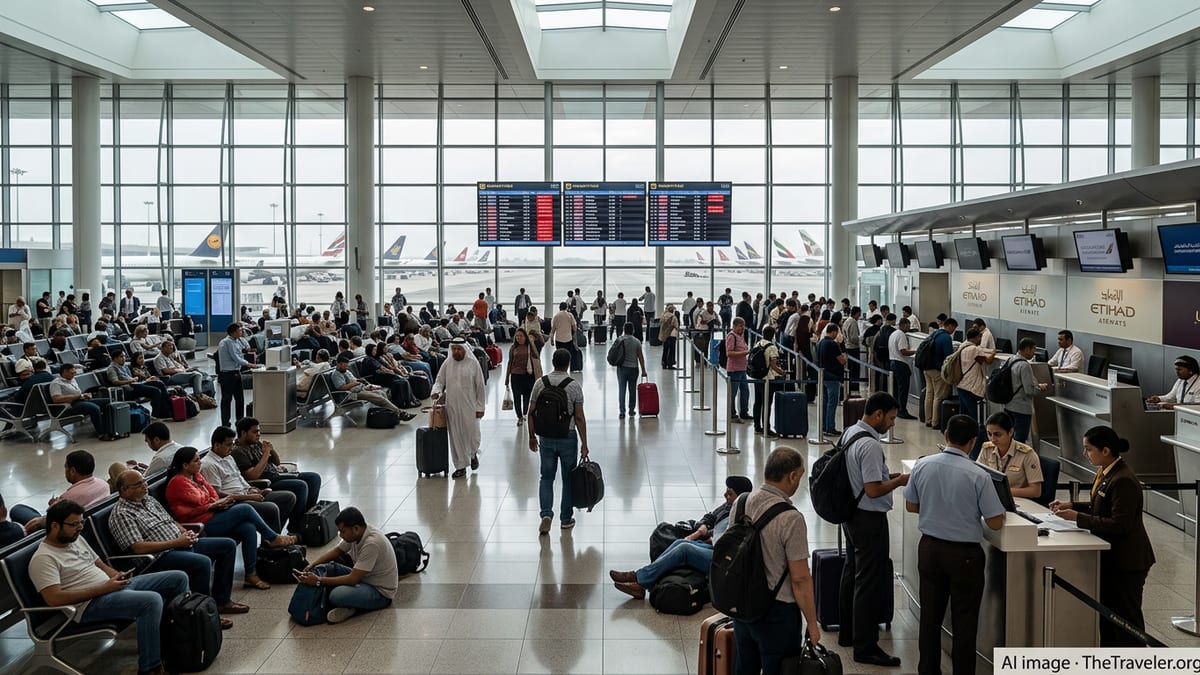
Regional tensions continue to affect Gulf airspace
Publicly available information from regional media and aviation data indicates that continuing instability linked to the conflict involving Iran is reshaping traffic flows across the Middle East. The disruption has prompted some airlines and passengers to avoid certain airspace and hubs, contributing to weaker demand on specific routes and more complex network planning for carriers based in the UAE.
Reports on recent airport traffic figures show that Dubai International Airport recorded a noticeable slowdown in passenger volumes in the second quarter of 2026 compared with earlier in the year, with management attributing part of the decline to the effect of the Iran war on traveler sentiment and route choices. This backdrop has sharpened attention on schedule reliability and contingency planning at major Gulf hubs.
The shifting conditions have had knock-on effects across multiple markets served by UAE airlines, from nearby Gulf states to longer-haul routes that traditionally relied on Middle East connections. While the core UAE airports remain open and fully operational, network adjustments and more cautious routing policies have in some cases translated into longer journey times or altered departure patterns.
Industry observers note that the current situation is dynamic, with airlines periodically updating timetables, rerouting flights around sensitive airspace and reviewing capacity on routes where demand has softened. Travelers are being urged through public channels to remain alert to short-notice changes and to make use of online tools to track flight status before setting out for the airport.
Emirates adjusts network amid softer traffic
For Emirates, the largest carrier based at Dubai International, published coverage of the airport’s latest quarterly statistics points to a sharp drop in passenger numbers over the April to June period of 2026. The figures highlight the extent to which geopolitical tensions and related airspace concerns have temporarily dented one of the world’s busiest long-haul transfer hubs.
Although Emirates has not issued a blanket disruption advisory, the combination of rerouting, altered flight paths and fluctuating demand has prompted a more measured approach to capacity deployment on certain regional and long-haul sectors. Public flight-status information and timetable updates show selective schedule tweaks rather than widespread cancellations, with an emphasis on keeping core trunk routes operating while trimming frequencies where needed.
The airline has continued to direct customers to its online flight-status tools and mobile channels, where same-day and near-term changes are reflected. In the context of a large, globally distributed network, this digital infrastructure is playing a central role in helping passengers navigate potential last-minute adjustments linked to airspace restrictions or operational considerations.
Travel industry analysts commenting in specialist media underline that Emirates is balancing short-term operational challenges with longer-term fleet and network plans, including the gradual introduction of new aircraft types. The carrier’s ability to redeploy widebody capacity at scale is viewed as a key factor in managing disruption and restoring growth once geopolitical conditions stabilize.
Etihad continues targeted cancellations on Kuwait routes
Etihad Airways, based in Abu Dhabi, has been among the UAE airlines most visibly affected by disruptions on routes to Kuwait in recent weeks. According to detailed reporting in regional outlets, the airline extended a series of flight cancellations between Abu Dhabi and Kuwait City through at least July 24 after Kuwait International Airport imposed temporary restrictions on take-offs and landings in response to repeated missile and drone threats in its vicinity.
The extended cancellations followed earlier schedule adjustments and have primarily impacted passengers traveling between the two capitals and those using Abu Dhabi as a connecting point. Publicly accessible schedules indicate that Etihad has periodically reinstated selected rotations as conditions allowed, while maintaining a reduced level of service on the route compared with normal operations.
Guidance shared through Etihad’s customer-facing channels has encouraged affected travelers to rebook on alternative dates, reroute through other destinations where feasible, or request refunds in line with applicable fare rules. The airline has stated through its published updates that its priority remains the safety of passengers and crew, with operational decisions shaped by ongoing risk assessments and coordination with aviation authorities.
Travelers already in transit have experienced a mix of outcomes, from relatively smooth reaccommodation on later flights to longer disruptions when capacity on alternative services has been constrained. Travel agents and booking platforms have reported elevated demand for flexible tickets and clearer disruption policies on Gulf routes as a result of the uncertainty.
flydubai and Air Arabia respond to Gulf airport constraints
Low cost carriers flydubai and Air Arabia have also faced operational headwinds linked to Gulf airspace and airport restrictions. Media coverage of the Kuwait situation notes that both airlines experienced a wave of cancellations and delays on flights between the UAE and Kuwait during the height of the recent disruptions, with some services later reinstated as operating windows reopened.
Information posted on flydubai’s operational updates page shows that the airline continues to monitor regional developments closely and to adjust its schedule in line with demand and local regulatory requirements. Recent notices highlight changes at several airports, including a move in late February 2026 of Riyadh operations to a different terminal, underlining how infrastructure and security considerations remain fluid across the network.
Air Arabia, which operates from Sharjah and additional bases across the region, has followed a similar pattern of targeted schedule changes on affected Gulf routes. Publicly available reports describe a combination of outright cancellations, retimed services and aircraft swaps intended to maintain connectivity while limiting exposure to airports experiencing heightened security measures.
Both carriers are emphasizing self-service tools for customers, encouraging the use of airline websites and mobile applications to check the latest flight status, manage bookings and understand eligibility for rebooking or credit shells in the event of disruption. This focus reflects the fast-moving nature of Gulf operations, where conditions can change within hours based on security assessments or airspace notices.
Passengers urged to track flights as conditions remain fluid
Across the UAE aviation sector, the message from publicly available guidance is that passengers should expect a more changeable operating environment than in pre-conflict years. While the vast majority of flights on Emirates, Etihad, flydubai and Air Arabia continue to operate as scheduled, pockets of disruption around sensitive regional hubs, particularly in Kuwait and parts of Saudi Arabia, can create knock-on effects for itineraries connecting through Dubai, Abu Dhabi, Sharjah and Ras Al Khaimah.
Travel experts quoted in regional coverage recommend that passengers build in additional buffer time for connections, especially when itineraries involve multiple Gulf airports or late-night bank departures. Adding flexibility through refundable or changeable fares, or by selecting flights earlier in the day where possible, is also framed as a practical response to potential last-minute adjustments.
Airlines and airports in the UAE have invested heavily in digital tools that allow travelers to receive push notifications, email alerts and real-time status information. Making full use of these systems, along with monitoring local news for updates on regional tensions or weather patterns, is increasingly seen as an essential part of trip planning in and out of the Gulf.
With the broader geopolitical picture still evolving, industry observers anticipate that UAE carriers will continue fine-tuning schedules and capacity on a rolling basis. The combination of large, flexible fleets and strong hub infrastructure positions Emirates, Etihad, flydubai and Air Arabia to absorb a significant share of the disruption, but passengers are being encouraged through public channels to stay informed and prepared for changes right up to the day of travel.
UAE and Kuwait flight disruptions report – The National
Dubai airport traffic impact from regional conflict – AP News