


More news on this day
Back-to-back cancellations on Delta Air Lines’ Lagos–Atlanta service in late August 2026 left scores of travelers stranded at Murtala Muhammed International Airport, highlighting the fragility of a vital transatlantic link between Nigeria and the United States.
Get the latest news straight to your inbox!
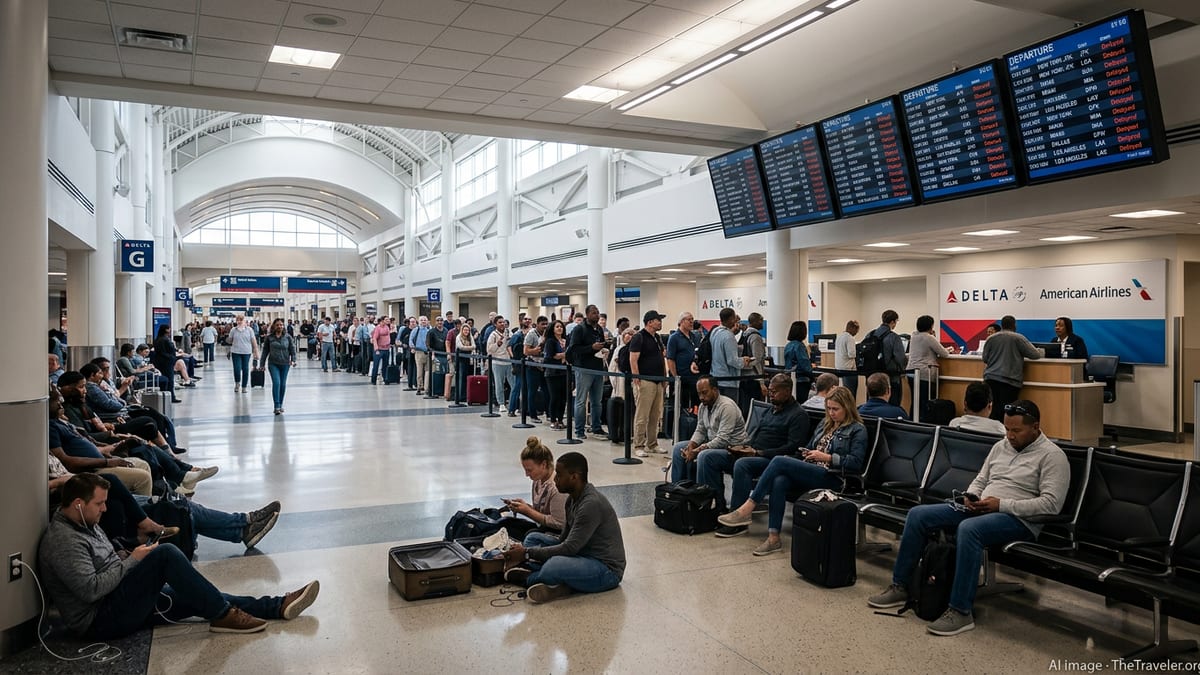
Back-to-back disruptions on a key transatlantic route
Publicly available flight information and Nigerian media coverage indicate that a Lagos–Atlanta departure identified by travelers as flight DL9895 was first cancelled on Sunday, August 23, 2026, with passengers already checked in at Murtala Muhammed International Airport. The service was a key overnight connection to Hartsfield–Jackson Atlanta International Airport, used by many travelers continuing to destinations across the United States.
Reports indicate that the flight was rescheduled for a later date in the same week, but the second attempt to operate the Lagos–Atlanta service also did not depart as planned. Coverage from Nigerian aviation and legal outlets describes the situation as a twin disruption that effectively wiped out two consecutive opportunities for affected passengers to leave Lagos for Atlanta.
Tracking dashboards used by travelers show that the disruption affected at least one rotation on the wider Lagos–Atlanta pairing, including the associated Atlanta–Lagos leg used to position aircraft back into Nigeria. The cancellations came during a period of broader operational strain for major carriers on long-haul routes, where aircraft utilization and crew availability are tightly balanced.
The Lagos–Atlanta link is among West Africa’s most important nonstop corridors to the United States, and repeated cancellations on the route can have ripple effects far beyond the two cities. Passengers connecting to US domestic flights, as well as those with time-sensitive travel such as medical appointments, school start dates or limited-entry visas, can face cascading disruptions when a primary long-haul sector fails to operate.
Mechanical issues, crew constraints and operational knock-on effects
Published accounts from Nigerian media and regional travel sites attribute the first cancellation to a technical or maintenance issue affecting the aircraft scheduled to operate the Lagos–Atlanta service. In subsequent notifications shared with passengers, references to crew availability and operational constraints appeared, mirroring language commonly used across the industry when duty-time limits and staffing shortages complicate recovery from an initial disruption.
Reports from legal and travel-industry platforms note that once a long-haul flight is cancelled close to departure, airlines must navigate a complex puzzle of aircraft positioning, mandatory crew rest, and available slots at busy hubs. In this case, the combination of a technical problem and duty-time limits appears to have contributed to an extended disruption rather than a single isolated cancellation.
Coverage also highlights a broader pattern of strain on some transatlantic operations, where high summer demand and limited spare widebody capacity leave airlines with fewer options when something goes wrong. In such environments, one mechanical issue can trigger a series of delays, misaligned crew rotations and eventual cancellations on subsequent days if recovery windows are narrow.
Industry analysis frequently points out that long-haul routes linking Africa and North America are especially vulnerable to this dynamic. With relatively few daily frequencies compared with transatlantic trunk routes in Europe, passengers often have fewer same-day alternative options when a flight is scrubbed, increasing the likelihood of overnight stays and multi-day delays.
Passengers report overnight stays, limited support and costly workarounds
Nigerian travel outlets and regional news reports describe passengers being left in Lagos for multiple days after the initial August 23 cancellation, with many travelers seeking last-minute accommodation and transportation on their own. Some accounts indicate that not all affected passengers received immediate hotel placements or meal assistance during the first night of disruption.
Subsequent coverage and social media commentary referenced travelers attempting to rebook on other airlines via European and Middle Eastern hubs, often at significantly higher fares given the short notice and late-August travel period. For passengers holding nonrefundable tickets or complex itineraries, switching carriers mid-journey can involve additional costs and administrative hurdles, including changes to US domestic connections and separate tickets.
Reports from Nigerian legal and consumer-focused platforms emphasize that the impact of such cancellations goes beyond inconvenience. Missed business commitments, time-sensitive medical appointments and academic start dates are among the consequences cited, alongside the financial strain of unplanned hotel stays, airport transfers and replacement tickets purchased at peak-season prices.
Publicly available information also shows that some passengers opted to wait for Delta’s next available Lagos–Atlanta service, while others abandoned their original itineraries in favor of multi-stop routings through alternative hubs. In either case, travelers faced significant uncertainty about when they would eventually arrive in the United States.
Regulatory rights and what stranded travelers can claim
Consumer advocates in Nigeria and abroad have used the latest Lagos–Atlanta disruptions to reiterate the importance of understanding passenger rights on international routes. Guidance shared in recent coverage points out that travelers on cancelled long-haul flights are often entitled to a refund if they choose not to be rebooked, even when the cancellation is attributed to operational or technical reasons.
Information from aviation-law specialists explains that eligibility for additional compensation or care depends on several factors, including where the ticket was purchased, the operating carrier and whether local or regional passenger-rights regulations apply. While the precise framework for flights between Nigeria and the United States differs from rules in some other markets, commentators note that overnight cancellations typically trigger obligations related to accommodation, meals and ground transport, subject to the circumstances of the disruption.
Publicly available guidance from consumer-protection agencies in the United States underscores that passengers whose flights are cancelled and who decide not to travel can usually request a refund of the unused portion of their ticket, even on nonrefundable fares. Advocates advising Lagos–Atlanta travelers encourage passengers to document all additional expenses, keep boarding passes and receipts, and retain written communications from the airline to support any refund or reimbursement requests.
Travel-law resources further suggest that affected passengers review both the airline’s own conditions of carriage and any applicable Nigerian aviation regulations. Where voluntary rebooking or vouchers are offered, experts recommend comparing these options against the value of a cash refund, especially in cases where travelers no longer wish to complete the disrupted journey.
Implications for confidence in the Lagos–Atlanta corridor
The twin cancellations on Delta’s Lagos–Atlanta service have drawn renewed attention to the reliability of a route that serves business travelers, students, diaspora families and tourists on both sides of the Atlantic. For many Nigerian travelers heading to the United States, a nonstop service to Atlanta offers the most direct access to Delta’s domestic network, making disruptions on this corridor particularly consequential.
Regional travel commentators note that Nigeria’s outbound market has grown steadily in recent years, with demand for seats on US-bound routes often outpacing capacity during peak seasons. In that context, cancellations on one of the limited nonstop options can quickly drive up prices on competing services and constrain choices for time-sensitive trips.
Observers also point out that while individual operational disruptions are not unusual in global aviation, high-profile incidents on strategic routes can influence traveler perceptions when they occur in quick succession. Back-to-back cancellations on a single Lagos–Atlanta rotation, combined with passenger reports of overnight stranding and uneven assistance, risk eroding confidence among frequent flyers and first-time travelers alike.
Travel-industry analysis suggests that future booking patterns on the corridor will depend on how reliably carriers operate the route in the coming months and how transparently they communicate during any further irregular operations. For now, the latest disruptions serve as a reminder that passengers on long-haul services with limited daily frequencies may face significant challenges if a key flight fails to depart.
ThisDay: Passengers Stranded as Delta Cancels Lagos–Atlanta Flights
Nigeria Travel Smart: Delta’s Lagos–Atlanta Cancellations Leave US-Bound Travellers Stranded
TheNigeriaLawyer: Delta Lagos–Atlanta Passengers Stranded After Back-to-Back Disruptions
TravelTrade: Delta Leaves Lagos–Atlanta Passengers Stranded After Twin Disruptions