


More news on this day
Holidaymakers heading from Manchester to Turkey’s Antalya resort region faced severe disruption after an easyJet flight was cancelled on the runway and a replacement service later diverted to Milan, leaving passengers more than 1,200 miles off course.
Get the latest news straight to your inbox!
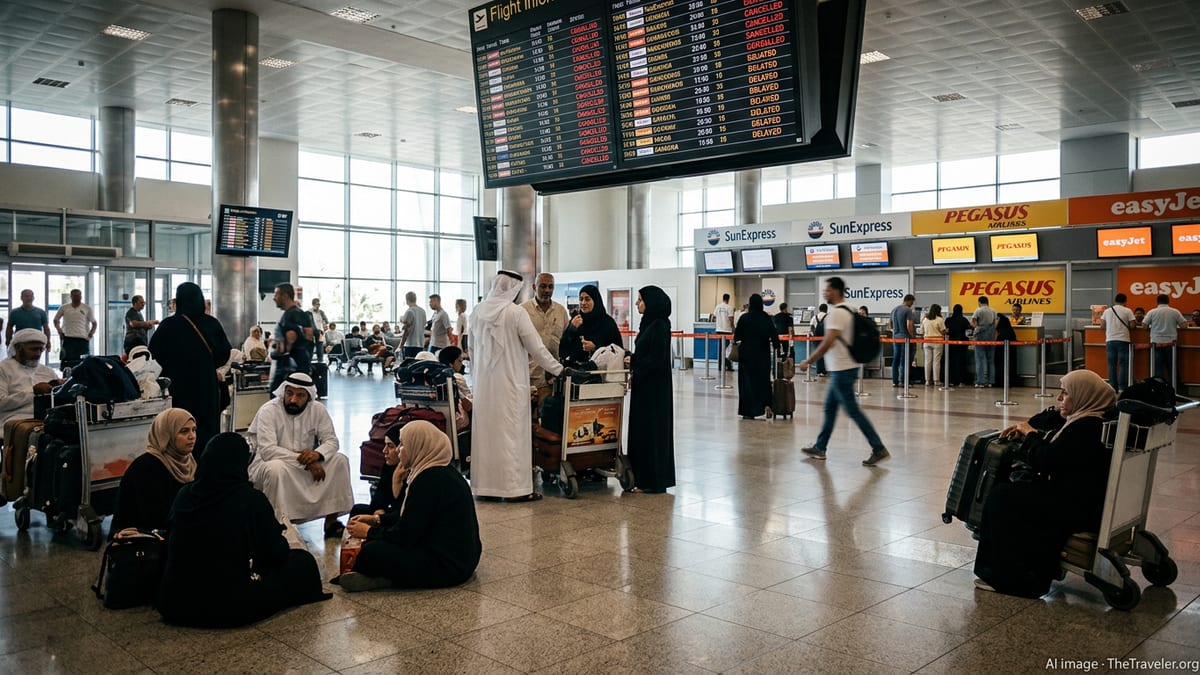
Runway cancellation triggers a chain of disruption
According to multiple UK media reports and open-source flight data, the disruption began at Manchester Airport when an easyJet service to Antalya was halted shortly before take-off. Passengers had already travelled to the airport for an early-morning departure and had boarded buses to the aircraft when they were instructed to return to the terminal, with little clarity on how the journey would proceed.
The original flight, understood to be operating under an early Manchester–Antalya rotation on 28 August, did not leave the runway as scheduled. Coverage from UK outlets indicates that the aircraft was stood down minutes before departure, after passengers had expected imminent boarding and pushback. Many on board were families with children at the start of a long-awaited summer holiday toward Turkey’s Mediterranean coast.
Reports indicate that travellers were later offered a replacement flight the same day, with the expectation that they would still reach Antalya, albeit several hours behind schedule. For many, the apparent prospect of salvaging the trip made the subsequent events particularly frustrating.
Replacement flight diverts to Milan instead of Antalya
Once the substitute service eventually departed Manchester, passengers believed they were finally en route to Turkey. However, flight-tracking records and subsequent media coverage show that the aircraft did not continue to Antalya as planned. Instead, it diverted to Milan in northern Italy, landing more than 1,200 miles from the original destination on Turkey’s southern coast.
Accounts compiled by UK news sites describe a lengthy delay before departure, followed by an unexpected announcement in the air that the aircraft would no longer head to Antalya. Publicly available information indicates that duty-time limits for crew and operational constraints on the long sector to Turkey were key factors in the decision to divert to Italy rather than complete the journey.
The diversion left travellers in Milan with no direct onward flight to Antalya that day, extending the disruption significantly. While easyJet is reported to have provided food vouchers and arranged onward travel and accommodation options, passengers still faced the prospect of salvaging complex holiday itineraries from an airport far from their planned arrival point.
Operational pressures and summer schedule strain
This incident comes at a time when European airlines are navigating intense summer demand, tight staffing rosters and strict crew duty regulations. Aviation-focused reporting on the Manchester–Antalya disruption highlights how a combination of initial delay, crew hour limits and aircraft availability can rapidly cascade into major schedule upheaval on popular leisure routes.
Analysts note that early-morning departures from busy airports such as Manchester are particularly vulnerable. Any delay within the turnaround window can push flights closer to the edges of crew duty limits, narrowing the margin for operating longer sectors to destinations such as the Turkish Riviera without breaching safety-related working time rules.
In this case, the decision to operate a shorter sector to Milan rather than continue to Antalya appears to have been taken to keep operations within those limits and ensure the aircraft and crew could be repositioned within the airline’s wider network. While this may help stabilise schedules system-wide, it can leave individual planeloads of passengers facing lengthy, complex rebooking processes.
Passenger experience and welfare concerns
Media summaries and passenger accounts collected by UK outlets describe a stressful experience, particularly for families with young children. Travellers faced an early start for a morning departure, an abrupt cancellation on the runway, hours of uncertainty in the terminal, and then a flight that ultimately terminated in a different country rather than in Turkey.
Reports indicate that after landing in Milan, passengers spent further time waiting for information about hotel arrangements, meal vouchers and onward travel. Some coverage notes that other airlines operating similar routes from Manchester to Antalya that morning completed their flights as planned, which added to frustration among those affected.
The episode illustrates the emotional and logistical impact when high-season leisure flights encounter cascading operational problems. With package holidays often tightly timed around accommodation check-in, transfers and onward excursions, a diversion of more than 1,200 miles can jeopardise a significant portion of a trip even when eventual re-routing is offered.
What UK and EU air passenger rules say
Under UK and EU261 air passenger rights rules, travellers on flights that are cancelled or significantly delayed are generally entitled to care and assistance, including meals, refreshments and, when necessary, hotel accommodation and transport between the airport and accommodation. Passengers on the Manchester–Antalya service reportedly received food vouchers during their wait in Milan, in line with these obligations.
Whether additional cash compensation is payable usually depends on the cause of the disruption and whether it is considered within the airline’s control. Published guidance explains that factors such as severe weather or certain air traffic control restrictions may be classified as extraordinary circumstances, while staffing or scheduling issues are more often viewed as operational matters that can trigger compensation.
Consumer travel advocates routinely advise passengers caught up in similar incidents to keep all receipts, document timings and communications, and submit formal claims via the airline’s website. If a claim is rejected, travellers can escalate the case to the relevant national enforcement body or an alternative dispute resolution scheme recognised for the airline’s home jurisdiction.
Growing scrutiny of reliability on Turkey leisure routes
Antalya and other Turkish coastal destinations rank among the most sought-after summer getaways from UK airports, with carriers operating dense schedules from Manchester, London and regional hubs. The scale of demand has sharpened attention on service reliability, particularly when multiple disruptions on Turkey-bound flights gain publicity in quick succession.
Recent coverage of the Manchester–Antalya diversion suggests that policy makers, regulators and consumer groups are likely to examine how airlines plan for peak-season resilience. Issues such as crew rostering buffers, availability of standby staff and contingency planning for long leisure sectors are increasingly in focus as airports grapple with post-pandemic recovery and fluctuating travel patterns.
For travellers preparing similar itineraries, the incident serves as a reminder to monitor flight status closely, ensure contact details are up to date with airlines and travel agents, and understand entitlements under air passenger rights frameworks in case a long-awaited holiday does not go to plan.
Independent: EasyJet passengers stranded after flight to Turkey diverted 1,200 miles away
Yahoo News: EasyJet passengers stranded after flight to Turkey diverted 1,200 miles away
Brit Brief: EasyJet flight from Manchester to Antalya diverted to Milan
Aviation A2Z: EasyJet passengers stranded in Milan after flight to Antalya takes detour