


More news on this day
Delta Air Lines is racking up more delays than any other major U.S. carrier as slow-moving storms and a recent flood watch around Atlanta disrupt operations at the airline’s busiest hub and ripple across its domestic network.
Get the latest news straight to your inbox!
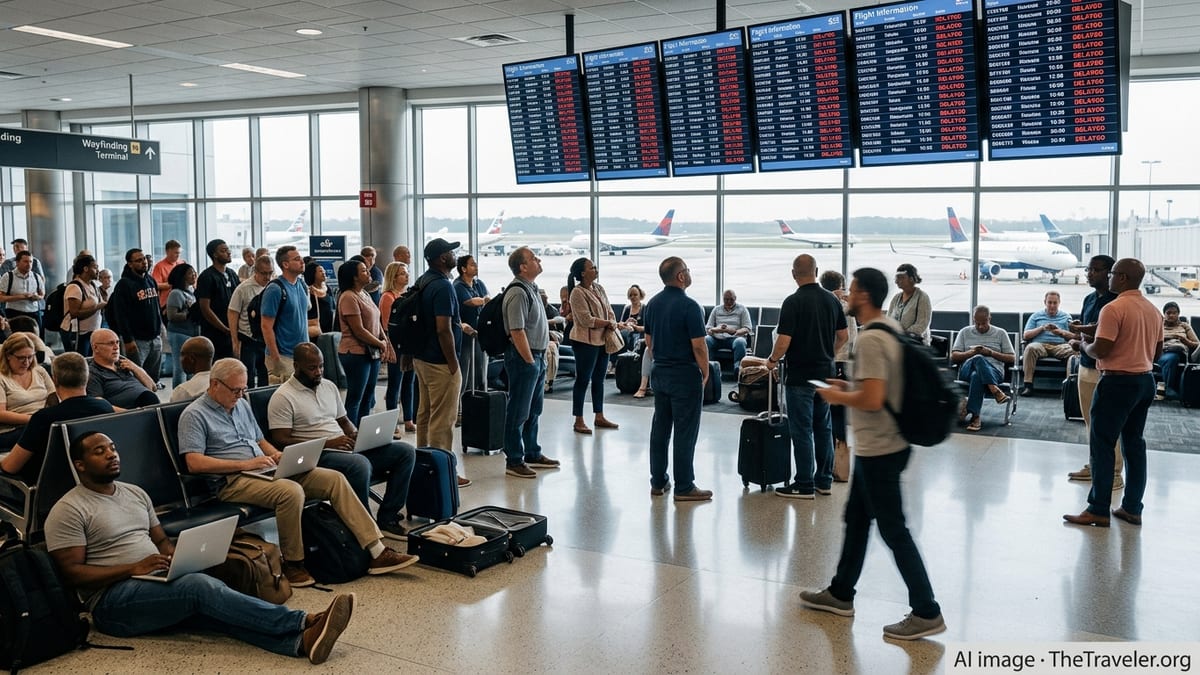
Stormy Pattern and Flood Watches Snarl Atlanta Operations
Metro Atlanta has been cycling through rounds of heavy rain, thunderstorms and localized flood watches in recent days, creating challenging conditions around Hartsfield-Jackson Atlanta International Airport, the primary hub for Delta Air Lines. Forecasters have highlighted back-to-back systems capable of dropping significant rainfall over short periods, increasing the risk of street flooding and low-lying runoff just as peak summer travel begins.
Recent outlooks for north Georgia describe a hot, humid pattern with scattered storms giving way to more widespread rain and possible street flooding on some evenings. Weather coverage from local broadcasters indicates that commuters are being warned to monitor conditions closely, with the potential for rapid changes in visibility and ground conditions near the airport as the strongest cells pass through.
These unsettled conditions have coincided with a series of flood watches and flash-flood alerts in the wider Atlanta area. While not every period of rainfall directly affects flight operations, the cumulative impact of repeated storm rounds and saturated ground has raised the possibility of runway standing water, ramp slowdowns and ground stops when lightning moves overhead.
Industry observers note that Atlanta’s role as one of the world’s busiest passenger hubs magnifies any weather disruption. Even short periods of heavy downpours or thunderstorm proximity can trigger spacing requirements on the airfield, causing departure queues and arrival holds that quickly translate into missed connections far from Georgia.
Delta’s Delays Outpace Rivals as Disruptions Cascade
Publicly available flight-tracking data and traveler reports indicate that Delta is currently posting higher delay and cancellation counts than most U.S. competitors on several weather-affected days this month. On multiple occasions, Delta’s operation has seen hundreds of delayed flights by midafternoon, driven in part by constraints at Atlanta and other storm-prone hubs.
Online delay trackers show that when thunderstorms build over north Georgia, a disproportionate share of impacted flights carry Delta numbers, reflecting the carrier’s deep exposure to the region. Social media and aviation forums are filled with accounts from passengers describing rolling departure pushes at Atlanta, last-minute gate changes and aircraft reroutes when storms force changes to active runways or approach paths.
Some disruptions appear to extend beyond one-off thunderstorms. Earlier in May, users on travel and aviation message boards documented days when Delta cancellations approached or exceeded 200 flights while rival airlines reported far lower tallies. Contributors attributed the gap partly to the airline’s hub-and-spoke structure, which channels a large volume of domestic and international traffic through a weather-sensitive bottleneck.
While any major carrier can struggle during severe weather, analysts following the sector suggest Delta’s recent performance underscores how quickly a localized storm cluster, layered on top of a tight schedule and high load factors, can push an operation out of sync. When a bank of arrivals into Atlanta is delayed by even an hour, the knock-on effects can ripple across dozens of spokes and persist well into the next travel day.
Ground Stops, Flood Risk and FAA Constraints at ATL
Federal aviation data shows that Atlanta has been operating under multiple constraints during the current stormy stretch. National airspace status reports list targeted restrictions around Hartsfield-Jackson, including limits on certain categories of traffic and periods when general aviation movements are curtailed to preserve capacity for scheduled airline operations.
When heavy rain, lightning or low clouds reduce the available arrival and departure rates at a busy hub, air traffic managers may implement ground stops, metering programs or reroutes. These measures are designed to maintain safety and prevent gridlock on taxiways, but they also lengthen delays for passengers already boarded on aircraft or waiting in packed concourses for connecting flights.
In the context of a flood watch, airport crews can also face additional constraints on ramp operations, from temporarily halting baggage loading during lightning to navigating pooled water around gates and service roads. Although airport infrastructure is designed to drain quickly, intense bursts of rain can overwhelm stormwater systems, forcing airlines to slow aircraft movements until conditions improve.
For Delta, these operational realities at its central hub translate directly into network strain. Flights that are held on the ground in other cities while waiting for a slot into Atlanta may miss onward connections, leaving aircraft and crews out of position for subsequent segments. Even when individual flights ultimately arrive close to schedule, the uncertainty complicates staffing and gate planning during what is already a high-demand period.
Travelers Confront Missed Connections and Longer Recovery Times
For passengers, the combination of flood-risk weather and a heavily utilized hub has meant a sharp increase in schedule anxiety. Posts on frequent-flyer and airline forums describe travelers building in extra connection time at Atlanta, switching to earlier flights when possible, or reconsidering tight layovers that might have been comfortable in calmer seasons.
In several recent cases, itinerary disruptions have not been limited to hour-long delays. Travelers recount diversions to alternate airports when storms parked over the Atlanta arrival corridor, resulting in unexpected overnight stays and missed international connections. Others highlight situations where a single canceled leg cascaded into multi-day rebookings as already-full flights left limited room to absorb displaced passengers.
The recovery from each storm system can also take longer than many travelers expect. Once a weather band moves out of the immediate area, airlines still need to reposition aircraft, reassign crews that may have hit duty limits during earlier delays, and accommodate customers who missed flights through no fault of their own. With load factors running high across the industry, same-day alternatives can be scarce, particularly on popular business routes and evening departures.
Consumer advocates advise passengers to pay close attention to operational alerts issued by airlines and to consider carrying-on luggage when feasible to reduce the risk of checked-bag misrouting during irregular operations. Some travel experts are also recommending that customers with essential same-day commitments look at non-stop options that bypass Atlanta entirely when the forecast points to another round of heavy storms.
What the Pattern Signals for Summer Travelers
The recent wave of delays at Delta’s Atlanta hub arrives just as the U.S. airline industry heads into the heart of the summer peak, a period already associated with tight aircraft utilization and limited slack in schedules. Aviation analysts note that if this stormy pattern persists into June and July, travelers could see more frequent weather-driven disruptions, especially on routes tightly linked to Atlanta.
Forecast discussions for north Georgia suggest that alternating stretches of heat, humidity and thunderstorms are likely to continue, with additional flood watches possible when moisture-rich systems stall over the region. While precise impacts on any given travel day remain uncertain, the combination of volatile weather and heavy passenger demand points to a heightened risk of irregular operations compared with quieter times of year.
For Delta, the current challenges may also serve as a test of its broader resilience strategy. Industry commentary has focused on how carriers balance tight scheduling and aircraft utilization with enough flexibility to absorb shocks from weather, air traffic control constraints and technical issues. The airline’s experience in Atlanta this month will likely inform how it schedules and staffs key hubs as summer progresses.
Travel planners recommend that passengers monitor forecasts for Atlanta and their connecting cities closely in the 48 hours before departure, take advantage of fee waivers or flexible rebooking options when offered, and build contingency time into itineraries. With flood watches and storm chances frequently in the forecast around Delta’s biggest hub, a little extra margin could make the difference between a manageable delay and an unexpectedly extended trip.