


More news on this day
United Airlines is expanding its use of artificial intelligence to explain flight delays in greater detail, using generative models to turn streams of operational data into near real-time updates for passengers on disrupted journeys.
Get the latest news straight to your inbox!
A New AI Layer on Top of Flight Operations
Publicly available information shows that United has been investing heavily in generative AI tools that sit on top of its existing operations systems and customer apps. One of the most visible results is an external-facing large language model that pulls data from aircraft routing, crew scheduling, maintenance notes and weather feeds to generate delay explanations written in everyday language.
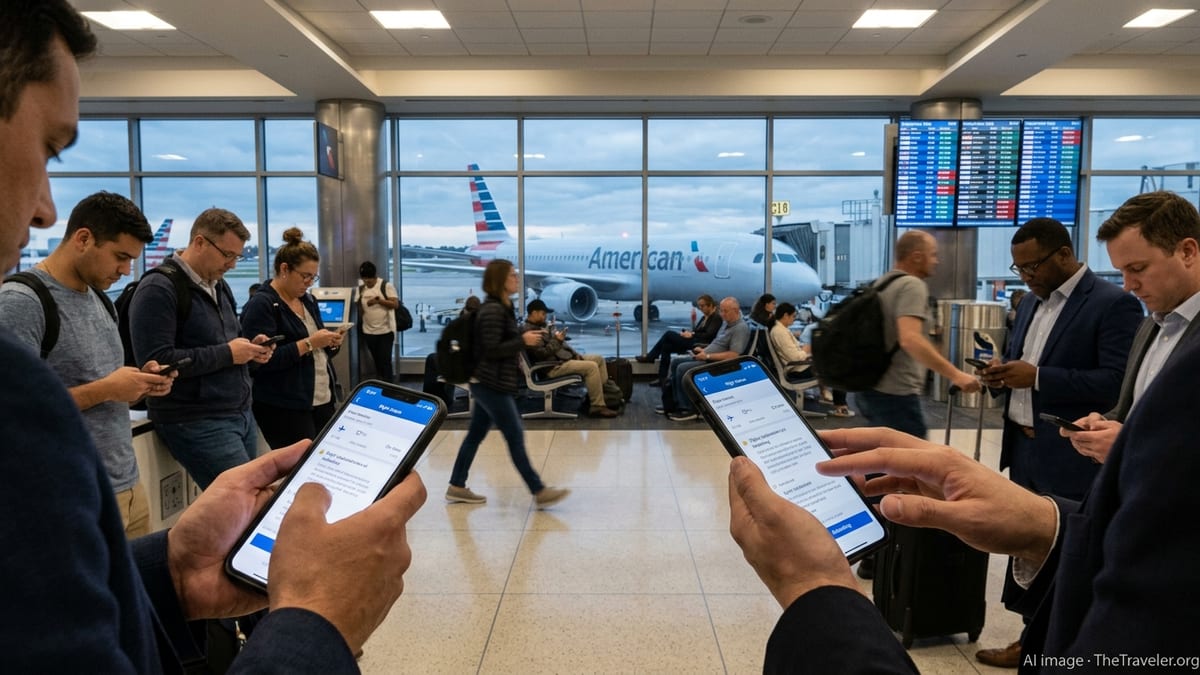
Reports indicate that this system, described internally as part of an initiative known as “Every Flight Has a Story,” is already being used to craft many of the delay messages that appear in the United mobile app and in text notifications. Instead of generic alerts that a flight is “delayed,” customers increasingly receive specific narratives about an aircraft waiting on a late-arriving inbound plane, a crew reaching legal duty limits or thunderstorms closing arrival routes.
Coverage in business and technology outlets notes that United has also built a tailored version of a popular conversational AI model for internal use, alongside tools branded as UnitedGPT, to support employees. The delay-explanation engine is one of the first customer-facing applications of that broader generative AI strategy, and executives have pointed to measurable gains in satisfaction scores when travelers receive clearer information about why their flights are not operating as planned.
From Human-Written Messages to AI-Assisted “Stories”
For several years, United relied on small teams of staff whose job was to write and send tailored notifications when flights encountered irregular operations. These teams monitored live operational feeds and attempted to translate technical details into concise updates covering everything from gate changes to aircraft swaps and crew rescheduling.
According to published coverage, those teams now work alongside generative AI tools that can assemble first drafts of delay explanations in seconds by correlating multiple data sources. The human specialists remain involved for complex or high-stakes situations, but routine disruptions are increasingly handled by AI-generated messages that are reviewed only lightly or, in some cases, delivered automatically.
Travel-industry analyses describe United as one of the first major U.S. carriers to roll out such specific, situation-based delay explanations at scale. In addition to narrative text, the airline’s systems can surface contextual information such as the location of the incoming aircraft and whether air traffic control programs or airport congestion are contributing to delays.
Some app updates are now labeled as being “powered by generative AI,” signaling to customers that the explanation has been produced by an automated system trained on United’s operational data. Early user feedback shared in public forums suggests that many travelers welcome the extra detail, even when the news is bad, because it helps them understand whether to rebook, wait or adjust plans on the ground.
Weather Maps, Maintenance Clarity and Real-Time Context
United’s delay-notification push is closely tied to weather, a leading cause of disruptions across the U.S. aviation system. Public documentation and news coverage highlight that the airline now texts customers links to live radar imagery when storms affect their routes and displays similar maps on airport gate screens, helping explain why flights are held even when skies appear clear at a given airport.
The same generative AI tools that write delay messages can incorporate these weather details into their narratives. Instead of a brief reference to “weather,” passengers may see explanations describing storms along the arrival corridor, ground stops issued for a specific hub, or restrictions on traffic volume into a congested airspace sector.
Commentary in aviation and technology outlets also notes that United has discussed using AI to bring more transparency to maintenance-related delays. Proposals outlined in public presentations include sending selected maintenance information or short videos that illustrate why an aircraft must remain on the ground, paired with AI-generated text that explains the work in accessible language while avoiding technical jargon.
These efforts are framed as part of a wider industry shift toward providing context about delays rather than simply new departure times. By giving travelers clearer reasons, airlines aim to reduce frustration, cut down on repeated queries to gate agents and contact centers, and demonstrate that safety or regulatory requirements are driving decisions when flights cannot depart on schedule.
Benefits, Limits and Concerns for Travelers
Technology and customer-experience analyses suggest that United’s AI-based delay explanations can help set expectations earlier in the disruption process. If passengers receive credible, detailed messages before leaving home or while still at a hotel, they may be more likely to adjust connections, rebook itineraries or delay their trip to the airport, easing crowding during major disruptions.
However, there are limits. Public commentary from travelers indicates that the accuracy of predicted departure times can still lag behind fast-changing operational realities. Aircraft swaps, late-arriving crews or sudden air traffic control restrictions can shift a forecast several times, leaving customers to sort through a series of app notifications that may not fully capture what is happening in the background.
There are also broader questions about how AI-generated explanations intersect with compensation and customer rights. Because many policies distinguish between airline-controlled issues and external causes such as weather or air traffic control, some observers have raised concerns that automated messages might be inconsistent or incomplete in describing the source of a delay, complicating efforts to seek vouchers or reimbursements.
Specialists in AI ethics and transparency, writing in public forums, have emphasized that while generative tools can make communication faster and more conversational, airlines still need clear governance over what information is shared and how. Without careful design and oversight, automated narratives risk overstating certainty, underplaying operational complexity or omitting key details that matter to travelers facing missed connections and overnight stays.
Part of a Larger AI Race in Commercial Aviation
United’s use of generative AI for delay explanations forms one piece of a broader technology race in commercial aviation. Industry reports describe airlines around the world experimenting with AI to forecast disruptions, optimize crew schedules, reroute aircraft, and streamline contact center interactions through chatbots and virtual assistants.
In the United States, several major carriers are working with large cloud providers and research partners on tools that can predict delays hours in advance by combining historical performance, live weather and air traffic control data. Some of these systems are complemented by conversational interfaces that allow staff or passengers to ask natural-language questions about the status of specific flights.
United’s high-profile delay-notification rollout positions it as a prominent early adopter of generative AI in customer communication. Analysts suggest that if travelers respond positively to richer, more transparent explanations, rival airlines are likely to accelerate their own deployments, potentially setting a new baseline for what passengers expect when something goes wrong.
At the same time, recent technology outages in the aviation sector highlight the risks of growing digital complexity. Observers note that as carriers lean more heavily on software to run operations and to communicate with passengers, resilience, backup systems and clear manual fallback procedures remain critical. For travelers, the arrival of AI-authored delay stories may make disruption days slightly more understandable, but the underlying challenge of keeping flights running on time is far from solved.