


More news on this day
Passengers travelling through Delhi’s Indira Gandhi International Airport over the coming days are being advised to prepare for possible delays and diversions as intense pre-monsoon storms move across northern India, breaking a searing heatwave but disrupting already strained air traffic operations.
Get the latest news straight to your inbox!
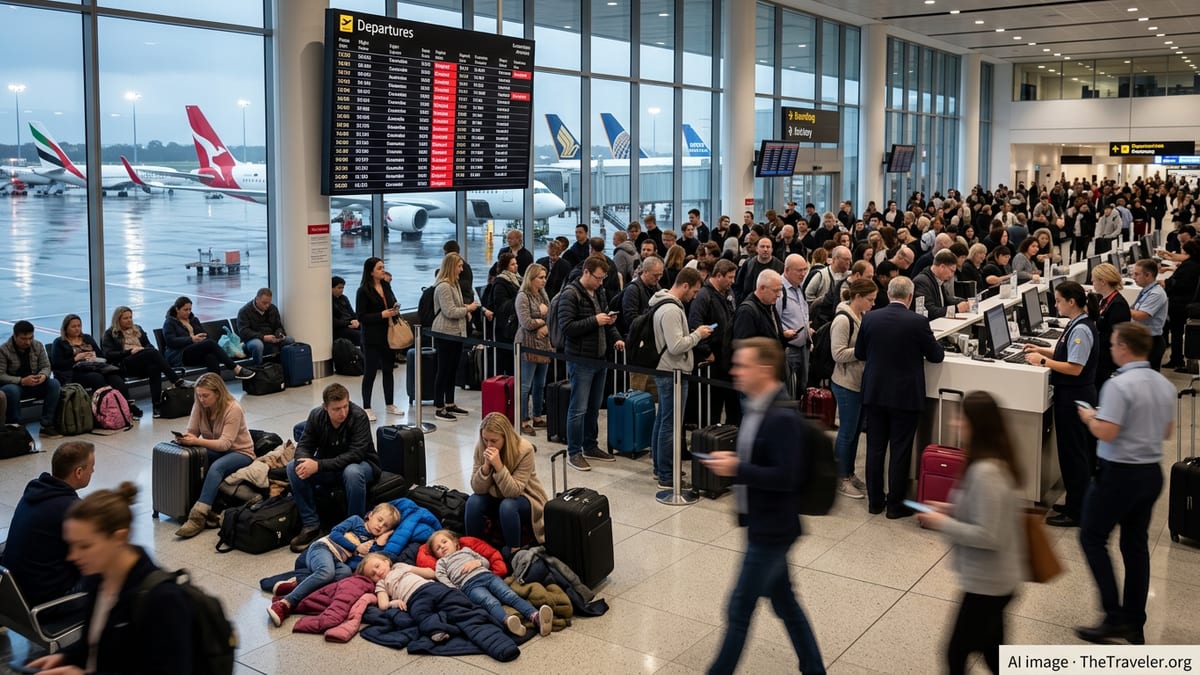
Heavy Rain And Thunderstorms Hit Key Air Hub
Published coverage from Indian media on May 28 indicates that strong thunderstorms and heavy rain over the National Capital Region have already led to disruption at Indira Gandhi International Airport, with several departures and arrivals experiencing extended holding times and rescheduling. Airport advisories urge passengers to monitor their flight status closely and to allow extra time for check-in and security procedures as the unstable weather persists.
Reports from Delhi describe intense downpours, gusty winds and frequent lightning on Thursday evening, typical of vigorous pre-monsoon systems that can quickly reduce visibility on approach and departure paths. Such conditions often necessitate temporary suspensions of ground operations, slower runway movements and increased spacing between aircraft, amplifying the risk of cascading delays across domestic and international networks.
Several airlines operating from Delhi have issued social media bulletins cautioning travellers about potential disruption and suggesting that they use online tools and mobile applications to confirm updated schedules before leaving for the airport. Publicly available information also highlights recommendations for passengers to consider using the Delhi Metro or other rail links to avoid weather-related traffic congestion on arterial roads leading to the airport terminals.
While the current showers are linked to pre-monsoon systems rather than the full onset of the southwest monsoon over north India, meteorological analyses suggest that this convective activity is part of a broader shift in weather patterns that is beginning to erode the record-breaking heat over the northern plains.
From Scorching Heatwave To Sudden Storm Relief
In recent days, large parts of north and central India have endured an extended and severe heatwave, with maximum temperatures in Delhi widely reported above 44 degrees Celsius and some inland cities crossing 47 degrees. Forecasts from the India Meteorological Department and private weather agencies have described May 2026 as one of the most punishing pre-monsoon spells in years, driven by persistent dry continental air and clear skies that allowed intense solar heating.
According to recent heat bulletins, red and orange alerts were in place across several northern states through May 28, warning of health risks for vulnerable populations and elevated power demand as residents relied heavily on cooling. Night-time temperatures in the capital also remained unusually high, limiting relief and increasing pressure on health and infrastructure systems.
The emergence of strong thunderstorm activity over Delhi and adjoining regions is now bringing rapid, if uneven, respite. Meteorologists quoted in national outlets note that the development of western disturbances, low-pressure circulations and moisture incursion from the Arabian Sea and Bay of Bengal are starting to undercut the heat dome that has dominated much of May. A gradual decline in maximum temperatures is projected for the final days of the month, though pockets of extreme heat are expected to persist in parts of Rajasthan and interior plains.
This transition, while welcome from a climatic and public health perspective, introduces new operational challenges for aviation, as intense localised storms can be as disruptive for flight schedules as prolonged high temperatures have been for energy and transport systems.
Operational Strain At Indira Gandhi International Airport
Delhi’s main airport, one of the busiest in Asia, is particularly sensitive to convective weather during the pre-monsoon and monsoon seasons. Strong crosswinds, microbursts, heavy rain and low cloud ceilings can reduce runway acceptance rates and force aircraft to enter holding patterns or divert to alternate airports such as Jaipur, Lucknow or Ahmedabad, depending on conditions and fuel calculations.
Recent weather-related advisories for Delhi highlight the possibility of brief but intense episodes of low visibility and waterlogging on airside infrastructure, requiring tow operations, slower taxi speeds and greater caution during ground handling. These factors can significantly lengthen turnaround times and ripple through the tightly scheduled evening and night-time departure banks that connect Delhi to Europe, North America and East Asia.
During similar storm events in previous pre-monsoon seasons, published reports documented clusters of delays exceeding one hour, along with missed connections for transfer passengers. Industry analysts note that even a short suspension of operations during peak periods can take several hours to unwind, particularly when combined with crew duty-time limitations and aircraft rotation constraints across airline networks.
Airport stakeholders are expected to rely on standard contingency measures, including dynamic runway use, priority sequencing for fuel-critical or long-haul flights, and coordination with air traffic control to manage sector loads. However, persistent or repeated storm cells over the region would likely prolong disruption and heighten pressure on both domestic and international schedules.
What Passengers Should Expect In The Coming Days
Weather outlooks for the northern plains suggest that the pattern of heat relief accompanied by thunderstorms and squally winds may continue through the end of May, with additional rain episodes possible as the southwest monsoon advances further across peninsular India. While precise storm timing over Delhi remains difficult to predict more than a day in advance, the risk window for disruption appears elevated, particularly in late afternoon and evening hours when convective activity typically peaks.
Travellers with departures or arrivals at Delhi in the next several days are being urged by publicly available advisories to monitor real-time updates from airlines and airport information channels. Early check-in, flexible travel plans and preparedness for extended waits at terminals are recommended, especially for those connecting to onward international flights where rebooking options may be constrained.
Passengers on short-haul domestic routes to and from Delhi may encounter last-minute schedule adjustments, changes in departure gates or aircraft swaps as airlines attempt to rebalance operations around weather-induced bottlenecks. Travel planners suggest building in additional buffer time for important engagements, including business meetings or onward rail journeys, in case of unexpected delays.
Despite the inconvenience, the storms are likely to be seen by many residents as a critical turning point after weeks of stifling heat. Cooler air masses, increased cloud cover and the prospect of a gradually advancing monsoon are expected to ease conditions on the ground, even as aviation and other sectors manage a more turbulent transition between seasons.
Broader Implications For India’s Summer Travel Season
The disruption risk at Delhi comes as India’s summer travel season is reaching its peak, with schools on holiday and domestic tourism demand rebounding. Airlines have added capacity on key routes linking the capital to hill stations, coastal cities and international leisure destinations, leaving limited slack in the system when weather disturbances strike.
Analysts following India’s aviation sector point out that climate volatility is increasingly shaping operational planning, with carriers now navigating sequences of extreme heat, dust storms and heavy rainfall within a single pre-monsoon to monsoon transition. The current episode, in which a record-setting heatwave is swiftly followed by intense thunderstorms, reflects a pattern that meteorologists and climate researchers describe as consistent with a warming atmosphere capable of holding more moisture and fuelling more energetic convective events.
For passengers, this translates into a growing need to treat weather-related disruption as a routine factor in trip planning, particularly at major hubs such as Delhi, Mumbai and Bengaluru. Flexible tickets, travel insurance that covers delays, and careful scheduling of tight connections are emerging as practical responses to an environment in which seasonal transitions are increasingly marked by extremes rather than gradual change.
As the southwest monsoon continues its slow march northward, attention will remain focused on how effectively India’s busiest airports manage the dual challenge of safeguarding safety during severe weather while keeping the country’s vital air corridors moving during one of the busiest times of the year.