


More news on this day
Delta Air Lines’ unionized pilots are escalating criticism of the Atlanta-based carrier, arguing that a surge in delays and cancellations reflects deeper operational missteps that are undermining reliability for millions of travelers across its network.
Get the latest news straight to your inbox!
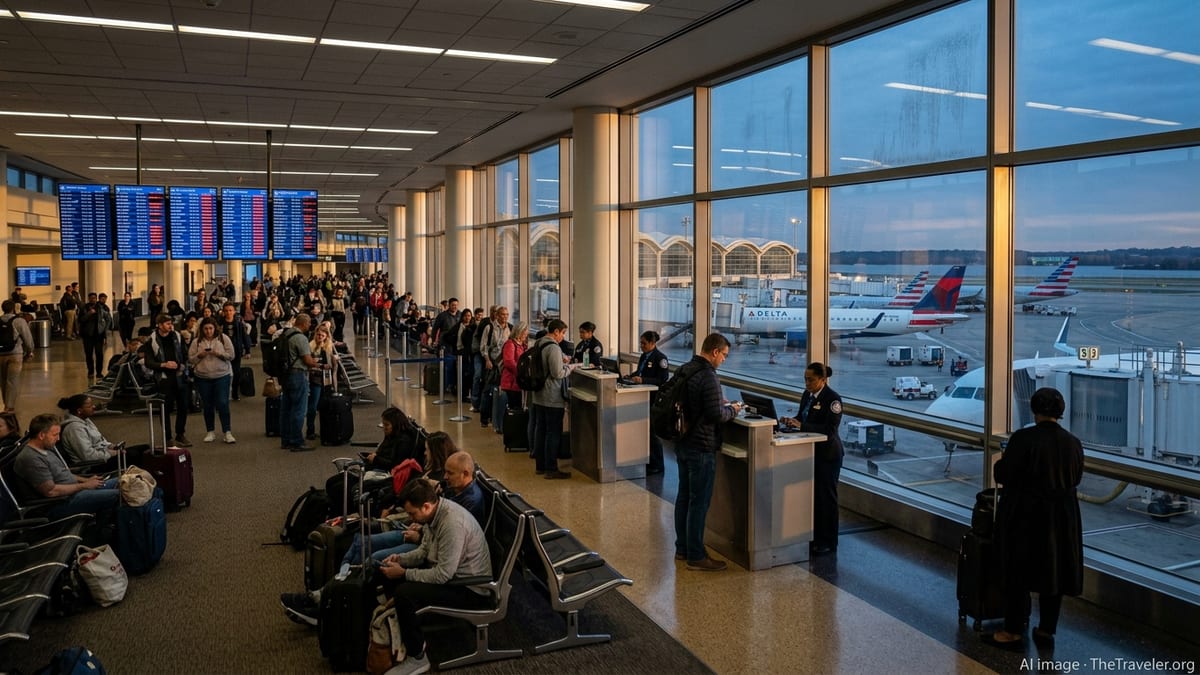
Pilots Take Unusual Public Step Against Atlanta’s Largest Employer
Delta’s roughly 15,000 pilots, represented by the Air Line Pilots Association (ALPA), have intensified a campaign highlighting what they describe as “unacceptable” levels of disruption, especially for passengers connecting through the company’s largest hub at Hartsfield-Jackson Atlanta International Airport. Recent disruptions have included days where Delta led major U.S. airlines in cancellations, drawing intense scrutiny from frequent flyers and aviation analysts.
According to published coverage, the union has rolled out a public-facing communications push, including an information website and social media messaging, to warn travelers that scheduling practices, staffing decisions and strained recovery systems are leaving the airline vulnerable when bad weather or other stresses hit the operation. The pilots argue that while storms and air traffic constraints can trigger problems, weak buffers in staffing and maintenance allow relatively routine issues to snowball into network-wide delays.
The move represents a striking rift between the pilots and a company long marketed as Atlanta’s hometown success story. Delta has been repeatedly recognized in recent years for high on-time performance, yet pilots contend that 2026 has exposed cracks in that reputation, with some peak days seeing hundreds of last-minute cancellations and rolling delays across major hubs.
For travelers in and out of Atlanta, the dispute has moved beyond an internal labor matter into a practical question of whether Delta can maintain the reliability that underpins its premium pricing and strong local loyalty. Social media posts, passenger forums and travel sites are now filled with accounts of missed connections, overnight airport stays and rebookings onto competitors.
Union Blames “Mismanagement,” Tight Staffing and Fragile Recovery
In statements summarized in national and aviation trade coverage, ALPA leaders argue that the root of the problem is not simply summer thunderstorms but what they describe as mismanagement of crew and aircraft resources. The union has cited thin staffing buffers, high reliance on pilots flying on days off, and complex scheduling systems that struggle to recover once crews begin to time out under federal duty rules.
One widely reported union communication described recent disruptions as the product of “mismanagement of resources, lack of proper tools and training for crew schedulers, and numerous misguided attempts to pinch pennies.” Published analyses of Delta’s operations this spring and summer similarly point to structural vulnerabilities, noting that when morning delays push pilots toward their maximum allowable duty limits, the airline often has limited spare crews available to take over affected flights.
Industry commentators have observed that this approach can work during routine conditions but becomes brittle during periods of thunderstorms, air traffic control constraints or maintenance discoveries. With aircraft and crew schedules packed tightly together, a single cancellation can strand both an airplane and its pilots in the wrong place for subsequent departures, turning one disruption into several more down the line.
Union leaders are also highlighting the human factor. Pilots who previously picked up significant voluntary overtime, they say, are now less inclined to do so amid what they view as management’s hard line in contract enforcement and negotiations. Without that voluntary cushion, the system has less flexibility to absorb irregular operations, further amplifying the risk of cancellations when things go wrong.
Delta Points to Weather and Broader System Strains
Delta has not directly endorsed the union’s characterization of events, and publicly available information from the company emphasizes external pressures as key drivers of disruptions. Corporate communications and advisory pages have cited severe weather systems, airspace congestion and broader infrastructure constraints as significant contributors to delays and cancellations affecting Atlanta and other hubs.
Airline executives have acknowledged, in remarks reported by aviation outlets, that the company experienced several operational “meltdowns” earlier this year and have indicated the risk of further disruptions during peak travel periods. In response, Delta has outlined internal plans to stabilize its operation, including staffing up crew scheduling teams, adding more reserve pilots, trimming select frequencies and giving maintenance teams more time overnight to prepare aircraft.
These steps are intended to create more slack in the system so that when disruptions occur, the airline can recover more quickly instead of allowing problems to cascade across the network. Analysts note that Delta’s strategy mirrors measures other major carriers have adopted in recent years, trading some capacity and short-term revenue for greater resilience and fewer high-profile meltdown days.
Still, for passengers experiencing hours-long delays or last-minute cancellations, the distinction between underlying causes matters less than the immediate disruption. Consumer advocacy groups and travel commentators are urging fliers to pay closer attention to cancellation and compensation policies, especially during peak summer weekends when the network is under maximum strain.
Labor Negotiations Amplify Tensions Over Reliability
The confrontation over reliability is unfolding against the backdrop of high-stakes contract talks. Delta’s pilots secured a major working agreement in 2023 that runs through the end of 2026, but union leaders are now engaged in a new round of bargaining focused on pay, quality-of-life provisions and scheduling protections in what they describe as an era of sustained high profits for the carrier.
Reports indicate that ALPA is seeking stronger safeguards around how pilots are assigned and rerouted during irregular operations, arguing that current practices contribute both to fatigue concerns and to operational fragility. The union’s public messaging to customers appears designed not only to pressure management at the bargaining table but also to frame reliability as a direct outgrowth of how pilots are scheduled and treated.
For Delta, the negotiations carry both financial and reputational implications. The airline has long marketed itself as a premium, service-oriented brand, and labor peace has been a selling point in contrast with rivals that have faced more visible public labor disputes. Extended disagreements with its largest union could complicate that narrative, particularly if passengers associate operational problems with corporate decisions rather than external shocks.
Aviation analysts note that pilots across the industry have used tight labor markets to push for better contracts, and that public campaigns emphasizing safety and reliability concerns have become a common tool. Delta’s situation is drawing particular attention because of the scale of its Atlanta hub and the airline’s past reputation for operational excellence, which raises the stakes for any prolonged period of instability.
Passengers Caught Between Disruption and Loyalty
For travelers in Atlanta and across Delta’s network, the dispute leaves difficult choices. Many customers rely on the airline’s extensive route map, frequent flyer program and deep schedule from key hubs such as Atlanta, Minneapolis, Detroit and Salt Lake City. Even as frustration rises over delays and cancellations, switching to another carrier may mean less convenient connections, higher fares or fewer nonstop options.
Online reviews and traveler forums have recently featured a wave of accounts from passengers describing missed weddings, disrupted business trips and long nights in airport terminals after Delta cancellations. Some report being rebooked on itineraries that depart a day or more later, while others say they have chosen to purchase last-minute tickets on competing airlines in order to reach time-sensitive events.
Consumer advocates advise travelers to build in additional buffer time when flying through major hubs during peak seasons, to track their flights closely via airline apps and third-party tools, and to understand refund and voucher rights if a flight is significantly delayed or canceled. For international trips, they note that compensation rules can differ widely between regions, with some jurisdictions offering stronger protections than others.
As the summer peak unfolds, the standoff between Delta’s unionized pilots and company management is likely to remain in the spotlight. The outcome of ongoing talks and the effectiveness of Delta’s operational fixes will determine whether Atlanta’s hometown airline can restore its reputation for reliability or whether “unacceptable” disruption becomes a more permanent part of the travel calculus for its customers.