


More news on this day
Regional Rail passengers across the Philadelphia area faced hours of disruption after a SEPTA train derailed at a key junction in North Philadelphia, leading to widespread delays and suspensions on July 1.
Get the latest news straight to your inbox!
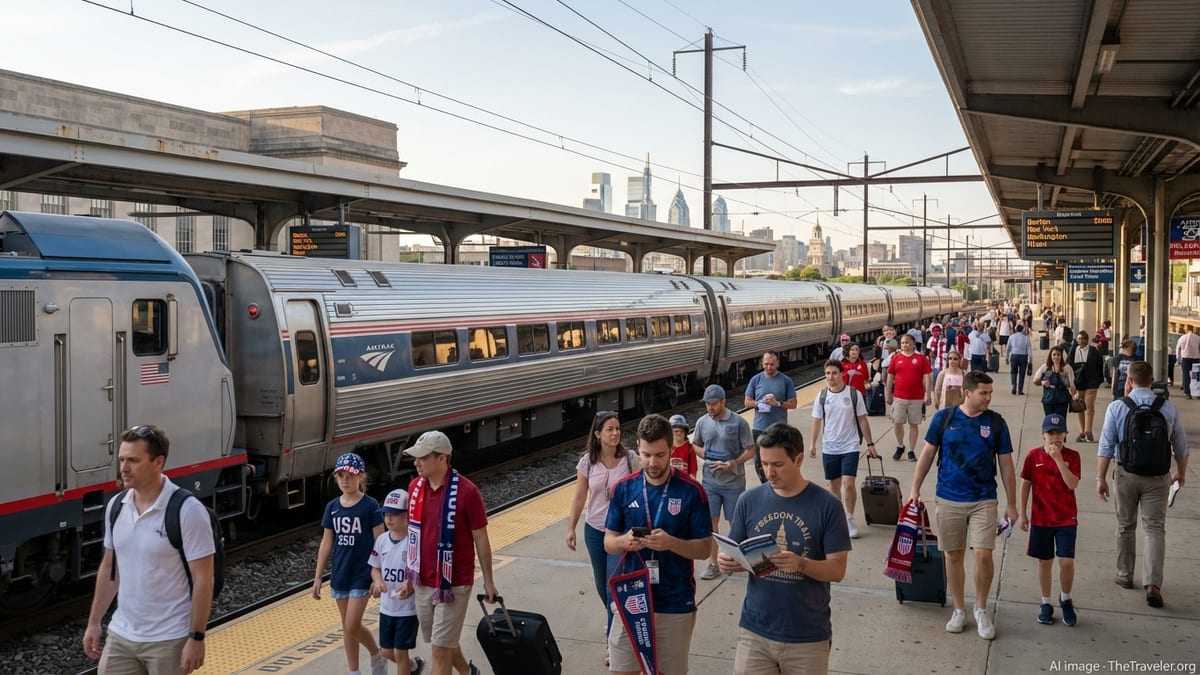
Derailment at North Philadelphia chokepoint
Published coverage indicates the incident involved a Manayunk/Norristown Line train that left the tracks near the North Broad and North Philadelphia stations early Wednesday morning. The location is a major junction where multiple Regional Rail lines converge, magnifying the operational impact far beyond the single train involved.
Reports describe the derailment as a low-speed incident, with train cars remaining largely upright but misaligned on the track. Publicly available information shows that crews were dispatched to inspect track conditions, rerail equipment, and assess impacts to overhead power and signaling in the area.
The affected stretch of railway carries trains between Center City and northern suburbs, and also serves as a through route for services bound toward Trenton, the airport, and western suburbs. The complexity of the track layout in North Philadelphia left limited options for rerouting, contributing to extensive delays as dispatchers attempted to thread remaining trains through a constrained corridor.
Suspensions and cascading delays across Regional Rail
According to multiple local news outlets, several Regional Rail lines were temporarily suspended during the morning commute while inspections and clearance work took place near the derailment site. Other lines operated with severe delays and altered stopping patterns as dispatchers prioritized safety and track access for recovery crews.
Service advisories indicated that trains were held outside Center City and at outlying terminals, creating crowding on platforms and forcing some riders to seek alternate routes on subways, buses, or rideshare services. Published coverage notes that even after limited service resumed, residual delays rippled across the network through the midday and afternoon periods.
Real-time tracking data and rider reports shared on social media described missed connections, cancelled departures, and irregular gaps between trains. Travelers attempting to reach Philadelphia International Airport and regional destinations such as Norristown, Doylestown, and Trenton encountered extended travel times, with some opting to abandon rail entirely for the day.
Commuter disruption during peak travel week
The derailment and resulting delays arrived during an already busy travel week in the Philadelphia region, with summer holiday events and major sports and entertainment gatherings drawing additional visitors into the city. For many daily commuters, the timing compounded the stress of navigating crowded schedules and tight connections.
Accounts from riders posted online portrayed a patchwork of experiences, ranging from relatively minor delays on lines that skirted the worst of the disruption to multi-hour commutes for those whose trains were cancelled outright. Some travelers described having to backtrack through Center City or transfer between multiple modes to complete what would normally be a direct Regional Rail trip.
Reports from local broadcasters indicate that crowding increased on the Market-Frankford and Broad Street subway lines as Regional Rail riders shifted to rapid transit. Buses serving neighborhoods in North and Northwest Philadelphia also saw heavier-than-usual loads during the morning and evening peaks.
Service restoration and ongoing recovery work
By Wednesday afternoon, publicly available information showed that SEPTA had restored most Regional Rail service through North Philadelphia, with trains once again using the affected corridor at reduced speeds. News coverage indicates that residual delays persisted into the evening as dispatchers worked to rebalance equipment and crews displaced by the morning disruption.
Rail workers continued track and infrastructure inspections after service resumed, aiming to confirm that switches, signals, and overhead power systems were fully functioning. Recovery operations also included detailed checks of the derailed train set and a review of data from on-board systems to help clarify the sequence of events leading up to the incident.
Early reports did not point to widespread structural damage to the right-of-way, which helped speed the return of limited service. However, the need for careful inspections at such a critical junction meant that timetable reliability remained fragile through the day, with riders advised to expect ongoing adjustments.
Safety focus and questions about reliability
The derailment adds renewed attention to the resilience of Philadelphia’s commuter rail network at a time when Regional Rail is preparing for schedule changes and long-term modernization efforts. Publicly available planning documents emphasize the importance of reliability improvements and better handling of disruptions on the busy trunk lines that pass through North Philadelphia.
Published commentary from transit advocates in recent years has highlighted how incidents at chokepoints can quickly cascade into systemwide problems, particularly during peak hours when the network is operating near capacity. Wednesday’s events provided another example of how a single infrastructure failure or equipment problem can affect riders across multiple counties.
In the aftermath of the derailment, travelers and observers have raised familiar questions about communication, with some riders reporting difficulty obtaining timely, consistent information about cancellations and alternative options. As investigations and operational reviews proceed, Regional Rail users are watching to see whether lessons from this disruption lead to changes in contingency planning, real-time updates, and infrastructure investment priorities.