


More news on this day
Delta Air Lines is rapidly transforming what premium travel looks like in the United States, with publicly discussed figures indicating that roughly 87 percent of its domestic first class seats are now paid rather than complimentary upgrades, reshaping both loyalty perks and passengers’ wallets.
Get the latest news straight to your inbox!
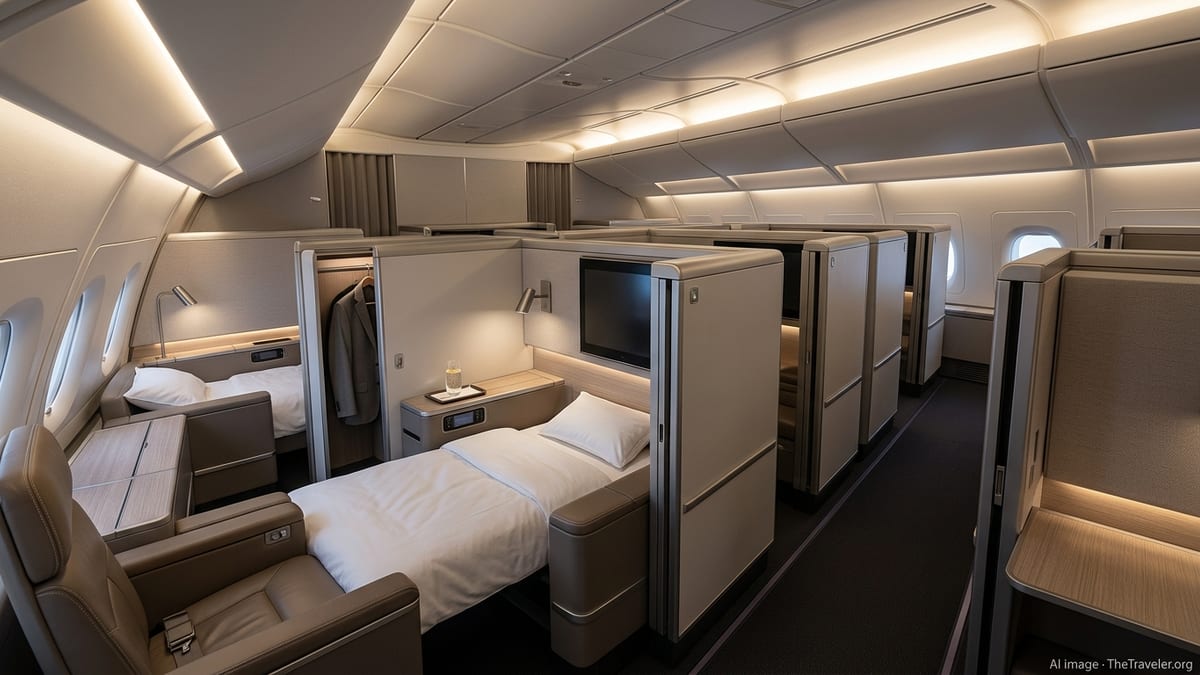
From Empty Seats to a Nearly Sold-Out Front Cabin
Over the past decade, Delta Air Lines has moved from frequently flying with unsold first class seats to treating almost every premium seat as revenue-generating inventory. Industry and investor-day presentations show that Delta has progressively increased the share of domestic first class seats sold for cash or miles, rising from well under 20 percent in the early 2010s to more than 80 percent today, with recent commentary pointing to a paid load factor in the high eighties on many routes.
This shift did not happen overnight. Analysts note that Delta spent years refining its revenue management systems, adding dynamic pricing for buy-ups, and actively marketing last-minute upgrades through its website and app. What was once a cabin dominated by complimentary elite upgrades is now increasingly filled by passengers who purchased first class outright, either at booking or closer to departure.
The result is that first class, particularly on domestic routes, has become a central pillar of Delta’s commercial strategy. Premium cabins across the network are contributing a growing share of total income, and commentary around recent financial results highlights that premium and loyalty-driven revenue now accounts for a majority of the airline’s overall revenue mix.
For travelers, these changes are visible in the form of fuller front cabins, fewer empty seats at boarding, and more frequent upgrade offers for a fee, even on relatively short flights. The traditional expectation that elite status alone would regularly deliver a complimentary first class experience is being steadily recalibrated.
Upgrades Are Shrinking as Monetization Rises
The most immediate impact of Delta’s strategy is being felt by its Medallion loyalty members, who have long regarded complimentary upgrades as a signature perk. Publicly available commentary from industry watchers indicates that only a small minority of Delta’s domestic first class customers are now sitting in those seats on complimentary upgrades, with estimates suggesting around one in eight.
Instead of relying on the gate to clear long upgrade lists, Delta increasingly aims to sell those seats in advance. Discounted buy-up offers now appear during online check-in, in the mobile app, and via email before departure. These offers can at times be aggressive, pricing first class at levels intended to tempt even price-sensitive travelers who would not normally consider a premium fare.
Gate and airport upgrades have not disappeared entirely, but they are becoming the exception rather than the rule, especially on high-demand routes where the paid load factor for first class already runs high. Industry commentary has described elite travelers watching empty seats depart while upgrade lists remain un-cleared, reflecting how carefully Delta manages last-minute inventory in pursuit of incremental revenue.
For frequent flyers, this has prompted a reassessment of the value of status versus simply paying for the product they want. Some are choosing to buy first class outright when they truly value the extra comfort and flexibility, while others are diversifying to other carriers or cabins if upgrades feel increasingly out of reach.
Why Delta Is Betting Big on Premium Revenue
Delta’s push to sell nearly all of its first class inventory is part of a wider trend among major U.S. airlines, but the carrier has become one of the clearest examples of how premium cabins can underpin profitability. Recent financial disclosures and independent analysis indicate that Delta’s premium products, which include domestic first class, international business class and premium economy, now deliver significantly higher margins than standard economy.
At the same time, capacity data shows that Delta has been growing premium seat supply faster than main cabin capacity, reflecting confidence that demand for the front of the plane will continue to rise even in a more uncertain economic climate. Corporate travel, small-business demand and higher-spending leisure customers are all contributing to this premium tilt.
Consultancy research on airline economics suggests that every additional percentage point of premium seats sold can have an outsized impact on overall profitability. By pushing its first class paid load factor toward the high eighties, Delta is able to generate more revenue from the same aircraft, improving unit revenue without relying solely on fare increases in economy.
For investors, this approach aligns with a broader shift toward “quality of revenue,” favoring more resilient, high-yield segments of demand. For passengers, it means that premium cabins are likely to remain both a growth area and a focus of product investment, even as competition intensifies across the U.S. domestic market.
What Travelers Can Expect Onboard in First Class
As Delta has focused on monetizing nearly every first class seat, it has also been refreshing the hard and soft product to justify the higher share of paying customers. On many newer narrowbody aircraft, first class seats feature larger seatbacks, improved headrests, better privacy wings and more accessible power outlets, placing Delta’s domestic product toward the top of the U.S. legacy carriers by cabin design.
Service elements have been evolving as well. Depending on route length and time of day, travelers can expect complimentary beverages, enhanced snacks, and in many cases hot meals, along with earlier boarding, increased baggage allowances and priority handling during disruptions. While not on par with international lie-flat business class, the domestic first class experience is positioned as a meaningful upgrade over the main cabin.
Because the cabin is now frequently full of paying customers, some long-time flyers report that the overall atmosphere has shifted. Business travelers share the space with more high-end leisure passengers and occasional fliers who bought a discounted buy-up, creating a broader mix of expectations around service, meals and quiet time. Delta’s challenge is to maintain consistency as the demographic of its first class customers diversifies.
With more revenue tied to the experience at the front of the aircraft, industry observers expect Delta to continue investing in cabin refurbishments, more reliable inflight connectivity and improvements to catering. Travelers paying for first class, especially on longer domestic routes, will be watching closely to see whether product enhancements keep pace with fare levels.
How Passengers Can Navigate the New First Class Reality
For U.S. travelers trying to adapt to Delta’s premium strategy, the key takeaway is that first class is now designed to be purchased, not primarily earned through status. Those who value extra space, priority treatment and included amenities increasingly need to budget for a higher fare or watch closely for targeted upgrade offers.
Booking early can still help secure lower first class prices on some routes, especially outside peak travel periods. However, dynamic pricing means that last-minute buy-ups sometimes appear at relatively attractive rates, particularly on flights where premium demand has not materialized as expected. Savvy travelers monitor these offers in the app and compare them with the value they place on comfort and convenience.
Loyalty members may wish to reassess which benefits matter most. If complimentary upgrades are becoming rarer, other perks such as priority services, same-day changes, fee waivers and earning rates may carry more weight when deciding whether to pursue or maintain status. Some travelers are shifting strategy toward earning and redeeming miles for confirmed premium bookings rather than hoping for an upgrade at the gate.
Ultimately, Delta’s move to sell around 87 percent of its domestic first class seats signals a broader redefinition of what “premium” means in U.S. air travel. For many passengers, it transforms the front cabin from an aspirational perk occasionally granted by status into a clearly priced product that must be consciously chosen and paid for, changing how they plan and value every trip.