


More news on this day
Air travel across Dubai and the wider Middle East remains uneven heading into the Northern Hemisphere winter season, with airlines juggling longer routings, periodic airspace constraints, and knock-on delays as British Airways lays out a clearer timetable to restart select regional services.
Get the latest news straight to your inbox!
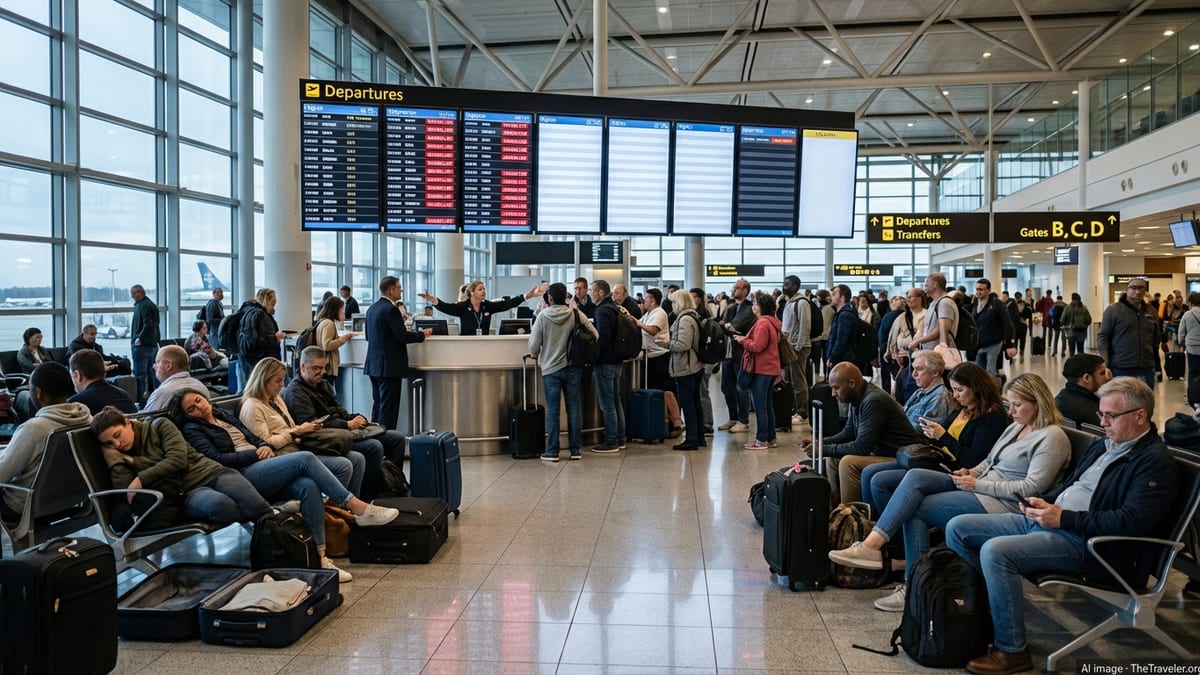
Disruption persists even as schedules begin to rebuild
Published coverage in mid-September 2026 points to a market that is reopening in stages rather than snapping back all at once. While major hubs in the UAE continue operating, carrier-by-carrier decisions on risk, routing, insurance, and aircraft availability have translated into a patchwork of suspensions, reduced frequencies, and last-minute timetable revisions.
For travelers, the operational reality has been felt less as wholesale shutdowns and more as irregularity: longer flight times due to rerouting, constrained arrival slots at peak periods, and tighter recovery margins when an aircraft rotation runs late. Those effects are magnified in Dubai because of its role as a global transfer hub, where missed connections can cascade across multiple long-haul banks.
Separately, Dubai International Airport reported a notable second-quarter passenger decline tied to the regional conflict’s impact on air travel, an indicator of how demand and network planning have been reshaped even where airports remain open. The recovery now appears linked to how quickly airlines feel able to restore predictable schedules for the winter travel rush.
British Airways sets Dubai return for early November, keeps Abu Dhabi paused
British Airways has signaled a return to Dubai service from early November 2026, with published coverage indicating the London Heathrow to Dubai route is set to restart on November 3, 2026. The resumption has been closely watched because BA’s Gulf schedule has been repeatedly adjusted since early 2026, leaving customers and tour operators seeking firmer dates for rebookings.
At the same time, the airline’s Abu Dhabi service is expected to remain suspended far longer, with reporting indicating the route will stay paused until the winter 2027-2028 season. That split approach underscores how carriers are differentiating between nearby markets based on route economics, connection flows, and perceived operational complexity.
Regional reporting has also described earlier restart targets shifting, including a plan that had pointed to a late-October return to Dubai before moving into November. In practice, that means customers holding tickets around the late-October shoulder may still see cancellations, reaccommodations, or reroutes onto partner or alternative carriers where available.
Other airlines adjust UAE and Gulf operations with staggered restart dates
British Airways is not alone in recalibrating. Coverage from UAE-based outlets and regional aviation reporting indicates multiple international carriers have extended suspensions, returned at reduced levels, or set restart dates across late October, November, and December, depending on the route and the operator’s network constraints.
Among the more concrete examples cited in published coverage: Swiss is expected to resume daily Zurich to Dubai flights from October 27, 2026, while Austrian Airlines is expected to restart Vienna to Dubai on December 12, 2026 with up to five weekly frequencies. Elsewhere, Virgin Atlantic’s Dubai service has been listed as suspended until October 2027, highlighting how wide the range of airline decisions remains.
Within the region, carriers based in the UAE have also selectively managed short-haul links. Reporting indicates Emirates has partially resumed Dubai to Bahrain with one daily flight, while its Dubai to Kuwait service has been described as remaining suspended. That kind of selective restoration matters for travelers using Dubai as a springboard into the Gulf because short sectors are often used to protect onward long-haul connections when capacity is tight.
Why delays can flare quickly: airspace management and arrival constraints
Operational documents published by the UAE’s General Civil Aviation Authority outline how airspace capacity can be managed during disruptions, including procedures that temporarily stop departures from specified regional airports bound for affected UAE airports once arrival delays reach defined thresholds. The framework is designed to prevent airborne holding from exceeding safe limits, but it can also produce sudden departure holds that look like “unexpected delays” to passengers at origin airports across the region.
In practical terms, that means an inbound congestion event at a UAE airport can trigger controls that ripple to nearby departure stations, particularly those within short flight times. Travelers may see their flight delayed before boarding, even when the departure airport is operating normally, because the destination’s arrival stream is being regulated.
Layered onto that, government travel advisories have continued to caution that regional tensions can lead to periodic airspace closures and flight cancellations. UK travel advice for parts of the Gulf has urged travelers to remain prepared for disruptions, reflecting the reality that conditions can shift faster than airline schedules can be rewritten.
What travelers should watch as winter demand ramps up
With more airlines aiming to restore winter capacity, the immediate risk is less about whether flights exist on paper and more about how consistently they operate day to day. Travelers connecting through Dubai or neighboring hubs may want to monitor their booking status closely in the weeks before departure, since published schedules can still change, particularly on routes that have been suspended for extended periods.
It can also help to plan for longer journey times. Rerouting around restricted airspace can add minutes or hours depending on the city pair, which in turn can tighten minimum connection times and raise the chance of misconnections when a first leg is delayed. For itineraries with critical onward links, travelers may prefer longer connection windows or routings that reduce reliance on a single tightly timed transfer bank.
Finally, travelers should separate airport operations from airline operations. Dubai’s airports have remained open, but a carrier’s choice to suspend or reduce service can still strand demand. As airlines like British Airways set clearer restart timelines, the market is moving toward a more stable winter schedule, but the current environment still supports planning with flexibility.