


More news on this day
Rep. Abe Hamadeh’s congressional office circulated a travel advisory for U.S. citizens in the Middle East, pointing travelers to State Department guidance that warns of heightened security risks and the possibility of sudden transportation disruptions across the region.
Get the latest news straight to your inbox!
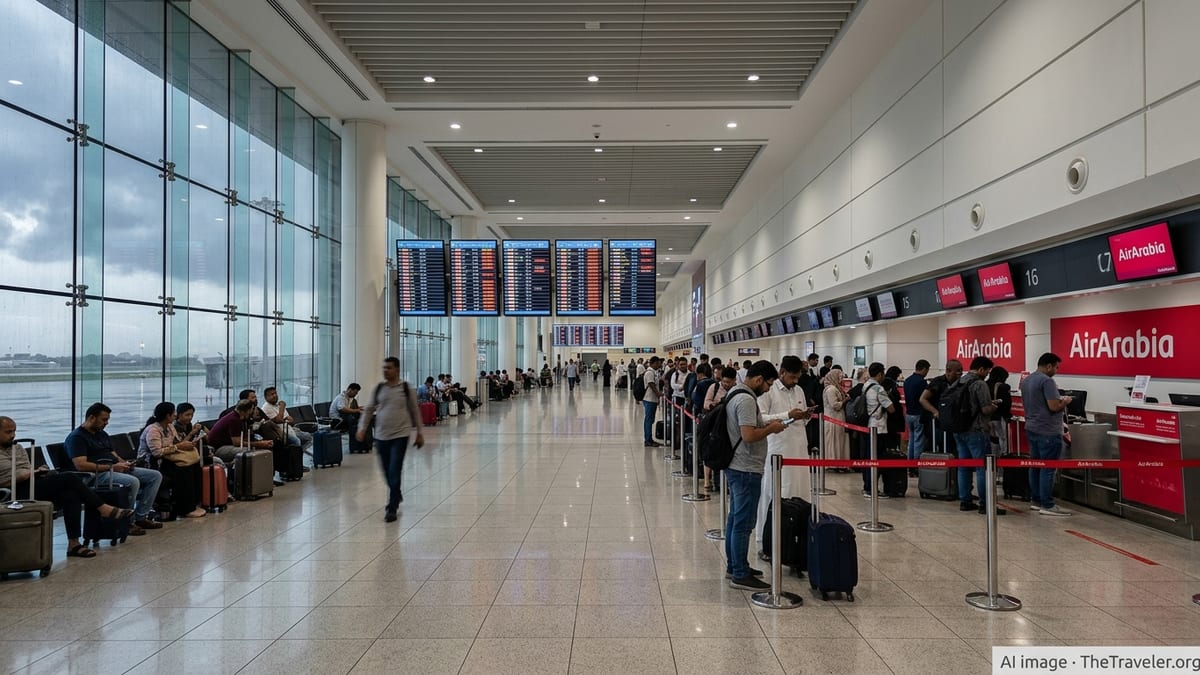
What the press release says, and why it is resurfacing now
Coverage circulating on Sept. 20, 2026 characterized the item as a press release from Hamadeh’s office that relays U.S. State Department messaging about a “complex” security environment in the Middle East and the potential for escalation. The notice also urges heightened vigilance for Americans currently in the region and suggests reconsidering nonessential travel through Middle East transit corridors.
The same theme appears in U.S. State Department public guidance updated this summer. A “Worldwide Caution” notice dated July 22, 2026 advises Americans worldwide to exercise increased caution and highlights that travelers in the Middle East should prepare for flight cancellations, periodic airspace closures, and other disruptions, while travelers outside the region should reconsider travel to and through it.
Hamadeh’s office has previously used its public communications channels to republish State Department safety and departure information during periods of elevated regional tension. A March 1, 2026 release, updated March 2, 2026, compiled phone numbers and email contacts for U.S. embassies and consular sections across several Middle Eastern countries and reiterated departure-oriented guidance for Americans facing serious safety risks.
How State Department guidance frames current risks for travelers
The State Department’s July 22, 2026 Worldwide Caution places special emphasis on Middle East travel conditions that can change quickly, including the possibility that airlines may cancel or postpone routes and that airspace closures can ripple across multi-country itineraries. It advises travelers to monitor airline operations and verify that flights remain scheduled before heading to airports.
The same public guidance notes that U.S. diplomatic facilities have been targeted, and that Iran and groups supportive of Iran may target other U.S. interests overseas, including locations associated with the United States and Americans. For travelers, that framing underscores why routine trip planning items like hotel location, ground transportation, and airport transfers can become more consequential during periods of elevated threat.
For Americans who proceed with travel, the guidance stresses situational awareness and official-alert monitoring. It also points travelers to the Smart Traveler Enrollment Program (STEP) and to official State Department channels for security updates, which can be especially relevant if conditions change during a trip or a layover.
Practical trip-planning impacts: flights, routings, and contingency planning
For travelers, the most immediate effect of this kind of advisory is often operational rather than political: itinerary reliability. Even when a destination itself remains accessible, major hubs can experience rolling schedule changes, reroutings, or cancellations that affect connections across Europe, Africa, and Asia.
That is why both Hamadeh’s advisory-style messaging and the State Department’s Worldwide Caution highlight the need to confirm flight status directly with carriers and to be prepared for periodic airspace closures. Travelers routing through major Middle East hubs may want to build extra time into connections, keep lodging plans flexible where possible, and ensure they can access travel documents and essential items if forced to change plans on short notice.
Another practical impact is communications resilience. In a disruption scenario, travelers may need to coordinate with airlines, hotels, insurers, and family quickly. Having roaming, eSIM, or backup connectivity arranged ahead of time can reduce friction if an unexpected diversion, overnight delay, or border change occurs.
Where the advisory points Americans for help and emergency contacts
A key feature of the messaging amplified by Hamadeh’s office is directing travelers toward official contact pathways. His March 2026 release compiled contact details for U.S. embassies and consular sections in countries such as Lebanon, Kuwait, Bahrain, Qatar, the United Arab Emirates, Oman, and Egypt, along with guidance for places where the U.S. does not operate an embassy.
That March 2026 post also included the State Department’s 24/7 phone numbers for Americans who need assistance arranging departure via commercial options: +1-202-501-4444 (from abroad) and +1-888-407-4747 (from the U.S. and Canada). While travelers should prioritize local emergency services for immediate danger, these lines are designed for overseas citizen services and crisis-related support navigation.
For destinations where U.S. consular capacity is limited, the advisory-style guidance also reinforces a basic planning rule: do not assume routine consular services will be available if conditions deteriorate. Travelers are encouraged to think through medical needs, passport security, and funds access in advance, and to keep digital and physical copies of key documents in case a replacement process becomes necessary during a fast-moving disruption.
What travelers should do before booking: match advisories to your exact destination
One challenge with broad regional advisories is that they can obscure differences across countries and even within the same country. The State Department’s system assigns destination-specific travel advisory levels and issues separate security alerts through U.S. embassies and consulates, which can contain time-sensitive details such as protest locations, restricted areas, or changes to entry and exit options.
Travelers planning imminent trips should cross-check three things before finalizing: the country travel advisory level for the specific destination, the most recent embassy security alerts for that destination, and the operational status of airports and overland border crossings relevant to their route. In periods of heightened tension, the most important planning information can shift from general caution to narrow, highly practical constraints like which crossings are open and which airlines are operating.
Hamadeh’s office advisory functions as a reminder to treat Middle East travel in late 2026 as dynamic, not static. For many travelers, the most actionable response is not necessarily canceling a trip, but tightening contingency plans: confirm change and refund rules, choose routings with alternative options, and enroll in official alert channels that can guide decisions in real time.