


More news on this day
A weather-related ground stop at Dallas Fort Worth International Airport on September 22 has been lifted, but flight tracking data and federal aviation status reports show hours of residual delays for inbound flights and their onward connections as airlines work to reset disrupted schedules.
Get the latest news straight to your inbox!
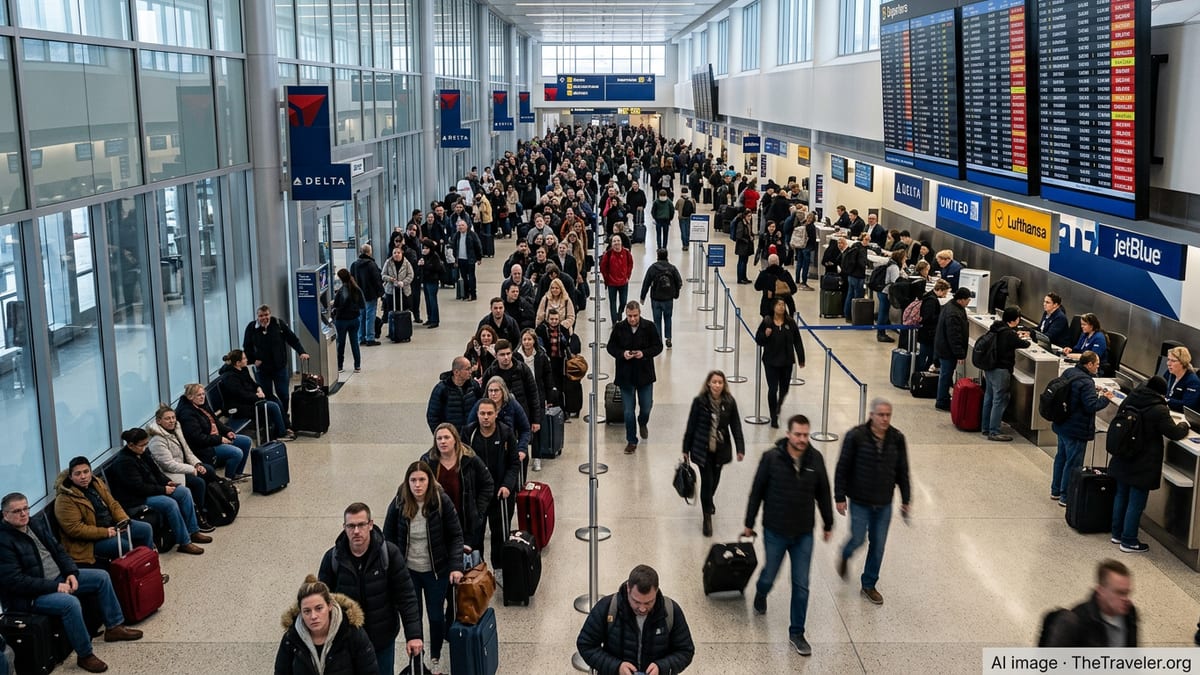
Storm-triggered ground stop disrupts one of the nation’s busiest hubs
According to the Federal Aviation Administration’s National Airspace System updates for Tuesday, September 22, 2026, Dallas Fort Worth International Airport (DFW) was placed under a ground stop tied to thunderstorms, restricting departures from other airports bound for North Texas until conditions improved. The constraint focused on inbound traffic, one of the most disruptive forms of operational control for a major hub.
Publicly available FAA planning advisories issued late Monday highlighted thunderstorms across multiple air traffic control centers, with DFW listed among airports where ground stop or ground delay programs were possible into the evening. Subsequent status summaries on Tuesday indicated that the weather-related ground stop at DFW had taken effect before being lifted as storms moved out of the immediate area.
Coverage from regional outlets described the ground stop as capping a difficult stretch for North Texas air travelers, with more than 600 delays and over 30 cancellations recorded at DFW on Monday, following more than 900 delays on Sunday as slow-moving storms repeatedly passed through the metro area. Those disruptions set the stage for a challenging Tuesday even after the formal restriction ended.
While the precise minute the DFW ground stop lifted is not specified in public FAA summaries, real-time airport status information on Tuesday morning showed the airport no longer under an active stop, indicating that flights were again being cleared for departure toward Dallas Fort Worth. That change shifted the focus from weather avoidance to recovery operations.
Residual delays hit inbound flights and connections hardest
FAA airport status data for Dallas Fort Worth on Tuesday morning listed general arrival and departure delays in the range of 15 minutes or less, suggesting that the immediate air traffic control constraints had eased. At the same time, flight tracking dashboards showed a much more severe picture for many individual flights, with large numbers of arrivals flagged as significantly late or diverted.
Industry-focused disruption trackers that log historical airspace events recorded a ground stop and associated delay program for DFW beginning on September 22, 2026, followed by a period of widespread departure and arrival delays. Even after the stop ended, that data showed an elevated disruption score for the airport, reflecting a combination of late inbound aircraft, missed departure slots and scattered cancellations.
Published coverage citing data from flight tracking services indicated that DFW had already logged hundreds of delays over the preceding 48 hours, while American Airlines and Southwest Airlines together reported more than 2,000 delays nationwide on Monday. Because Dallas Fort Worth is American’s largest hub, any inbound disruption tends to ripple across the carrier’s network, affecting flights well beyond North Texas.
Travel forums and passenger reports on Tuesday echoed those statistics, with inbound travelers describing extended holding patterns, diversions to alternate airports in Texas and Oklahoma, and rolling departure time changes as crews and aircraft fell out of position. These accounts align with long-established patterns documented in federal air travel reports, which show that severe weather and resulting traffic management initiatives are among the leading causes of long tarmac waits and missed connections.
Why recovery lags long after a ground stop ends
A ground stop is a tool used in air traffic management to control congestion and preserve safety by temporarily halting departures to a particular airport. Once lifted, it does not instantly restore normal operations. Public explanations from aviation agencies and industry sources describe a cascading effect: flights that were kept at gates in distant cities all depart in a compressed window, converging on the same airport with limited runway and gate capacity.
At a hub as large as DFW, that wave can quickly exceed available parking positions and staffing, forcing arriving aircraft to wait for open gates or divert to alternates. The knock-on effect extends to outbound flights, which depend on those incoming aircraft and crews. Schedules that were built with tight connection times suddenly become misaligned, and airlines begin rebalancing aircraft rotations and crew assignments to stay within duty-time limits.
Recent Air Travel Consumer Reports from the U.S. Department of Transportation, which track tarmac delays longer than three hours, show multiple American Airlines flights into and out of DFW earlier this year with ground delays exceeding three hours during significant weather events. Those historical records illustrate how quickly a single storm system can create extended disruption windows that persist well after the weather has cleared.
Analysts who follow operational performance note that major hub carriers typically prioritize restoring longer-haul and high-connectivity routes first, sometimes delaying or canceling shorter regional flights to free aircraft and crews. That strategy can mean relatively smooth long-distance departures from DFW even as shorter inbound segments continue to experience outsized delays.
What travelers flying through DFW today should expect
For travelers scheduled to arrive at or connect through Dallas Fort Worth on Tuesday, the clearest picture comes from combining airline-specific information with broader status tools. The FAA’s DFW status page on Tuesday morning no longer listed a formal ground stop, but flight tracking boards and airline apps still displayed many arrivals arriving well behind schedule, in some cases more than an hour late as the operation worked through the backlog.
Public guidance from aviation regulators and airport operators in recent months has repeatedly emphasized checking flight status directly with the airline before leaving for the airport, especially on days affected by weather or traffic management initiatives. The same advice applies today at DFW: a flight that shows a modest delay on a general board may be subject to additional changes as crews time out or aircraft are reassigned.
Travel planning resources also highlight the importance of longer connection times at large hubs on storm-impacted days. With Dallas Fort Worth serving as a primary connecting point between coasts and for many international routes, passengers with tight domestic connections may be particularly vulnerable to missed flights while the system recovers. Rebooking options can be constrained when multiple waves of delays have already consumed available seats.
Some airlines have historically introduced temporary travel waivers during significant weather disruptions in North Texas, allowing customers to move their trips without change fees or fare differences within defined date and city pairs. As of Tuesday morning, no broad waiver specific to the latest DFW storms had been highlighted in publicly available information, so travelers needing flexibility are being directed to manage changes directly through airline apps, websites or customer service channels.
DFW’s broader role and what this disruption signals for fall travel
Tuesday’s ground stop and subsequent inbound delays come at a busy time for Dallas Fort Worth, which has been highlighting record passenger volumes and an ambitious multibillion-dollar capital program aimed at expanding terminal capacity and upgrading airfield and roadway infrastructure. Airport communications in recent weeks have framed these projects as essential to handling future growth while improving resilience during weather and operational disruptions.
Even as long-term investments progress, the latest episode underlines how exposed high-volume hubs remain to localized thunderstorms and regional airspace constraints. With DFW functioning as a central node for connections across the United States and to Latin America, weather patterns in North Texas can quickly reverberate across domestic and international networks, particularly during shoulder seasons when storm lines are frequent.
For travelers planning fall itineraries, the experience at DFW this week serves as a reminder to build in extra time for connections through storm-prone hubs and to monitor both airline communications and systemwide tools such as FAA status pages and real-time flight trackers. While Tuesday’s ground stop has been lifted, the scale of the recovery effort shows that the practical impact on travelers often extends well beyond the official end of an air traffic control restriction.
As airlines and airports move into the late-year holiday planning window, operational data from disruptions such as the DFW storms and recent outages affecting major Northeastern airports are likely to inform staffing, scheduling and infrastructure decisions. For passengers, that evolving playbook will translate into more notifications, dynamic rebooking and, on days like today, the need for patience while inbound flights finally make their way to the gate.