


More news on this day
Boston Logan International Airport recorded more than 480 flight delays and over 70 cancellations on Monday as a wave of ground stops at New York City area airports rippled through one of the country’s busiest air corridors.
Get the latest news straight to your inbox!
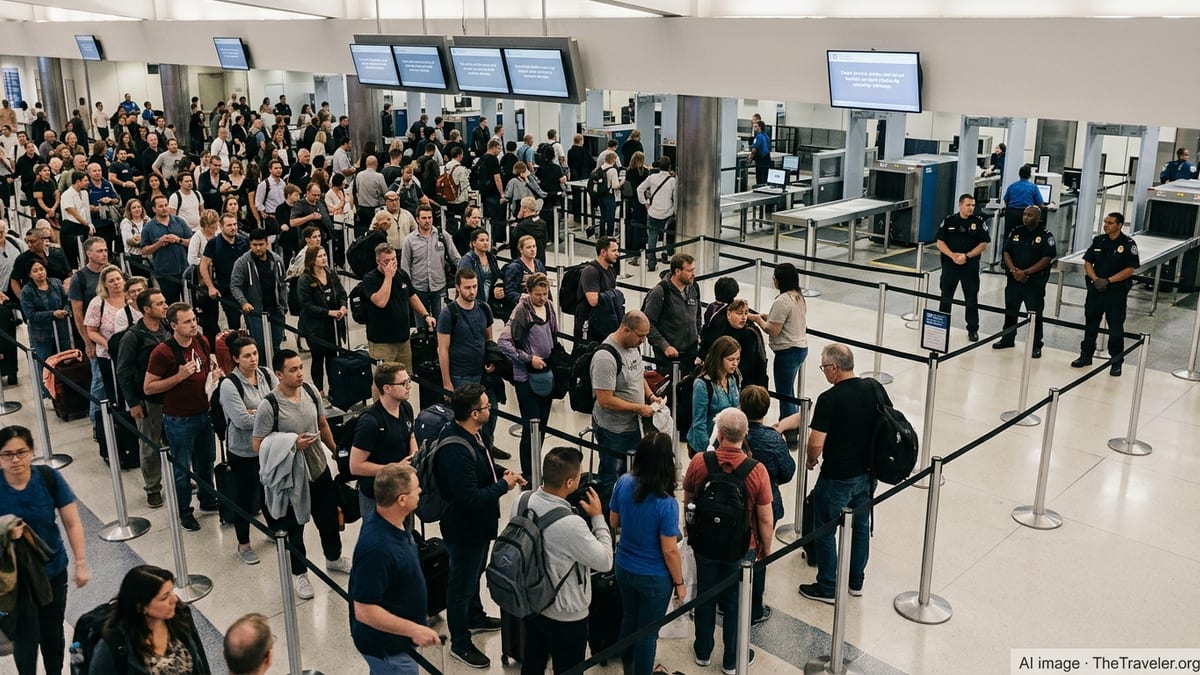
New York airspace outage ripples into Boston
Publicly available flight-tracking data and news reports indicate that the disruption began Monday, September 21, when a technical failure affecting telecommunications lines in New Jersey forced the Federal Aviation Administration to restrict traffic flows into major airports serving the New York metropolitan region. Ground stops were issued at John F. Kennedy International, LaGuardia, Newark Liberty and other nearby facilities, sharply reducing the number of arrivals those airports could accept.
Because Boston is tightly connected to New York through shuttle routes, banked connections and aircraft rotations, the slowdown around New York quickly translated into delays at Logan. Data from FlightAware cited in local and national coverage show that by Monday evening, more than 480 flights at Logan had been delayed and more than 70 had been canceled, placing the airport among the hardest hit in the Northeast for the day.
In addition to the constraints around New York, coverage from Boston-based outlets notes that Logan itself was placed under a ground delay program, meaning departing flights were held at their origin points and metered into Boston to prevent congestion from building in the air and on the airport’s limited open runways.
By late Monday, federal transportation officials reported that fiber lines had been repaired and that ground stops in the New York region were being lifted, but they also cautioned that it would take time for airlines and airports to work through the backlog of delayed aircraft and crews.
Runway construction and local factors magnify disruption
The disruption at Logan did not stem solely from the incident in New Jersey. The Massachusetts Port Authority, which operates Boston Logan, has previously highlighted that a key runway is closed for construction through mid-November 2026, reducing the airport’s overall capacity and making it more vulnerable to knock-on effects when the wider air traffic system struggles.
Local reporting on Monday’s events pointed to this runway work as a contributing factor, along with an FAA equipment issue affecting the flow of flights into Boston. With fewer available runways and tighter airspace procedures, even modest scheduling disruptions can escalate into extended gate holds and longer-than-normal taxi times.
Travel industry data compiled earlier this year already ranked Boston Logan among the most delay-prone major U.S. airports, with more than a quarter of flights arriving behind schedule in recent performance studies. That underlying vulnerability meant that when the New York region slowed sharply on Monday, Logan had less room to absorb the shock without widespread schedule changes.
The combination of long-planned construction, real-time technical problems and constrained operations in neighboring states left Boston travelers facing a significantly more difficult travel day than typical late-September conditions would normally produce.
Wide impact on airlines, routes and connections
The delays and cancellations at Logan spanned domestic and international operations, affecting both short-haul shuttles and longer-haul routes that rely on aircraft arriving from New York and other East Coast hubs. Published coverage and schedule data show congestion building through the afternoon as aircraft that were supposed to feed Boston departures from New York, Newark and Philadelphia remained on the ground or arrived hours late.
When aircraft and crew rotations are disrupted in this way, airlines often face difficult choices about which flights to prioritize. Some early delays can cascade into later cancellations if crew duty-time limits are reached or if aircraft are out of position. Monday’s pattern at Logan reflected that dynamic, with the number of delayed flights rising sharply before cancellation totals climbed later in the day.
Travelers connecting through Boston were particularly exposed to missed onward flights. New York area ground stops limited the ability of airlines to rebook passengers through nearby hubs, and the high volume of disruptions across the Northeast shrank the inventory of available seats on alternative routings.
International services were not immune. While long-haul flights tend to have more built-in schedule padding, extended delays on incoming aircraft from Europe and Canada reduced the margin for error for late-evening departures from Logan, leading to additional schedule changes and lengthened connection times for transatlantic and transborder itineraries.
By Tuesday, operations improve but delays linger
By the morning of Tuesday, September 22, publicly available FAA operational data showed Boston Logan listed with relatively modest general departure delays of 15 minutes or less, a marked improvement from the previous day’s conditions. Flight-tracking snapshots indicated a much smaller number of delays and cancellations, suggesting that airlines and air traffic managers were gradually restoring normal patterns.
Local broadcast outlets reported that Logan had just over 20 delays and a small handful of cancellations early Tuesday, reflecting both the clearing of Monday’s backlog and the resumption of standard traffic flows through the New York area. Even so, passengers were still advised to verify their flight status before traveling to the airport, given the potential for residual disruptions as aircraft and crews repositioned.
For some travelers, the lingering effects took the form of swapped aircraft types or changed departure times as airlines adjusted their schedules for the rest of the week. Others encountered longer lines at customer service desks and call centers as passengers from missed flights continued to seek rebooking options.
Although the acute phase of the disruption was easing, the episode highlighted how long it can take for the tightly choreographed U.S. air traffic system to return to equilibrium after a single point of failure in a critical region such as the New York-New Jersey corridor.
What travelers through Logan should know now
With runway work at Logan continuing through at least mid-November and the New York area entering a busy fall travel season, aviation analysts quoted in recent performance studies have warned that the Northeast corridor is likely to remain sensitive to weather and technical issues. Days with thunderstorms, strong winds or additional equipment outages could again trigger ground delay programs or ground stops that affect both Boston and New York.
Publicly available federal notices on slot usage and scheduling practices for New York area airports underscore that regulators expect elevated congestion and disruption risk in that region through at least 2027, even as they encourage airlines to trim peak-time schedules. For Boston-bound travelers, that means flights that rely on New York connections or aircraft rotations may continue to face higher-than-average delay probabilities on busy days.
Travelers using Logan in the coming weeks may wish to pay close attention to connection times on itineraries that pass through New York area hubs and to build in additional buffer where possible, particularly for last flights of the day or for trips tied to fixed events such as cruises and international tours. Monitoring flight status closely on the day of departure remains important, especially when headlines indicate operational problems in the broader Northeast airspace.
While Tuesday’s data suggests that Logan’s operations are returning to near-normal levels, the events surrounding more than 480 delays and over 70 cancellations at the airport on Monday underline how quickly conditions can deteriorate when a critical node in the regional air traffic network falters.