


More news on this day
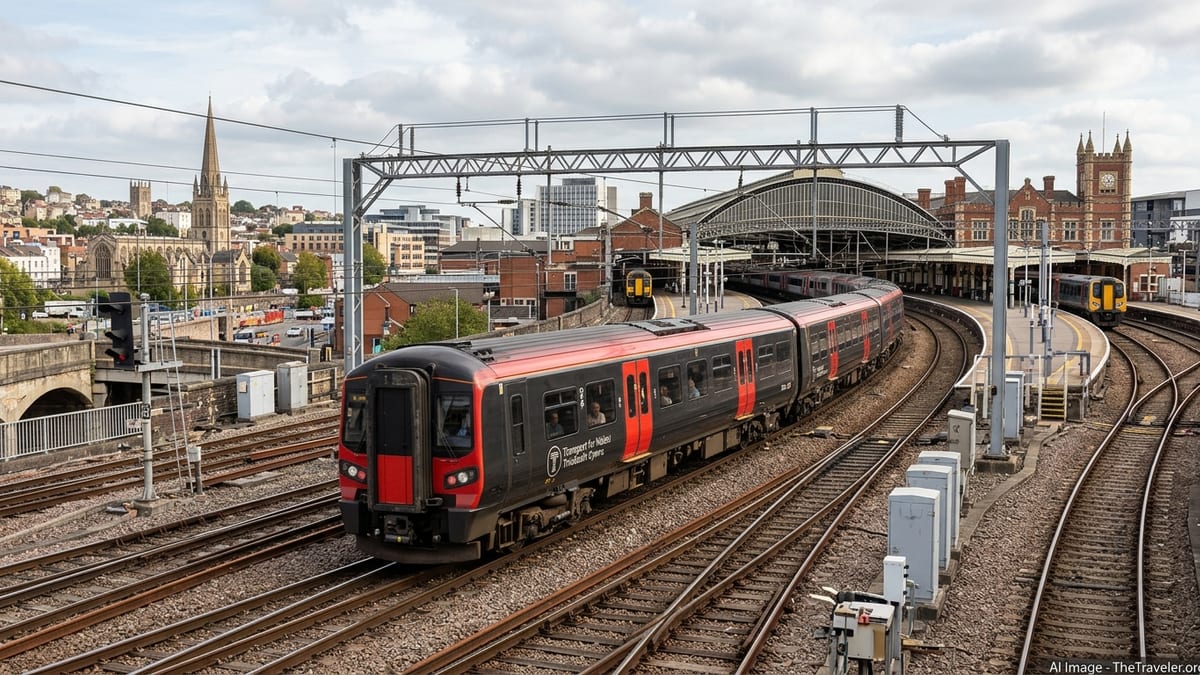
Transport for Wales Rail will launch new direct services between West Wales and Bristol Temple Meads from Sunday 13 December 2026, creating one-seat journeys across the Severn for towns such as Carmarthen, Swansea, Milford Haven and Fishguard that currently require a change at Cardiff Central.
Get the latest news straight to your inbox!
What has been approved for December 2026
The Office of Rail and Road has approved Transport for Wales’ application for firm track access rights to run West Wales to Bristol Temple Meads services from the UK-wide December 2026 timetable change, known as the Principal Change Date. The approval is set out in the regulator’s 52nd supplemental agreement decision letter, which confirms access from the December 2026 change until at least early 2028.
Under the plan, existing West Wales to Cardiff services will be extended across South East Wales and through the Severn Tunnel to Bristol, rather than operating as a completely separate route. The new trains will run through Cardiff Central and Newport before continuing to Bristol Temple Meads, with some weekday and Saturday services also due to stop at Bristol Parkway according to current planning documents.
Public information from Transport for Wales and government sources indicates a core pattern of roughly two-hourly services. On this basis, there are expected to be around nine trains in each direction on weekdays and Saturdays, though exact departure times and stopping patterns remain subject to late timetable work before they appear in journey planners.
Which Welsh communities gain direct Bristol links
The new cross-border services are designed to give a one-seat ride between Bristol and a string of West Wales communities for the first time in the modern timetable. Trains are scheduled to start in West Wales at Carmarthen, with extensions on at least one service each way most days to both Milford Haven and Fishguard Harbour, according to the ORR filings and supporting material from the Welsh Government and local media.
Along the main corridor, intermediate stations including Llanelli, Gowerton and Swansea will gain direct Bristol connections, as will larger South Wales stations such as Neath, Port Talbot and Bridgend on those services that follow the usual West Wales to Cardiff route. These trains will then continue through Cardiff Central and Newport before crossing the Severn, giving communities along much of the South Wales main line a direct option into Bristol Temple Meads.
For travellers in Pembrokeshire and Carmarthenshire, the practical change is the removal of the mandatory interchange at Cardiff Central when heading for Bristol. Instead of planning connection times and walking between platforms at Cardiff, passengers will be able to remain on the same train from their local West Wales station through to Bristol, or vice versa.
What will the journey look like for passengers
The services are planned to use the established route from West Wales into Cardiff before running east through Newport, Severn Tunnel Junction and over the Severn Tunnel to Bristol. Most trains are set to terminate at Bristol Temple Meads, the city’s main station close to the centre and onward connections across southwest England. Some weekday and Saturday diagrams are also expected to include calls at Bristol Parkway, improving links to the northern fringe of the city and to longer-distance services on the main line.
Transport for Wales has indicated that its new Class 197 diesel multiple units are intended for the route, in line with its wider deployment of this fleet across South and West Wales and cross-border services. However, the operator has not yet published a definitive unit-by-unit allocation, so there remains a possibility that other diesel units may appear on some workings, particularly during the bedding-in period, and travellers should check nearer the time if rolling stock is a priority for them.
Because these are extensions of existing West Wales to Cardiff workings, journey times between West Wales, Cardiff and Bristol are expected to be broadly comparable to making today’s connection at Cardiff, but with the convenience of remaining on a single train. For some itineraries, especially where current connections are relatively tight or involve platform changes, the through services may also reduce overall travel time and uncertainty.
Impact on cross-border travel and what to check next
Welsh Government transport officials have framed the new link as a significant improvement in cross-border rail connectivity between Wales and England rather than a replacement for any existing operator. Great Western Railway’s Cardiff to Bristol services will continue to run alongside the new Transport for Wales trains, giving passengers a wider choice of departure times and potentially easing crowding on the busiest flows.
Policy statements around the approval emphasise that the West Wales to Bristol trains are intended to provide an alternative to car travel along the M4 corridor and to improve access from Bristol and southwest England to coastal and tourism areas in Pembrokeshire and Carmarthenshire. For travellers, the main benefit will be more straightforward planning of weekend leisure trips, commuting and study journeys that cross the Severn, particularly for those living beyond Swansea who until now have had to factor in a change of train and possible missed connections at Cardiff Central.
As 13 December 2026 approaches, the key things for travellers to watch are the appearance of the finalised December timetable in rail journey planners, confirmation of which trains will call at Bristol Parkway and at smaller intermediate stations, and any operator announcements about introductory fares or promotional offers. With access rights currently granted only through the early part of 2028, early passenger feedback and loadings during 2027 and into 2028 are likely to play an important role in determining whether the service pattern is adjusted or extended in future.