


More news on this day
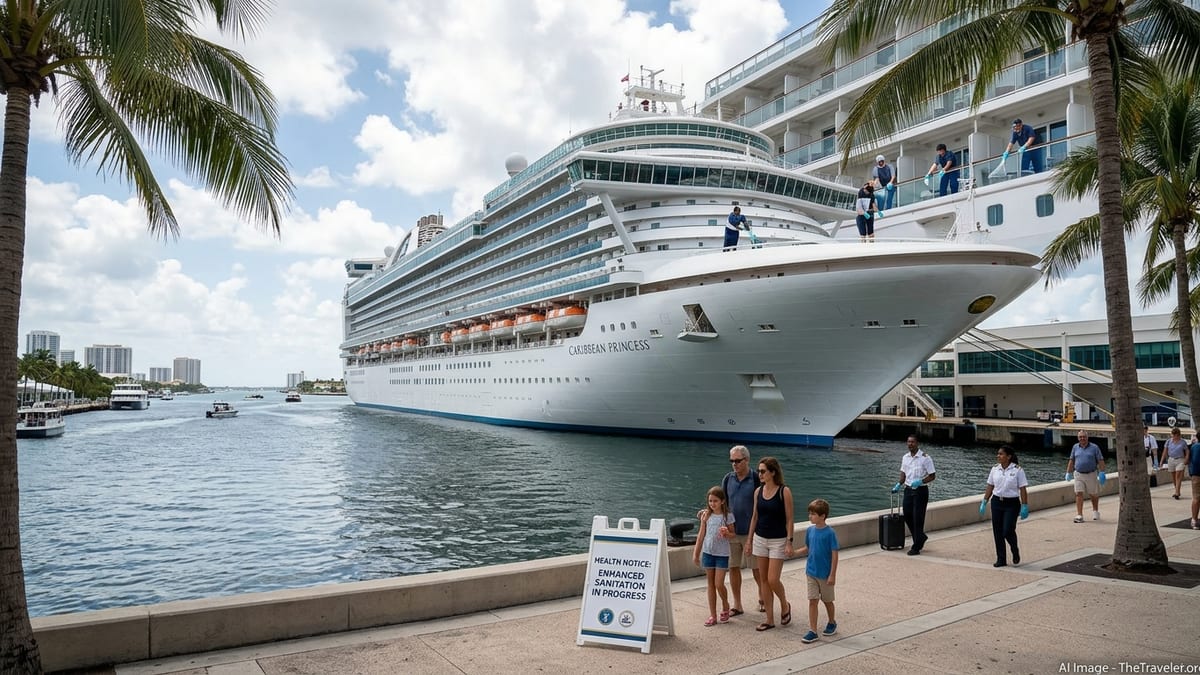
U.S. health officials are investigating an outbreak of acute gastrointestinal illness that has sickened nearly 150 passengers and crew aboard Princess Cruises’ Caribbean Princess during a 12-night round-trip voyage from Fort Lauderdale, highlighting how the CDC tracks and manages cruise-related illness from major U.S. homeports.
Get the latest news straight to your inbox!
What the CDC and Princess Cruises say about the current outbreak
According to the Centers for Disease Control and Prevention’s Vessel Sanitation Program (VSP), the Caribbean Princess reported an outbreak of acute gastrointestinal illness to the agency on November 15, 2026, while sailing a 12-night itinerary to the Caribbean, Colombia and the Panama Canal that departed Fort Lauderdale on November 11 and is scheduled to return November 23.
The CDC’s outbreak summary lists 134 passengers out of 2,936 and 14 crew members out of 1,132 with predominantly vomiting and diarrhea, placing the total case count at 148 and above the agency’s threshold for public posting on its cruise outbreak table.
The pathogen is still listed as “unknown” as of November 20, 2026, with stool specimens undergoing testing, so officials have not confirmed whether norovirus or another agent is responsible.
How the incident fits into 2026 cruise illness reports
The Caribbean Princess episode is one of a small number of cruise outbreaks that have met the CDC’s public reporting criteria in 2026, and it is the second VSP-listed outbreak on the same ship this year, following a norovirus incident earlier in the spring.
Another 2026 case involving Princess Cruises occurred on the Ruby Princess, which departed San Francisco on June 12, 2026, for a 20-day round-trip Alaska and Canada cruise and returned July 2; the CDC reported 102 passengers and 23 crew members with gastrointestinal illness on that voyage and identified norovirus as the cause.
Both the Fort Lauderdale-based Caribbean Princess sailing and the San Francisco-based Ruby Princess voyage therefore appear on the CDC’s 2026 cruise outbreak list, but they represent specific voyages on individual ships rather than a system-wide health emergency for Princess Cruises or for U.S. homeports generally.
How CDC defines an outbreak and what happens onboard
Under the Vessel Sanitation Program, cruise ships sailing from U.S. ports must track and report gastrointestinal illness cases to the CDC, and an outbreak is posted on the agency’s website when at least 3% of passengers or crew report qualifying symptoms such as vomiting or diarrhea to the ship’s medical team during a voyage.
Once the threshold is met, ships are required to submit daily updates to the CDC on case counts and control measures, while health officials may board the vessel during or at the end of the cruise to review records, inspect sanitation practices and collect specimens for laboratory testing.
Princess Cruises has said that in response to the Caribbean Princess situation it isolated symptomatic guests to their cabins and intensified cleaning and disinfection efforts, while describing the illnesses in a statement as affecting a “limited number of guests” with generally mild symptoms, language similar to how the company characterized the Ruby Princess norovirus cases earlier this year.
What enhanced hygiene measures mean for travelers
For passengers, outbreak-control measures on affected sailings can be highly visible, including crew-served buffets instead of self-service, more frequent disinfection of high-touch surfaces such as railings and elevator buttons, and clear instructions for anyone feeling unwell to contact the medical center and remain in their cabin until cleared.
These steps are designed to limit person-to-person spread and contamination in shared spaces, and they may be implemented even when the suspected pathogen has not yet been confirmed in the laboratory, as is the case with the current Caribbean Princess investigation.
While such measures can temporarily change the onboard experience, they are part of the standard response framework developed between cruise lines and the CDC rather than an indication that cruising from ports like Fort Lauderdale or San Francisco has broadly become unsafe.
Practical takeaways for upcoming cruises
Travelers with cruises booked from Florida or California can monitor the CDC’s Vessel Sanitation Program website, which lists current and past gastrointestinal illness outbreaks by ship and voyage, to see whether their specific sailing has any reported issues.
Health agencies consistently advise passengers to practice frequent handwashing with soap and water, promptly report any gastrointestinal symptoms to the ship’s medical staff and consider travel insurance that covers medical care and trip disruption, since isolation due to illness can affect the ability to participate in shore excursions or onward travel plans.
Even with several high-profile incidents in 2026 involving Princess ships from Fort Lauderdale and San Francisco, publicly reported outbreaks still account for a small share of total cruise departures, and illness reports are concentrated on particular voyages rather than across all sailings from these major U.S. homeports.