


More news on this day
American Airlines flight AA3230 from Phoenix to Portland declared a mayday over a reported hydraulic problem on November 19, 2026, after another crew spotted possible engine flames, prompting a rapid but safe return to Phoenix and an evening rebooking for affected travelers.
Get the latest news straight to your inbox!
What Happened On Flight AA3230
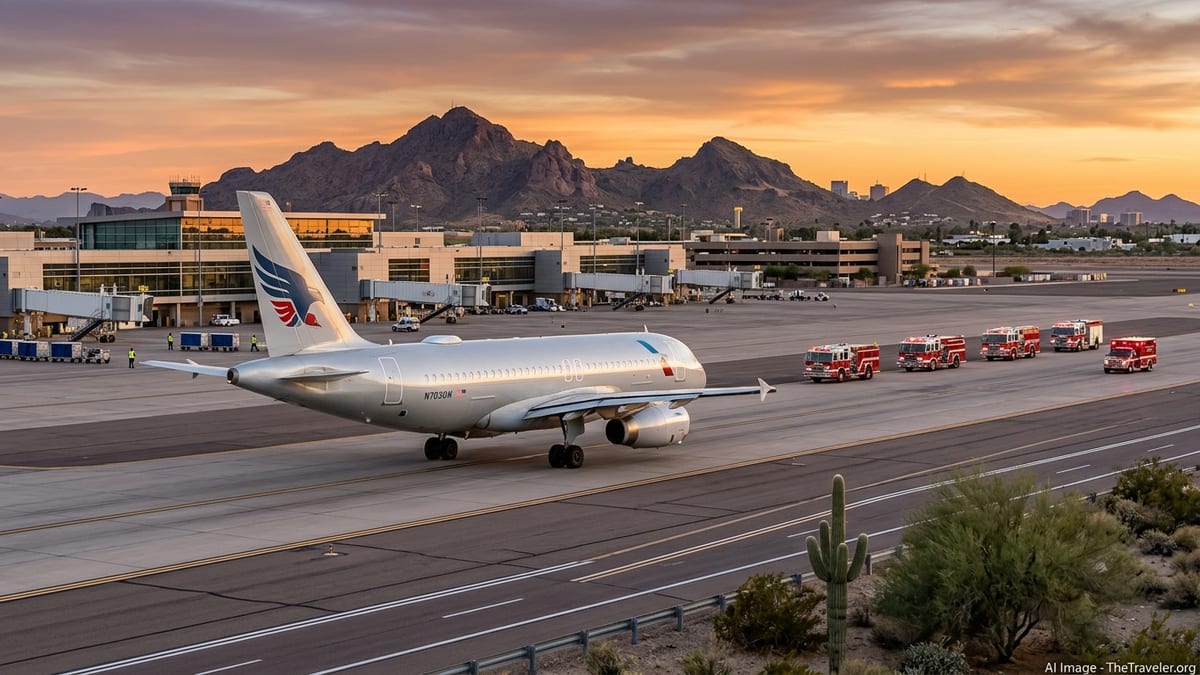
On Thursday, November 19, 2026, American Airlines flight AA3230, an Airbus A319 operating from Phoenix Sky Harbor to Portland International Airport, declared a mayday shortly after departure and returned to Phoenix. Tracking data and multiple aviation reports indicate the aircraft took off in the late afternoon and was back on the ground in roughly 20 minutes, with no injuries reported among passengers or crew.
Before issuing the mayday call, the flight’s pilots informed air traffic control that they were dealing with a hydraulic problem and would need to come back to Phoenix. Controllers subsequently relayed a report from the crew of another departing aircraft, widely identified as a SkyWest-operated regional flight, who said they had seen flames coming from one of AA3230’s engines shortly after takeoff.
American Airlines has stated that the aircraft “returned to Phoenix due to a mechanical issue,” confirming the safe landing and normal deplaning. The airline has not publicly confirmed any engine fire, nor has it detailed the specific nature of the hydraulic issue, which remains the subject of internal inspection and potential regulator review.
Timeline, Aircraft Details and Passenger Disruption
AA3230 was scheduled to leave Phoenix at around 3:58 p.m. local time on November 19 and pushed back shortly after 4 p.m., according to flight-tracking data. After departure to the west, the crew reported hydraulic trouble, declared a mayday and requested vectors back to Phoenix. The A319 landed back at Sky Harbor at approximately 4:34 p.m., where it taxied to the gate under its own power before being taken out of service for maintenance checks.
The aircraft has been identified in aviation databases as Airbus A319 registration N703UW, a roughly 28-year-old jet that joined American’s fleet following the US Airways merger. While the age of the aircraft is notable to some travelers, regulators focus on maintenance condition rather than calendar age, and there has been no indication from American or U.S. authorities of any fleet-wide safety concern linked to this incident.
Reports from the airline and flight-tracking services indicate that around 120 people were on board, including approximately 113 passengers and five crew members. After returning to Phoenix, travelers were rebooked onto a replacement aircraft to Portland that same evening, arriving several hours later than originally scheduled. Some services list the onward departure around early evening; exact times vary slightly between tracking platforms, but they concur that customers completed the trip that night rather than waiting until the next day.
What Is Known, What Is Not, And Why Maydays Matter
As of November 20, 2026, the key confirmed facts are the crew’s report of a hydraulic problem, the declaration of a mayday, the SkyWest crew’s observation of apparent engine flames and the safe return to Phoenix without injuries. American’s public statement refers only to a mechanical issue and does not address the reported flames, possible fluid leaks or any tire or smoke observations noted in some specialist aviation reports.
The exact cause of the reported hydraulic problem, and whether it is connected to the apparent engine flames seen from the other aircraft, has not been disclosed. There is also no public confirmation yet on whether the Federal Aviation Administration or the National Transportation Safety Board will open a formal investigation, which is common when an emergency declaration involves possible engine or system damage but is not automatic.
For travelers, the mayday call itself is a sign that safety protocols are working rather than failing. A mayday declaration ensures priority handling by air traffic control, rapid clearance back to the airport, and the positioning of emergency services along the runway in case the situation deteriorates. In this case, those safeguards were activated, but the aircraft landed normally and passengers exited via the jet bridge rather than emergency slides.
Impact On Passengers And What Travelers Can Expect After A Diversion
The immediate impact on AA3230’s customers was delay, missed onward connections for some, and a change of aircraft type and schedule on a busy November travel day. American has said that customers were re-accommodated to Portland that evening, and tracking data confirms that the replacement flight arrived several hours late compared with the original timetable.
Under U.S. regulations, unscheduled returns and diversions caused by mechanical problems do not trigger automatic cash compensation in the way that certain delays can under European Union rules. Passengers who choose not to travel after such an event can typically request a refund for the unused portion of their ticket, but any additional costs such as hotels or alternative transport are handled case by case under the airline’s policies rather than by law.
For those continuing to travel, the main practical effects are disruption to same-day plans and the need to rebook onward flights or ground transport. Airlines usually prioritize passengers from a diverted flight on the next available services, but availability can be tight on peak travel days, particularly on popular domestic routes like Phoenix to Portland.
What Travelers Should Do In Similar Situations
In flight, the most important step for passengers during any declared emergency is to follow crew instructions closely and to keep aisles clear, even if the aircraft appears to be operating normally. Announced returns for mechanical issues can feel alarming, especially when emergency vehicles are visible after landing, but they are a routine part of aviation safety procedures.
After a diversion or emergency return, travelers should monitor their airline’s mobile app and airport departure boards for updated flight details and gate changes. Customer-service lines and in-app chat tend to fill quickly after a high-profile incident, so using self-service rebooking options where available can help secure earlier seats to the final destination.
Before setting out again, it is worth confirming whether you prefer a refund or re-accommodation if your schedule has been significantly disrupted, and keeping receipts for any reasonable out-of-pocket expenses that might be considered for reimbursement. As American, the FAA and potentially the NTSB release further information about the November 19 AA3230 incident, travelers on this and similar routes should check for any updated guidance but can continue to expect that unscheduled returns for mechanical concerns will be handled first and foremost as safety events rather than customer-service issues.