


More news on this day
U.S. air travelers are heading into the Thanksgiving rush with lingering delays and scattered cancellations, as the national flight network continues to absorb the impact of a rare nationwide FAA ground stop on November 13 and a separate United Airlines system outage on November 16, with Orlando International Airport among the hubs showing elevated disruption even without any formal FAA delay program in place today.
Get the latest news straight to your inbox!
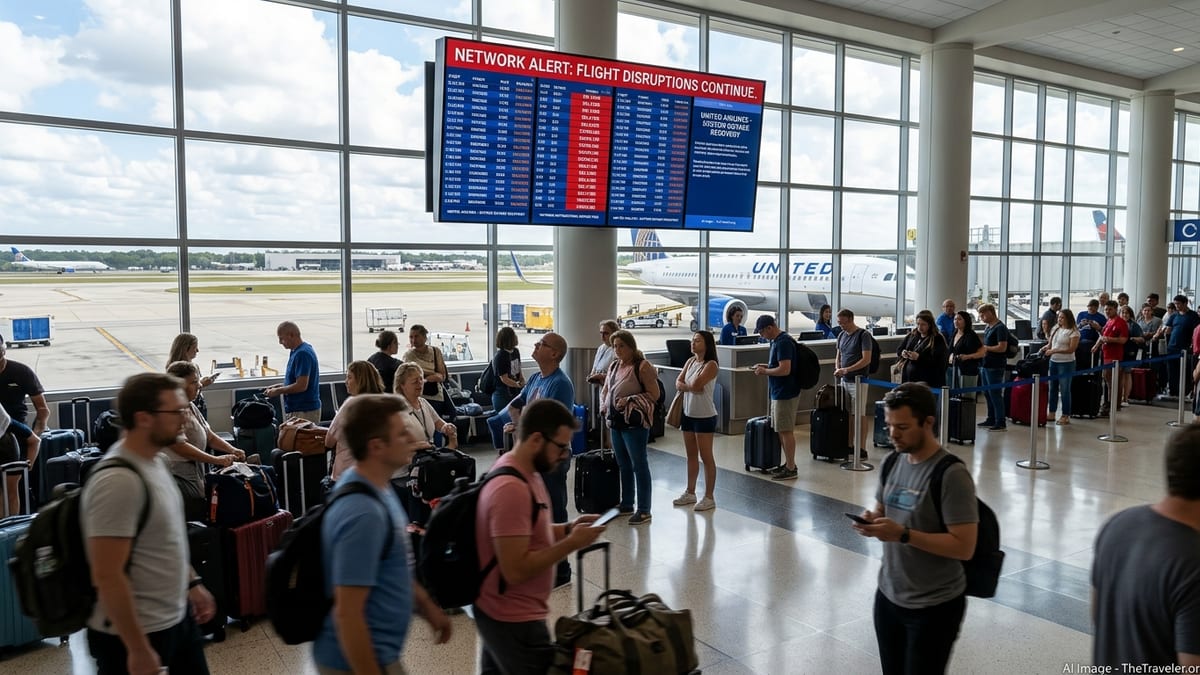
Network still settling after November 13 nationwide ground stop
The Federal Aviation Administration ordered a nationwide ground stop for all U.S. airports on Friday, November 13, 2026, following a telecommunications failure that affected communications between air traffic control centers and aircraft. According to an FAA question-and-answer update and federal briefings, the system issue prompted the agency to halt departures for safety reasons, ultimately leading to thousands of cancellations over the following days while airlines worked to reposition aircraft and crews.
Current federal summaries indicate the ground stop lasted for just under five hours, but knock-on effects carried into the weekend as carriers canceled or delayed flights to rebalance schedules. Transportation and emergency-management documents describe the failure as stemming from overloaded or malfunctioning network equipment in an aging infrastructure, and officials have stressed that there is no confirmed evidence of a cyberattack, while acknowledging that the exact chain of technical causes is still being examined.
By November 14, officials were signaling that the air traffic control system itself was operational and that airlines were expected to restore largely normal schedules by the end of November 15. However, today’s patterns show that while the formal ground stop has long been lifted, residual congestion and aircraft-placement issues are still surfacing as delays in various parts of the network.
United’s November 16 tech outage added another layer of disruption
Three days after the nationwide ground stop, United Airlines experienced a separate technology outage on Monday, November 16, 2026, that affected departing flights across its network. United described the incident as a “widespread system outage” impacting pilot- and crew-facing tools, including systems used to provide final aircraft weight information before departure, and temporarily held departing flights while the problem was addressed.
United and multiple news outlets report that the disruption lasted roughly 90 minutes to two hours before systems were restored, after which flights already in the air continued normally but hundreds of departures experienced delays as the airline cleared accumulated queues. The carrier has said publicly that there is no indication the outage was caused by a cyberattack and has not linked it directly to the FAA’s separate telecommunications failure.
Because the incident fell inside an already stressed travel week, it contributed to additional late-evening delays and scattered cancellations across United’s hubs. For travelers, that meant a higher risk of missed connections and overnight disruptions, especially for itineraries that relied on tight layovers on November 16 and into the morning of November 17.
Real-time data show continued delays today, but no new FAA program
As of this afternoon on November 20, 2026, live statistics from flight-tracking service FlightAware indicate that there are currently around 1,800 to 1,900 delays within, into or out of the United States and several hundred cancellations. These figures update throughout the day and are operational estimates rather than certified Department of Transportation statistics, but they give a snapshot of how the system is performing heading into the pre-Thanksgiving weekend.
FAA status information and third-party aggregators that mirror the Air Traffic Control System Command Center show no national ground stop or nationwide delay program in effect today. Individual airports may still see localized flow control or minor traffic-management initiatives, but there is no broad federal restriction comparable to the November 13 event. That means most of today’s disruptions are linked to local weather, airline-specific issues and the residual effects of earlier disruptions rather than any new, centralized halt to departures.
For passengers, the practical impact is that today’s problems are unevenly distributed rather than systemwide: some hubs are moving close to schedule, while others are registering moderate delays that can still cascade into late arrivals and missed onward connections.
Orlando’s delays highlight localized strain ahead of Thanksgiving
Orlando International Airport, one of the country’s busiest leisure gateways and a top Thanksgiving destination, has been among the airports showing notable disruption in the days since the ground stop. Airport statistics compiled by Airportia for the 10 days from November 10 to November 19, 2026, indicate that departures from Orlando recorded an average delay of about 43 minutes, counting on-time and cancelled flights as zero delay, with roughly 5 percent of scheduled departures cancelled over that period.
Today’s real-time trackers show that Orlando is not currently under any FAA ground stop or ground delay program, but conditions remain challenging. FlightAware and similar services report that MCO is experiencing typical departure delays in the range of about 30 to 45 minutes this afternoon, attributed in part to weather, with a smaller number of individual flights facing longer waits. Localized thunderstorms, low cloud ceilings and heavy traffic volumes are cited by these tools as contributing factors rather than any new systemic outage.
While these figures do not make Orlando officially the country’s worst-performing airport, they confirm that the airport has been operating with significantly longer-than-normal departure waits and above-average cancellations in the days leading up to Thanksgiving. For travelers using MCO, that translates into busier gate areas, more crowded security and check-in lines and a greater chance that even a modest schedule hiccup can ripple through their entire itinerary.
What travelers should expect and how to prepare
For travelers flying in the coming days, the main consequence of this mixed recovery is elevated uncertainty rather than outright shutdowns. With nationwide delays still numbering in the low thousands and airports like Orlando seeing average departure holds of roughly half an hour or more at times, tight connections are more vulnerable, and evening arrivals can push into late night as earlier delays propagate through the schedule.
Practical steps can mitigate some of the risk. Airlines and airport authorities are urging passengers to allow extra time at the airport, particularly at busy leisure hubs and major connections, and to monitor flight status frequently on both airline apps and airport departure boards. Where possible, selecting longer connection windows, avoiding the last flight of the day on critical legs and checking in early can reduce the chance of being stranded if a delay compounds.
Looking ahead to the core Thanksgiving travel days next week, federal agencies have not announced any new nationwide operational restrictions, but reviews of the November 13 ground stop and the November 16 United outage are ongoing. Travelers planning to depart between November 22 and November 27 should continue to check for schedule adjustments, weather advisories and any targeted traffic-management programs at their departure and connection airports, especially if traveling through disruption-prone hubs such as Orlando.