


More news on this day
A Disney Wish cruise from Port Canaveral cut its voyage short within hours of departure after a reported medical emergency on board prompted the ship to return to port, according to multiple passenger accounts and publicly available ship-tracking information.
Get the latest news straight to your inbox!
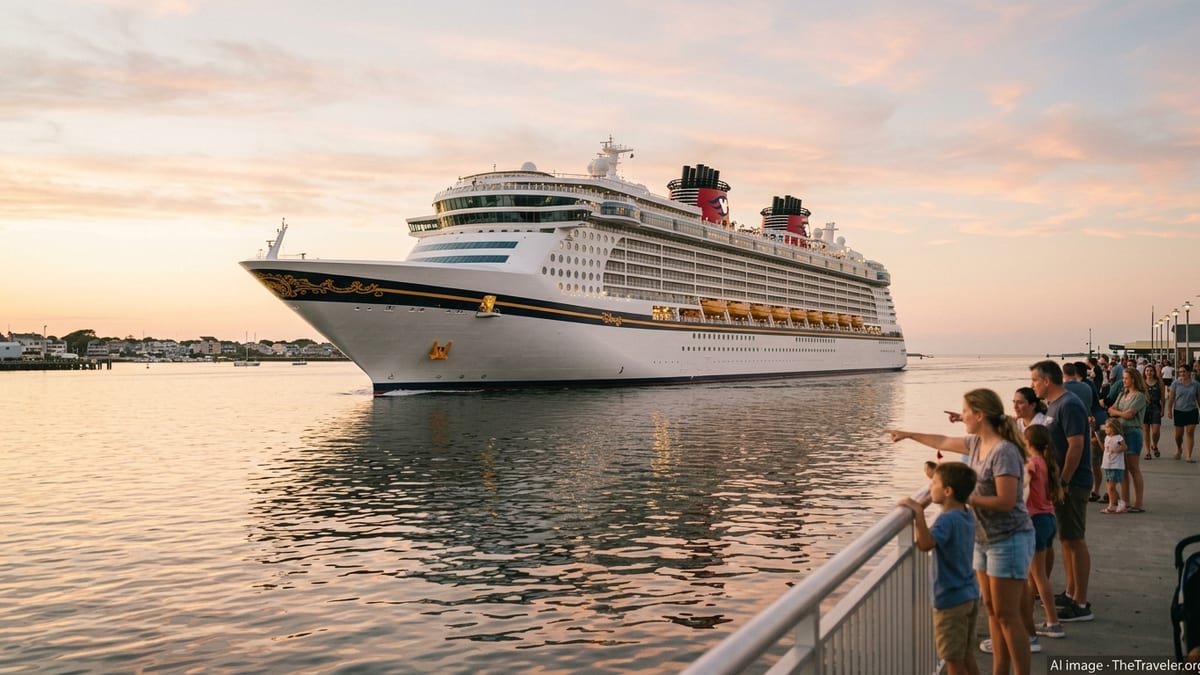
Voyage Interrupted Shortly After Departure
The incident occurred on an early sailing in the current Bahamas cruise schedule, when Disney Wish departed Port Canaveral on a short itinerary and was expected to remain at sea overnight. Publicly accessible marine-tracking data shows the ship leaving on schedule and then reversing course back toward the Central Florida port instead of continuing on its planned route.
Discussion among cruise watchers and passengers on online forums indicates that the ship returned to Port Canaveral within only a few hours of sailing. Posts from travelers describing the experience refer to an urgent situation involving an individual who required care beyond the capabilities of the ship’s medical facilities.
Ship schedules for Port Canaveral list Disney Wish as an overnight presence at the port following the unscheduled return, aligning with reports that the vessel remained docked while the situation was addressed and the voyage plan adjusted. The interruption affected what is typically a tightly timed schedule of three and four night sailings to Nassau and Disney’s private destinations in the Bahamas.
There have been no widely circulated official statements detailing the precise timing of events or identifying the person involved. Available reports focus primarily on the operational impact to the voyage and the decision to prioritize medical care by returning to land-based facilities.
Medical Diversions a Known Part of Cruise Operations
Medical emergencies are an established risk on large cruise ships, where thousands of guests of varying ages and health statuses are traveling far from advanced medical centers. Modern vessels such as Disney Wish are equipped with onboard medical teams and treatment rooms designed for a range of urgent situations, but serious or specialized cases often require evacuation ashore.
Cruise lines can respond in several ways, depending on the ship’s location and the severity of the case. Options include turning back to the departure port, diverting to the nearest suitable harbor, or coordinating a medical evacuation with maritime rescue services. In this instance, the ship’s proximity to Port Canaveral shortly after departure made a direct return to the home port the most practical option.
Publicly accessible cruise-industry guidance emphasizes that decisions to alter a voyage for medical reasons are typically based on the judgment of onboard medical staff in coordination with shoreside teams, with safety placed ahead of schedule considerations. While itinerary disruptions can be frustrating for guests, such diversions are widely regarded as a necessary part of responsible cruise operations.
For Disney Cruise Line, which markets its product heavily to families, a rapid response to health-related incidents forms a critical part of its safety and service reputation. Returning quickly to port, even at the expense of the first night of a short itinerary, is consistent with broader industry practice when advanced treatment is required.
Impact on Passengers and Itinerary
Passengers posting about the event describe an evening of uncertainty as the ship altered course and eventually docked again at Port Canaveral, rather than heading for an open-sea overnight run. Reports suggest that onboard activities and entertainment continued as the crew worked to maintain a sense of normalcy while the medical situation was addressed.
Once back at the pier, the ship reportedly remained in port overnight, giving medical personnel on land access to the affected guest. Travelers noted that some onboard services adjusted hours and programming to reflect the unusual schedule, with the ship effectively functioning as a stationary resort for part of the night.
Short cruises have limited flexibility when disruptions occur, and a return to port within hours of departure can compress or alter the remaining itinerary. In similar past incidents in the wider cruise sector, lines have sometimes shortened port calls, adjusted sailing speeds, or modified routes in an effort to preserve as much of the advertised experience as possible for guests while keeping to future departure commitments.
Passengers on disrupted voyages typically receive information at various points during the process, with additional details later shared regarding any changes to ports of call or onboard schedules. Many travelers affected by such events express understanding that medical diversions are unpredictable and prioritize passenger welfare over exact adherence to the original plan.
Disney Wish’s Role in Port Canaveral Cruise Traffic
Disney Wish is a key part of Disney Cruise Line’s presence at Port Canaveral, operating a busy schedule of three and four night sailings to the Bahamas. Port schedules for 2026 show the ship calling frequently at the Central Florida hub, often alongside other major vessels serving the Caribbean and Bahamas market.
The ship, which debuted in the mid-2020s, is designed as a family-focused resort at sea, featuring elaborate entertainment, themed dining, and dedicated spaces for children and adults. Its itineraries are structured around quick getaways that pair Port Canaveral with Nassau and Disney’s private island experiences, appealing particularly to families combining cruises with Orlando-area theme park visits.
Because the vessel’s timetable is closely integrated with other ships using the same terminals, any unexpected delay or overnight stay in port can have ripple effects on pier assignments and local logistics. Port schedules and cruise-industry updates indicate that Disney Wish generally maintains a tightly choreographed pattern of early-morning arrivals and late-afternoon departures to keep pace with demand.
The brief interruption linked to the reported medical emergency did not alter the longer-term deployment pattern for Disney Wish at Port Canaveral, and the ship is listed to continue its regular rotations in the weeks following the incident. For prospective passengers, the episode serves primarily as an example of how itineraries can adjust when health emergencies arise.
What Prospective Cruisers Should Know
Episodes like the recent return of Disney Wish to Port Canaveral highlight an important aspect of cruise travel that prospective guests should consider when planning a vacation. While itineraries are marketed in detail, all major cruise contracts note that routes and schedules can change at any time for reasons including weather, mechanical issues, or medical emergencies.
Travelers evaluating a cruise with Disney or any other line may want to review ticket contract terms, travel insurance options, and cancellation or compensation policies related to voyage disruptions. Published policy language generally outlines what guests can expect if a sailing is shortened, ports are substituted, or departure and arrival times are altered because of circumstances beyond the company’s control.
At the same time, the rapid-response capabilities demonstrated in this type of incident underscore the level of preparedness expected from major cruise operators. The combination of onboard medical staff, established procedures for coordinating with shoreside resources, and the ability to change course quickly is designed to ensure that health and safety remain the top priority, even when it requires bringing a ship back to port far sooner than planned.
For many travelers, this balance between operational certainty and the flexibility to respond to emergencies is an accepted part of modern cruising. The recent Disney Wish diversion serves as a reminder that, on the open ocean, passenger care can take precedence over the exact timing of a dream vacation.