


More news on this day
Disney Cruise Line’s Disney Wish briefly returned to Port Canaveral on Monday, July 27, after departing on a Bahamas itinerary, with published coverage indicating the turnaround was prompted by a medical emergency on board.
Get the latest news straight to your inbox!
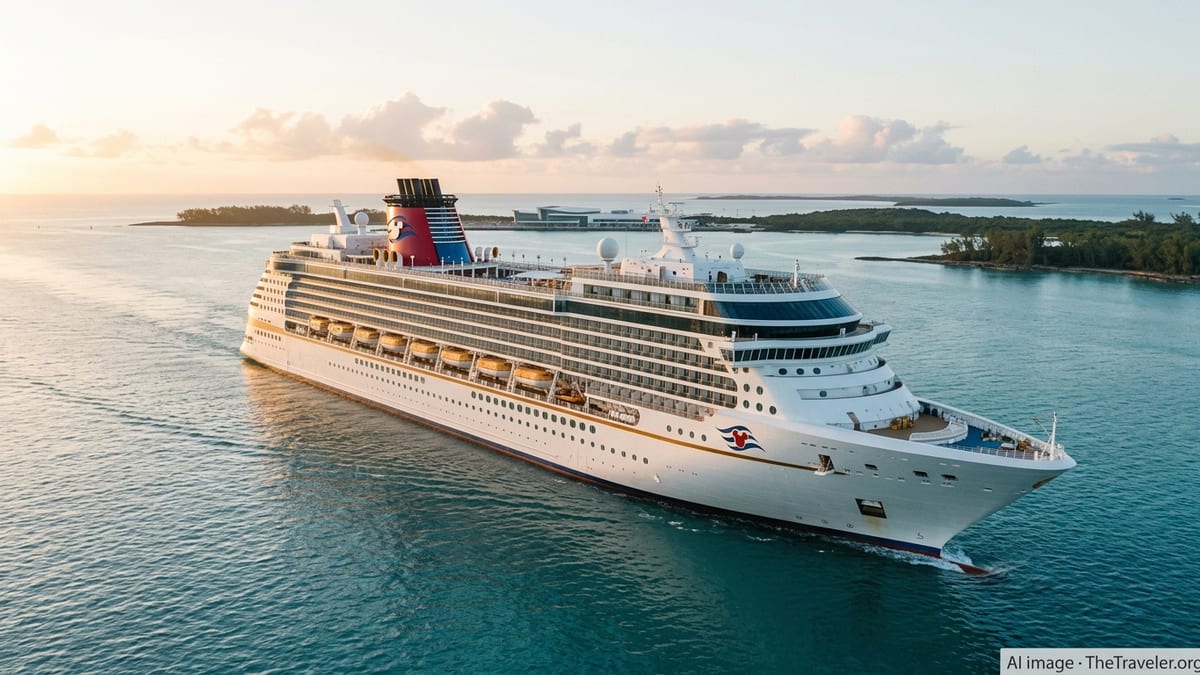
Ship Turns Back To Port Canaveral Shortly After Departure
Publicly available ship-tracking data and cruise schedule information show that Disney Wish departed Port Canaveral on the afternoon of July 27 on a scheduled Bahamas sailing before turning back and reappearing at the central Florida port within a few hours. The return occurred early enough in the voyage that the vessel was still relatively close to shore, allowing it to retrace its route to Port Canaveral instead of arranging an at-sea transfer.
Reports from cruise-focused outlets describe guests and onlookers noting the ship’s unexpected presence at Port Canaveral later in the day, despite its itinerary calling for a route toward Nassau. Discussion in online cruise communities highlighted confusion among travelers staying at hotels near the port, who observed Disney Wish berthed at a different terminal than earlier in the day and sought explanations for the rapid turnaround.
Coverage indicates that after addressing the situation in port, the vessel resumed its Bahamas itinerary, limiting the disruption primarily to the first hours of the sailing. At the time of writing, there are no indications that the overall voyage length or scheduled return date to Port Canaveral have changed.
Medical Issue Reported As Reason For Return
According to published coverage from Disney Cruise Line news outlets and posts shared within cruise discussion forums, the ship’s early return to Port Canaveral was reportedly prompted by a medical emergency involving an individual on board. The nature of the medical issue, the person’s identity, and their current condition have not been disclosed in publicly available sources.
Commentary from passengers on past Disney Wish sailings and other Disney Cruise Line voyages suggests that returning to port or diverting course for serious medical needs is not uncommon within the cruise industry. Travelers have shared numerous examples of sailings altered to allow a guest or crew member to be transferred to shoreside care, reflecting the priority placed on rapid access to advanced medical facilities when necessary.
While the ship’s onboard medical center can treat a range of conditions, cruise lines typically rely on land-based hospitals for complex or time-sensitive emergencies. Turning back to the departure port, particularly in the initial hours of a voyage, can be one of the fastest ways to achieve that transfer.
Guest Experience And Itinerary Impact
Initial indications are that the impact on the July 27 sailing of Disney Wish was concentrated in timing rather than in the complete loss of scheduled ports. The ship’s Bahamas itinerary, which commonly includes Nassau and Disney’s private island, is built around relatively short distances from Port Canaveral, giving the captain added flexibility to make up some time after an early return.
Guests on similar sailings in recent months have described minor schedule adjustments, such as later arrival or departure times at ports of call, when ships respond to onboard medical situations. In most of those cases, travelers reported that the cruise line adjusted activities and port times to preserve as much of the planned experience as possible.
In online reactions to the latest incident, many cruise enthusiasts noted that while unexpected schedule changes can be disappointing, they are typically viewed as a necessary response when someone’s health is at stake. For some frequent cruisers, repeated exposure to such diversions has reinforced the understanding that itineraries are always subject to change for safety reasons.
How Cruise Lines Handle Medical Emergencies
Industry information and Disney Cruise Line guidance describe a multi-layered approach to medical events at sea. Each ship is equipped with a medical center staffed by physicians and nurses, with set clinic hours and an on-call system for urgent cases. These facilities are intended to manage a wide spectrum of issues, from minor injuries to initial stabilization of more serious conditions.
When an incident exceeds what can be reasonably managed on board, cruise lines may choose from several options, including returning to the nearest suitable port, diverting to an alternate port along the route, or arranging a transfer via local maritime or air ambulance services. The decision is influenced by the patient’s condition, weather, distance to shore, and the availability of medical infrastructure ashore.
Disney Cruise Line’s publicly available terms and health guidance emphasize that itineraries may change without notice in the interest of safety, and that guests are encouraged to carry comprehensive travel insurance that includes medical and emergency evacuation coverage. These policies are designed to give the operator flexibility to respond quickly when medical needs arise, even if that means altering a cruise that is already underway.
Broader Context For Cruise Safety And Preparedness
The reported incident involving Disney Wish adds to a broader pattern of medical-related diversions and returns across the cruise sector in 2026. Other mainstream lines have recently experienced schedule changes after serious onboard health events, with ships delaying departure, skipping ports, or doubling back to their homeport so that passengers or crew could reach advanced care.
Cruise analysts note that as ships have returned to full occupancy and itineraries have expanded, the likelihood of medical events impacting schedules has also increased. Even so, such diversions remain a small fraction of overall sailings, and operators frequently highlight their safety records and emergency response capabilities as a core part of their marketing and guest communications.
For prospective guests, travel planners often recommend reviewing a cruise line’s health protocols, medical facilities, and itinerary-change policies before booking, particularly for travelers with underlying conditions or mobility needs. The Disney Wish turnaround near Port Canaveral this week serves as a reminder that while modern cruise vacations are highly choreographed, safety considerations can still lead to sudden course changes as circumstances evolve.