


More news on this day
A key construction contract for the southern access to the Brenner Base Tunnel has been awarded in northern Italy, signaling a decisive step toward reshaping passenger and freight rail links across the Alps on the Munich Verona corridor.
Get the latest news straight to your inbox!
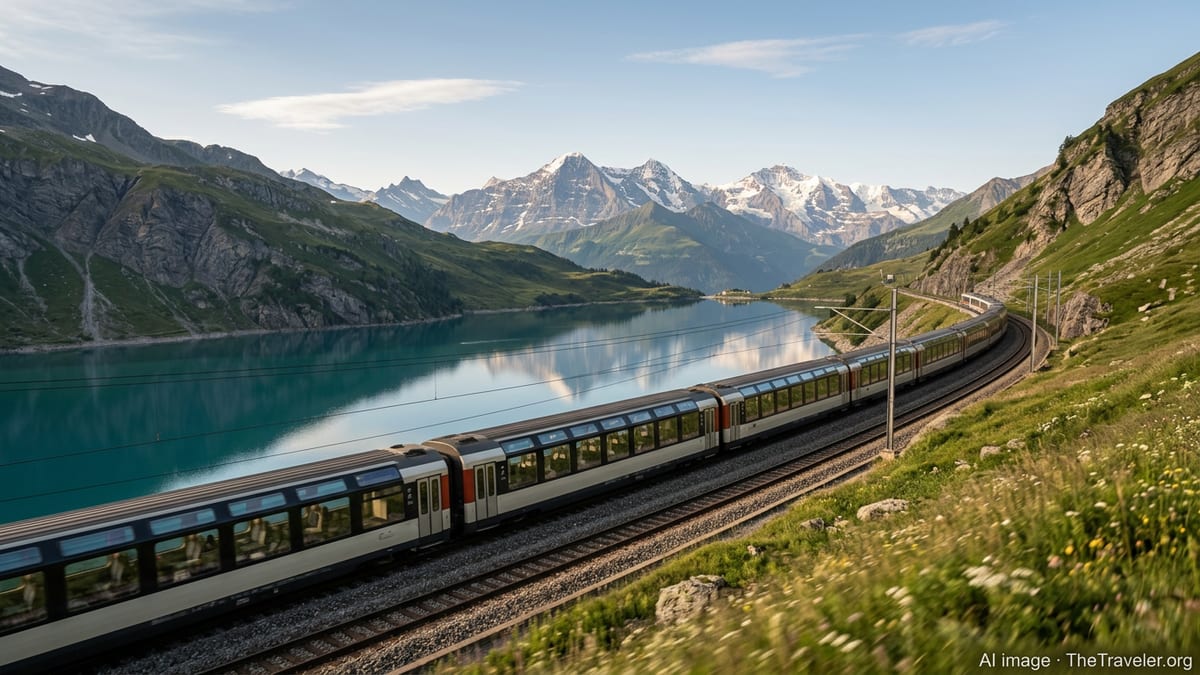
Major rail bypass project confirmed in Trento
Publicly available information from the project partners indicates that the contract covers the design and construction of the Trento rail bypass, identified as Lot 3A, on the southern access line to the Brenner Base Tunnel. The works focus on a new alignment around the city of Trento, designed to separate long distance traffic from local services and to create a more direct route for international trains.
The consortium that secured the award is led by Italy based construction group Webuild, working with partners including Ghella and others with experience on large scale European rail infrastructure. Reports indicate a contract value in the range of approximately 934 million euros, reflecting both the complexity of the underground alignment and the importance of the project within the wider Brenner Base Tunnel system.
According to project documentation, the bypass will extend for roughly 13 kilometers, with the vast majority of the route in tunnel. The design aims to limit surface impact in the densely settled Adige valley, while still delivering the capacity and speed upgrades required for future cross border rail operations.
The contract award in Trento is part of a broader upgrade of the Fortezza Verona line in northern Italy, where sections of track are being quadrupled to handle a mix of fast passenger services and heavy freight trains feeding into the Brenner Base Tunnel once it opens to traffic.
Strategic link for the Munich Verona rail corridor
The Brenner Base Tunnel is one of Europe’s flagship cross border transport projects, intended to improve rail connections between Austria and Italy beneath the Brenner Pass. While the main twin bore tunnel under the Alps has attracted most of the attention, the effectiveness of the scheme depends just as much on its northern and southern access routes.
The Trento southern access contract plays a central role in this system, giving long distance trains a faster, more reliable path into and out of the tunnel. Published coverage describes the bypass as a missing piece between the new base tunnel and the existing rail network in the Adige valley, where congestion and slower speeds currently limit capacity.
By diverting through traffic into new underground sections, the project is expected to free up space on the existing surface lines for regional and commuter services. This separation of flows is a recurring theme in European high capacity rail design, and the Brenner southern access follows the same logic, tailoring infrastructure to different types of trains and travel patterns.
In the longer term, Italian rail upgrades south of the Brenner will connect with improvements on the Austrian side, where works on the northern access lines are also underway. The combined effect is intended to shorten travel times between Munich and Verona and make rail more competitive with road transport for both passengers and freight.
Construction scope and engineering challenges
The southern access contract involves extensive tunnelling under and around the urban area of Trento, which presents both engineering and environmental challenges. Project materials describe a mix of excavation methods, with traditional drilling and blasting in some sections and tunnel boring machines in others, depending on geological conditions.
Careful phasing will be required to maintain continuity of existing rail operations and to limit disruption in the valley, which is a key north south transport corridor for Italy. Planners have emphasized the need to coordinate works with both national rail operator activities and local road networks, as construction traffic, materials delivery, and spoil removal must all be managed in a confined alpine setting.
The new bypass will incorporate emergency exits, ventilation systems, and modern signaling compatible with European Rail Traffic Management System standards. This technical equipment is critical to ensuring that the southern access line can handle high train frequencies and long freight formations once the Brenner Base Tunnel is in full operation.
Beyond the tunnels themselves, the contract includes work on connecting structures, junctions, and integration with existing stations and yards. These interface points are essential to allow trains to transition smoothly between the historic network and the new high capacity infrastructure without operational bottlenecks.
Economic and environmental implications for the region
According to information released by the construction groups involved, the Trento bypass contract is expected to generate around one thousand direct and indirect jobs during the construction period, with significant participation from local suppliers. This represents a substantial injection of investment into the regional economy, particularly in specialized sectors such as tunnelling, civil engineering, and rail technology.
Regional authorities and project backers frame the Brenner southern access as part of a broader shift in alpine transport policy, aiming to move freight from road to rail. Heavy truck traffic over the Brenner Pass has long been a source of congestion and environmental concern, and the new infrastructure is seen as a way to reduce emissions, noise, and air pollution in the valley.
Travel sector observers note that improved rail connectivity could also benefit tourism, with faster and more frequent services between northern Italy, Austria, and southern Germany. For destinations in Trentino Alto Adige and beyond, smoother rail links may offer an attractive alternative to driving, particularly during peak holiday periods when mountain roads are often saturated.
At the same time, the construction work itself must be carefully managed to protect local communities and landscapes. Environmental assessments associated with the contract set out mitigation measures for noise, vibration, and spoil disposal, along with monitoring plans for groundwater and surface water during excavation.
Next steps toward Brenner tunnel opening
With the southern access contract now awarded, attention turns to implementation timelines and coordination with progress inside the Brenner Base Tunnel. Different sections of the overall project are advancing at varying speeds, and the Trento bypass will need to be delivered in sync with other critical components.
Project schedules in the public domain indicate a multi year construction period for Lot 3A, reflecting the complexity of the underground works and the need to phase activities to maintain safety and service continuity on existing lines. Testing and commissioning of the new infrastructure will follow, including integration of signaling and control systems.
Transport industry analysis suggests that the timely completion of the southern access will be a major factor in determining how quickly the full benefits of the Brenner Base Tunnel can be realized. Aligning track, tunnel, and systems delivery on both sides of the border will be essential for the Munich Verona corridor to function as planned.
For travelers and logistics operators watching the project, the contract award for the Brenner southern access marks a tangible move from planning and design toward construction on a key section of the route. As work advances in the coming years, the Trento bypass will be closely watched as an indicator of how Europe’s latest transalpine rail link is taking shape on the ground.