


More news on this day
Passengers traveling through Stockholm Arlanda on June 6 are facing a difficult day as a cluster of cancellations and delays involving Finnair, SAS, Ryanair and other carriers disrupts links to major hubs including Paris, Berlin, London and Rome.
Get the latest news straight to your inbox!
Three Cancellations Trigger Wider Knock-On Effects
Publicly available flight tracking data for Saturday indicates that three departures and arrivals linked to Stockholm Arlanda have been cancelled, involving services operated by or on behalf of Finnair, SAS and Ryanair. While the individual flights represent a small share of the airport’s daily schedule, the cancellations are contributing to a ripple effect across the wider European network.
Information on scheduled Finnair codeshares from Arlanda shows disruptions on selected services into the London and wider UK market, with at least one London-bound departure removed from the day’s operations and passengers diverted to alternative routings through Helsinki and other hubs. Parallel schedule data for SAS and its regional partners points to scrubbed departures on short haul routes that typically feed into major connection banks in Copenhagen and other Scandinavian gateways.
Ryanair’s network around Stockholm has also seen targeted disruption this week, with recent delays and cancellations reported on routes linking Arlanda and other Swedish airports to continental Europe. Those adjustments are now being felt more keenly as today’s cancelled sectors reduce options for travelers aiming to reach onward flights in cities such as Berlin, London and Rome.
While each airline has cited different operational factors in recent weeks, including fleet rotations, crew availability and wider European air traffic constraints, the combined effect at Arlanda today is a concentrated window of cancellations feeding into an already tight summer schedule.
More Than 30 Delays Across Key European Hubs
Alongside the three outright cancellations, live departure and arrival boards and third party flight status platforms show 34 delayed flights touching Stockholm Arlanda on Saturday. Many of these services are tied to the busiest Western European hubs, including Paris, Berlin, London and Rome, amplifying the disruption across the continent.
According to aggregated punctuality data for early 2026, airports such as Paris Charles de Gaulle, Berlin Brandenburg, London Heathrow and Rome Fiumicino typically handle high volumes of traffic with on-time performance often hovering in the 70 to mid 80 percent range. Recent Europe-wide reports highlight how even a small reduction in punctuality at these hubs can quickly cascade into missed slots, longer taxi times and late departures on connecting services.
In practical terms, travelers at Arlanda have been encountering departure holds ranging from modest 20 to 30 minute slippages to significantly longer delays on some outbound and inbound flights. Services to and from London and Paris appear particularly sensitive, as congestion and weather-related constraints at those airports add to the pressure on already crowded summer schedules.
The combination of delayed arrivals from major hubs and tight turnaround windows has further narrowed the margin for error, creating a pattern where knock-on delays can spread across airlines and alliances irrespective of where the original issue began.
Finnair, SAS and Ryanair Under the Microscope
The latest problems at Stockholm Arlanda come at a time when several European carriers are already facing heightened scrutiny over reliability and customer service outcomes. In Finnair’s case, recent adjustments to long haul and transatlantic flying have pushed more connecting traffic through key European spokes, increasing sensitivity to short haul disruptions at airports such as Arlanda.
SAS has also been navigating a challenging operational environment in 2026, with travelers taking to online forums in recent months to document a mix of delays, short notice cancellations and baggage handling problems on routes into and out of Stockholm. While punctuality statistics for Scandinavian hubs remain comparatively strong, even a modest uptick in irregular operations can translate into noticeable disruption for passengers on tightly timed itineraries.
Ryanair, which operates a dense network of point to point services across Europe, continues to adjust capacity and schedules in response to changing market conditions and airspace constraints. Recent network changes, including earlier rounds of cancellations on selected routes, have left some passengers with fewer low cost alternatives when disruptions occur on busy travel days such as this.
Travelers affected by today’s events at Arlanda are being managed according to each carrier’s published policies, which typically offer options such as rebooking on later departures, rerouting via alternative hubs or applying for refunds in the case of cancellations. However, reports from recent weeks indicate that securing preferred alternatives can be difficult on peak summer dates when available seats are scarce.
Arlanda’s Strong Record Faces a Stress Test
Stockholm Arlanda usually ranks among Europe’s better performing major airports for on time operations, with recent punctuality reports placing it above the continental average for large hubs. That record has made the airport a comparatively reliable transfer point for both Scandinavian residents and international travelers heading to and from Northern Europe.
Today’s cluster of delays and cancellations therefore represents more of a stress test than a systemic breakdown. Aviation performance data suggests that when several hubs experience moderate constraints at the same time, even relatively resilient airports like Arlanda can see their schedules fray at the edges, especially during the busy summer travel season.
The concentration of today’s issues on flights linked to Paris, Berlin, London and Rome highlights how dependent regional airports are on the performance of Europe’s largest gateways. When weather, capacity restrictions or air traffic control measures affect those hubs, the impact often radiates outward to secondary nodes such as Arlanda, regardless of local conditions in Sweden.
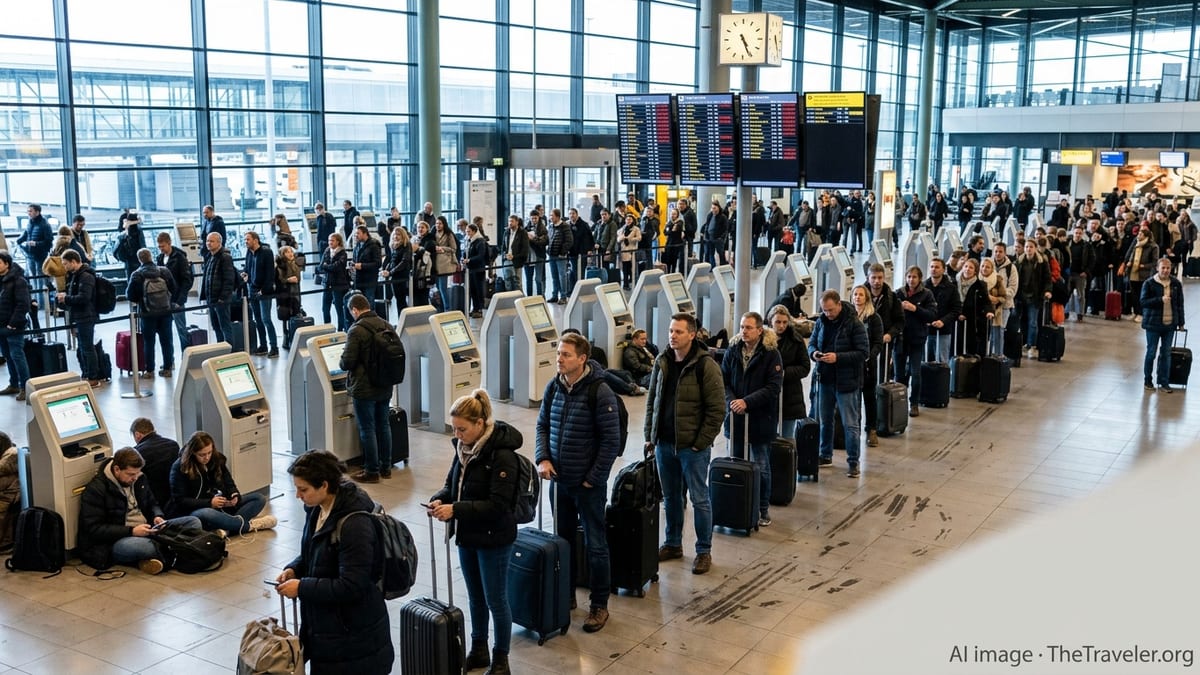
Airport operator information for Stockholm continues to emphasize that most flights are operating broadly as scheduled, but the subset of disrupted services is still significant enough to create queues at check in counters, longer waits at departure gates and increased pressure on customer service channels.
Guidance for Travelers Moving Through Stockholm Today
For travelers headed through Stockholm Arlanda on June 6, publicly available guidance from airlines, airports and consumer agencies suggests a series of practical steps. Passengers are widely encouraged to monitor their flight status frequently on the day of travel, using both airline channels and airport departure boards to track any last minute changes to departure times or gate assignments.
Given the elevated risk of missed connections when delays accumulate, passengers connecting in Paris, Berlin, London or Rome may benefit from allowing extra time between flights where possible, or discussing alternative routings with their airline if schedules appear particularly tight. Some carriers also offer app based notifications and self service rebooking tools that can speed up changes if a delay or cancellation is confirmed.
Consumer rights information for flights departing the European Union notes that travelers whose services are significantly delayed or cancelled may be entitled to assistance such as refreshments, accommodation and rerouting, depending on the length of delay and circumstances. Passengers are often advised to keep receipts for essential expenses and to document the timing and nature of any disruption in case they pursue claims later.
With summer travel demand building, aviation analysts expect more days like this across the European network in the coming months. For passengers moving through Stockholm Arlanda and its key partner hubs, staying informed, building in extra time and understanding available protections remain central to navigating an increasingly fragile travel landscape.