


More news on this day
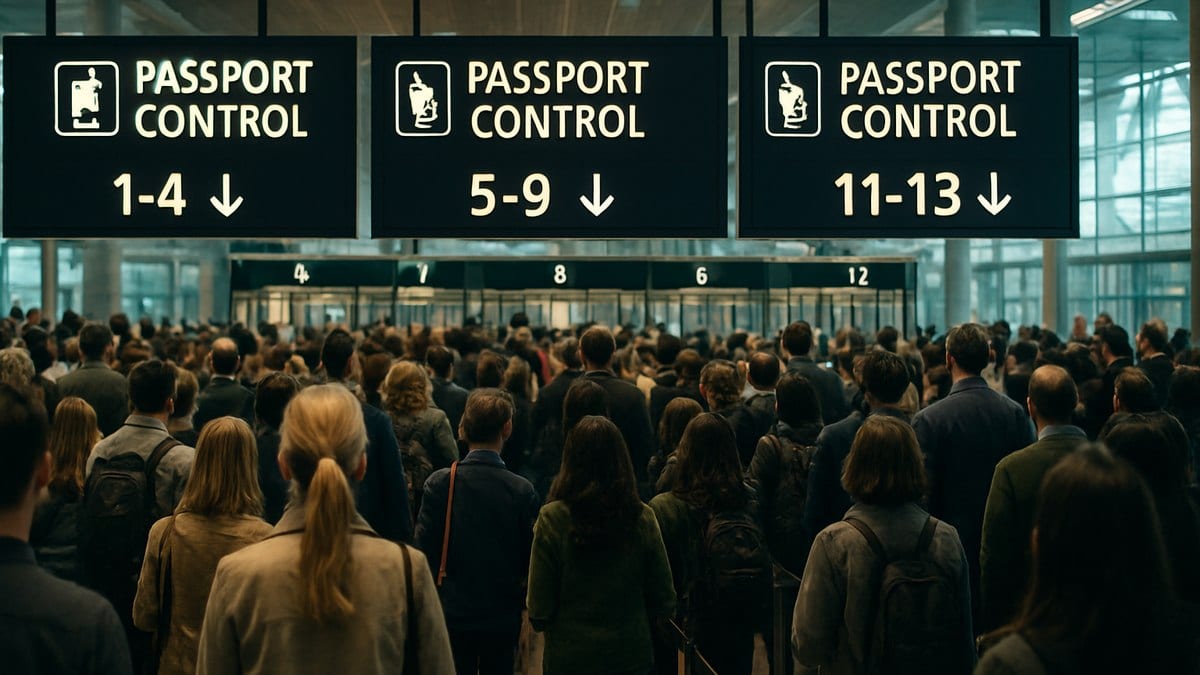
More than 120 easyJet passengers were left stranded in Milan in mid-April after long queues at EU border checks prevented them from reaching their Manchester-bound flight in time, underscoring the disruptive early days of the bloc’s new biometric Entry/Exit System.
Get the latest news straight to your inbox!
New EU border rules collide with peak Sunday traffic
According to published coverage from multiple outlets, the disruption unfolded on Sunday 12 April 2026 at Milan Linate Airport, a busy city hub that serves a mix of business and leisure traffic. The easyJet service to Manchester was scheduled to depart in the evening, when weekend return flows from Italy to the UK typically peak.
Reports indicate that only around three dozen passengers managed to board the aircraft, which departed with roughly 34 people onboard. More than 120 others, many of them UK residents, were still stuck in queues at passport control when boarding closed, despite having arrived at the airport well ahead of departure.
Accounts compiled by broadcasters and travel-industry sites describe passengers funneled into a bottleneck at border control, where new biometric procedures were being applied to non EU nationals. With staff attempting to capture fingerprints and facial images for thousands of travelers, processing times stretched into hours.
By the time many easyJet customers cleared the checks and reached the gate area, they reportedly found that their flight had already left, leaving them to scramble for hotel rooms and alternative journeys home.
Entry/Exit System rollout triggers delays across Schengen
The incident in Milan came just days after the European Union’s Entry/Exit System, or EES, went fully live across external Schengen borders on 10 April 2026. The large scale project replaces manual passport stamping with a shared digital database and biometric capture for most non EU travelers entering and leaving the bloc.
Airports Council International and national airport operators had already warned of potential teething problems, and early reports from countries including Italy, France and Spain point to queues of up to three hours at some terminals. The Guardian and other outlets note that passenger flows have been particularly strained where large numbers of third country travelers, such as British citizens post Brexit, are processed in a relatively compact border hall.
At Milan Linate, local media and travel blogs describe a combination of dense Sunday traffic and a system still bedding in. Some automated gates reportedly rejected a high proportion of users, pushing them back into manual lines and compounding the congestion. In warm, crowded conditions, Italian coverage and eyewitness accounts mention passengers feeling unwell as they waited.
The EES is intended to enhance security and make it easier to track overstays, while eventually speeding up crossings once databases are populated and travelers are familiar with the process. The Milan disruption illustrates that, in the short term, the transition period can be highly disruptive when staffing, infrastructure and passenger communication do not keep pace with the new requirements.
Stranded travelers face extra costs and limited alternatives
For the more than 120 easyJet customers who missed the Milan to Manchester flight, the operational headache quickly turned into a personal and financial one. Coverage by UK media such as ITV News details how travelers expecting a straightforward Sunday evening journey home instead faced days of uncertainty in Italy.
Several passengers told journalists they had to arrange last minute accommodation in Milan at their own expense, with some staying multiple nights while waiting for space on later flights. Others reportedly booked replacement tickets on alternative routes, in some cases spending hundreds of pounds to fly via different European hubs or even travel overland to other airports.
Passenger rights specialists and consumer advocates have begun weighing in on the case, noting that EU Regulation 261/2004 may offer potential avenues for compensation, depending on how responsibility for the delay is ultimately interpreted. Some advisory sites argue that because the aircraft departed as scheduled and the disruption stemmed from border processing rather than the airline’s operations, affected travelers may need to present detailed evidence and be prepared for contested claims.
For individuals, the distinction is academic compared with the immediate reality of missed work, unexpected costs and the stress of being separated from family or commitments back home. The Milan episode is already being cited by travel advisers as a high profile example of how external factors at the airport can unravel even carefully timed itineraries.
easyJet and airports under pressure to adapt
EasyJet has publicly described the border queues at Milan Linate on 12 April as unacceptable, according to multiple news reports, while also highlighting that airport authorities and border agencies control immigration processes. The carrier has pointed to its standard guidance that travelers departing from European airports should allow sufficient time for security and passport checks, particularly during busy periods.
However, the scale of the disruption, and the fact that some passengers say they arrived three to four hours before departure, has sparked debate over what airlines and airports can reasonably anticipate during the EES rollout. Commentators note that carriers can work with airport operators to adjust check in opening times, boarding gate cut offs and customer communications when exceptional conditions are expected.
At Milan’s airports in particular, recent travel reports and queue tracking tools suggest that wait times at security and passport control have been volatile in the days following EES implementation. Malpensa, the city’s main intercontinental gateway and easyJet’s larger local base, has also seen lengthy lines at peak hours, although not all departures have been severely affected.
Industry analysts say the coming weeks will be critical as Italian airports, border police and airlines refine their staffing plans and passenger flows under the new system. The Milan easyJet incident is likely to feature in discussions about whether additional lanes, clearer signage and triage for imminent departures are needed to avoid large numbers of passengers being left behind again.
What travelers should know for spring and summer 2026
For travelers heading to or through Italy in the months ahead, the events in Milan offer a cautionary tale at the outset of the EES era. Publicly available information from airports and travel organizations now consistently advises non EU nationals to arrive significantly earlier than they might have done in previous years, especially for departures to the United Kingdom and other countries outside the Schengen zone.
Practical tips emerging from early EES experiences include checking in online wherever possible, traveling with carry on luggage only if feasible, and heading directly to security and passport control after reaching the terminal rather than lingering in retail or dining areas. Some frequent travelers also recommend monitoring recent queue reports for specific airports and considering fast track services where available.
For families or passengers who may need additional assistance, allowing extra buffer time is especially important, as some EES e gates currently exclude younger children and may redirect them to manual processing. Those connecting from other European flights in Milan or elsewhere in Italy are being urged to build in longer minimum connection times than before.
As Europe moves toward a fully digital border environment, the Milan easyJet disruption stands as an early stress test. With peak summer travel still to come, how quickly airports and authorities can smooth out the Entry/Exit System’s rough edges will determine whether April’s stranded passengers are remembered as an isolated shock or a warning of wider chaos to follow.