


More news on this day
Passengers at London Stansted Airport have reported being stranded in departure halls after security queues stretched to around two hours, causing missed flights, frantic rebookings and renewed questions about how the fast-growing hub is coping with record traffic.
Get the latest news straight to your inbox!
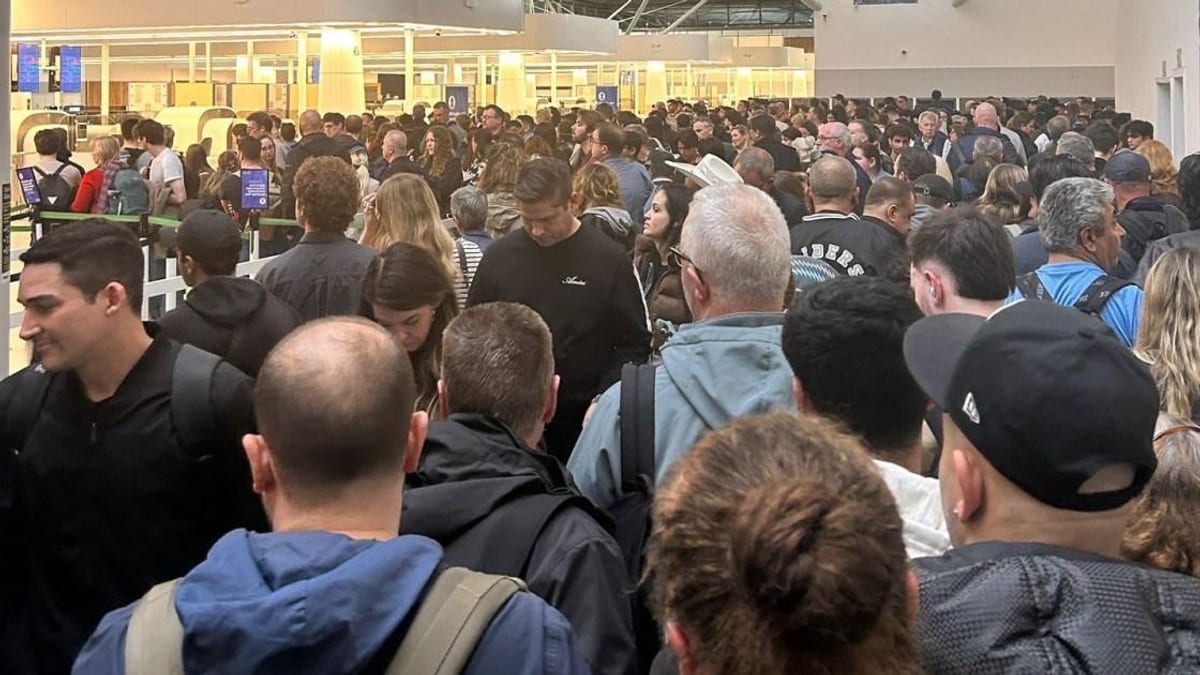
Long Queues Turn Routine Departures Into Ordeals
Reports from recent days describe snaking security lines at Stansted that have pushed well beyond the main search area and back into check in zones, leaving some travelers stationary for long periods and unsure if they would reach their gates before departure. Social media posts and forum accounts speak of waits of around two hours at peak times, far beyond the airport’s usual performance benchmarks, with some passengers abandoning their trips altogether when it became clear they would not make it through in time.
These passenger accounts contrast sharply with the airport’s typical statistics. Publicly available performance data for recent seasons indicate that the vast majority of travelers at Stansted normally clear security in under 15 minutes, with average waits measured in just a few minutes even at busy periods. The latest chaos therefore appears to reflect acute pressure points rather than everyday operations, but for those caught in the queues, the distinction has offered little comfort.
Travelers have also highlighted the emotional and physical strain of standing for prolonged periods in tightly packed lines, particularly for families with young children, older passengers and those with reduced mobility. Complaints online refer to confusion over where queues begin and end, minimal real-time information on expected wait times and concerns about access to water and seating while people are stuck in crowded corridors.
Some accounts suggest that while the main security lanes have been overwhelmed, paid fast track channels have remained comparatively fluid, intensifying criticism from passengers who feel that standard travelers are bearing the brunt of the disruption while premium options continue to move.
Record Traffic Meets Finite Terminal Capacity
The disruption comes as London Stansted is handling some of the highest passenger volumes in its history. Recent traffic updates show the airport surpassing previous records over the latest winter season and moving more than 30 million passengers annually, with regulatory approval already in place to lift its permitted capacity further into the long term. Airlines based at Stansted, led by major low cost carriers, have added routes and frequencies that tighten turnaround times and concentrate flows into popular departure banks.
Infrastructure projects are under way, including an expanded security hall within the main terminal. Planning documents and operator statements describe these works as essential to keeping pace with projected growth and to modernising the screening process. However, construction phases, reconfigured queuing layouts and temporary closures can themselves introduce bottlenecks, particularly when demand spikes or when staffing does not fully align with peaks in departing traffic.
Industry observers note that Stansted was originally designed as a single terminal operation serving fewer passengers than it now processes, and that incremental expansion has had to work around the constraints of the existing building. Crowd management therefore becomes highly sensitive to relatively small changes in passenger numbers, lane availability or staff deployment. When several of these factors shift at once, even for a few hours, queues can escalate quickly.
The planned decommissioning of the airport’s airside transit system in 2026, part of wider terminal expansion works, also illustrates how physical changes at Stansted ripple through the entire passenger journey. While the current security queues are concentrated before that point, any reconfiguration of flows toward the gates places additional pressure on screening capacity if it is not increased at the same time.
Knock-On Effects: Missed Flights and Added Costs
For many passengers, the headline issue has not been inconvenience alone but the financial and logistical consequences of being trapped in lengthy queues. Recent accounts from travelers indicate that some have missed flights despite arriving in line with widely promoted guidance to be at the airport at least two hours before departure. In several cases described on consumer forums, travelers who missed flights due to security queues have faced significant rebooking fees, last minute hotel costs or the need to purchase entirely new tickets from other airports.
Published consumer advocacy coverage across Europe shows that airlines and airports frequently dispute liability when passengers miss flights because of congestion at security or border control. Stansted is no exception. Travelers report being directed between airline desks and airport customer service counters, with each side citing differing terms and conditions and insurance clauses. That leaves many travelers uncertain about whether they can claim compensation or refunds when airport processes, rather than their own lateness, appear to be the primary cause of a missed departure.
The current situation at Stansted echoes wider patterns seen at other European hubs, where surging demand has strained staffing and infrastructure. Recent analysis of the EU’s new entry exit system, for example, has highlighted how additional checks and biometric registrations are producing two to three hour lines at some airports, with airlines warning of missed flights and disrupted schedules. Although the worst of Stansted’s current queues are centred on security rather than border control, the cumulative effect for travelers is similar: unpredictable delays, tighter connection margins and a sense that planning ahead offers no guarantee.
Consumer advocates advise that passengers build in more buffer time than usual for Stansted departures during busy holiday periods and early morning peaks, and that they document waiting times and any public announcements if they later need to challenge charges tied to missed flights. However, such measures shift much of the burden back onto travelers rather than resolving the structural issues behind the queues.
Official Messaging Versus Passenger Experience
Publicly available information from the airport operator continues to stress that Stansted is generally a reliable and efficient gateway, often citing statistics showing high percentages of passengers clearing security within set time targets. Recent communications around busy travel periods, such as Easter and summer getaways, have reinforced standard advice to arrive in good time, prepare cabin bags carefully and use all available lanes to keep queues moving.
For passengers who have recently endured two hour waits, this messaging can appear disconnected from reality. Online posts and travel reviews increasingly highlight a gap between headline figures and the lived experience during peak surges. While daily averages may look favourable, individual days or specific morning banks of departures can still tip into severe congestion, meaning that travelers’ impressions of the airport depend heavily on when they happen to travel.
Observers also point to the growing role of low cost carriers at Stansted, whose business models emphasise rapid turnarounds and densely packed schedules. Tight departure banks for these airlines can produce sharp waves of demand at security that challenge staffing rosters and queuing systems. If multiple large aircraft are scheduled to depart within a short window, a single problem such as a lane closure, equipment fault or staff shortage can quickly cascade into system wide delays.
The contrast between positive operational statistics and negative passenger stories complicates efforts to rebuild confidence. On one hand, Stansted can demonstrate that queues are often short and that recent winters have delivered record traffic with mostly smooth operations. On the other, highly visible episodes of chaos, amplified on social platforms, shape public perception and may prompt some travelers to favour alternative London airports.
Calls for Clearer Communication and Long-Term Fixes
The latest disruption has fuelled debate about what more can be done to make security screening at Stansted both resilient and predictable. Passenger groups and travel commentators are urging clearer real-time communication, including more prominent display of expected wait times before travelers join queues, so that they can better judge whether to approach desks, seek assistance or adjust their plans.
There are also calls for greater transparency on staffing levels and on how the airport prioritises different queues during periods of intense pressure. Some travelers argue that if standard queues are approaching two hours while fast track remains significantly shorter, the airport should focus on restoring balance rather than preserving a strong differential between paid and free options. Others highlight the need for closer coordination between airlines and the airport on check in opening times to prevent large numbers of passengers converging on security at once.
Longer term, capacity upgrades to the security hall and surrounding circulation areas are expected to play a central role in reducing the risk of similar episodes. Plans referenced in recent industry reporting suggest additional lanes, modernised scanners and redesigned queues that can absorb more passengers without blocking other parts of the terminal. Yet such projects take time to deliver, and in the interim, passengers remain exposed to the kind of sudden, severe queues that have turned routine departures from Stansted into stressful ordeals.
As the airport heads into another busy summer, the tension between record growth and finite space is likely to remain at the heart of the Stansted experience. Whether recent scenes of two hour security lines become an exception or a recurring feature will depend on how quickly infrastructure, staffing and communication keep pace with demand.