


More news on this day
More than 120 easyJet passengers were left stranded at Milan Linate Airport after lengthy new EU border checks prevented them from reaching the gate before their Manchester-bound flight departed with only a fraction of booked travelers on board.
Get the latest news straight to your inbox!
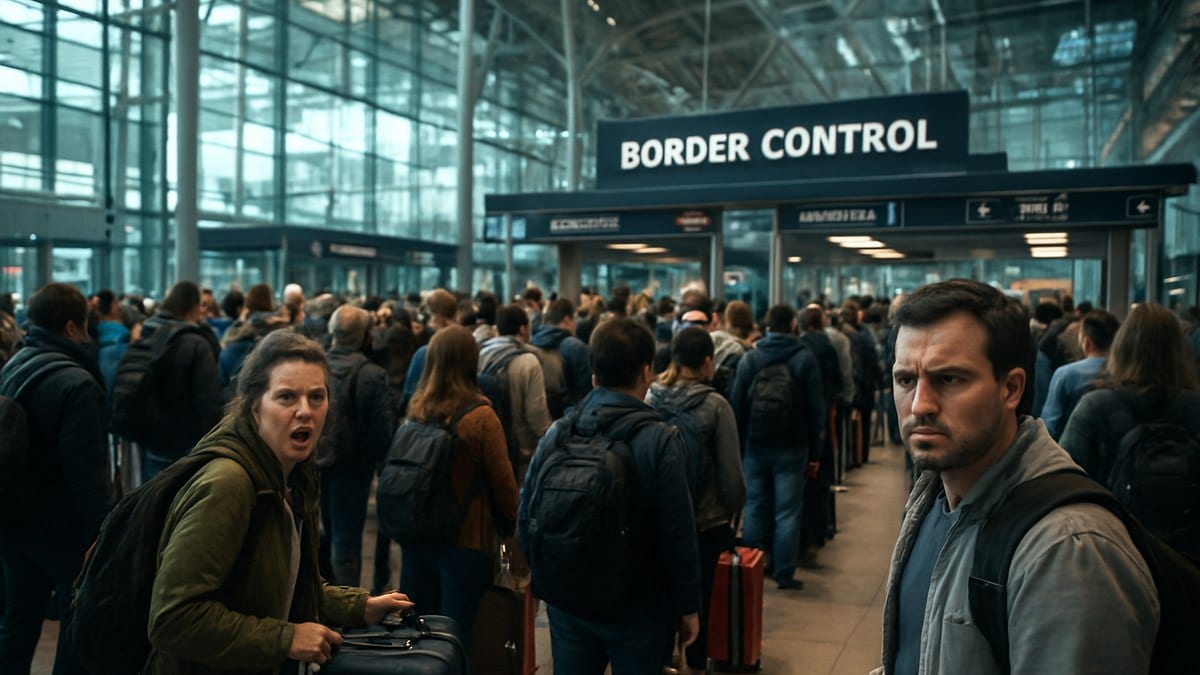
New EU border system triggers chaos at Milan Linate
The disruption unfolded on Sunday 12 April at Milan Linate, where around 156 passengers were booked onto an easyJet service to Manchester. Publicly available coverage indicates that only 34 people ultimately boarded, leaving approximately 120 to 122 travelers still stuck in lines at border control as the aircraft pushed back.
The bottleneck has been linked to the European Union’s new Entry/Exit System, or EES, which recently moved into full operation for non-EU arrivals and departures. The scheme records biometric data and travel movements for third-country nationals, including passengers from the United Kingdom, who now face additional checks when entering and leaving the Schengen area.
Reports from multiple outlets describe queues stretching for hours at Milan Linate’s passport control, with some non-EU travelers required to register their fingerprints and facial images for the first time. The combination of new procedures, limited staffing and a busy spring travel period appears to have overwhelmed the processing capacity, leading to missed flights and abandoned travel plans.
Coverage in European travel media notes that this incident is one of the most severe examples so far of EES-related disruption, drawing attention because of the unusually low number of passengers on the departing aircraft and the volume left behind in the terminal.
Passengers stranded as flight departs nearly empty
Accounts compiled by UK and European news outlets describe a scene in which passengers who had arrived well in advance of departure became trapped in slow-moving border queues, unable to clear checks in time to reach the gate. When the easyJet flight finally left Milan for Manchester, it reportedly did so with just over one-fifth of its booked passengers.
Stranded travelers subsequently faced a difficult search for alternative routes home. Coverage in British media highlights families who paid well over 1,000 pounds for replacement flights via other European hubs, while others were offered seats on services to London instead of Manchester or advised that the next direct Milan–Manchester departure from the same airport would not leave for several days.
Some reports mention passengers feeling unwell in the crowded lines, with accounts of people fainting or becoming sick amid the long waits. Images published in travel and regional outlets show dense queues at passport control and frustrated travelers watching departure boards as their original flight left without them.
Commentary from consumer advocates cited in this coverage suggests that many travelers believed they had complied with general advice to arrive early, yet still found that the additional time was insufficient once the new checks and delays were taken into account.
Airline and industry response to EES disruption
Publicly available statements from easyJet reported in several outlets characterize the delays at Milan Linate as unacceptable and linked to the implementation of the EES border checks. The airline has emphasized that it does not control processing at state-run passport control points but has acknowledged the severe impact on its customers.
Travel industry bodies have also weighed in on the broader rollout of EES. A joint message from European airport and airline groups, cited in specialist aviation media, describes the first days of full operation as marked by passenger disruption, long queues and missed flights at several airports, not only in Italy.
These organizations have called for greater flexibility in applying the new system, including the option to scale back or temporarily suspend full EES checks during peak periods if infrastructure and staffing are not yet sufficient. The aim, according to their public comments, is to balance security objectives with a workable experience for passengers and operational reliability for airlines.
Some commentators in the travel press note that incidents such as the Milan Linate case could strain relations between airlines, airports and border agencies, as each side seeks to clarify where responsibility begins and ends when government-mandated systems cause significant disruption to passenger flows.
What the Milan incident means for UK-bound travelers
The problems at Milan Linate have particular relevance for passengers traveling between the Schengen area and the United Kingdom, who are now treated as non-EU nationals under the new regime. UK travelers are among those required to register biometric data and have their movements logged each time they cross the external Schengen border.
Travel advisories and expert commentary published after the Milan incident increasingly suggest that passengers should allow substantially more time at departure airports in the coming weeks, particularly when flying from Schengen countries to non-Schengen destinations. Some guidance recommends arriving as much as three to four hours before departure at busy hubs until the new system beds in.
Reports also highlight practical complications, such as check-in desks and bag-drop counters that typically open only a few hours before departure. This timing can limit how early passengers are able to move airside and join border queues, increasing the risk of bottlenecks if EES processing remains slow.
Consumer-rights articles note that compensation rules may be complex in these circumstances, since the underlying cause of delay lies with border procedures rather than airline operations. Travelers affected by missed flights are being encouraged in public coverage to keep records of waiting times and any additional costs incurred, and to check both airline policies and travel insurance terms closely.
Pressure builds for smoother rollout ahead of peak season
The Milan Linate disruption has intensified scrutiny of how ready Europe’s border systems are for the busy summer travel period. With EES still in its early days, industry analysts quoted in travel and aviation media are warning that similar problems could arise at other airports unless technical, staffing and flow-management issues are addressed quickly.
Some airports have already invested in additional biometric kiosks, signage and staff to guide passengers through the new process. However, the Milan case suggests that even with preparation, a surge in first-time EES registrations can overwhelm facilities if traffic is high and procedures take longer than anticipated.
Ongoing analysis in European media frames the incident as a stress test for the EU’s border modernization plans. While few dispute the goal of enhancing security and tracking entries and exits more accurately, the experience in Milan is prompting calls to prioritize practical adjustments that keep passengers moving and flights operating on schedule.
For travelers, the episode stands as an early warning that border checks in and out of the Schengen area may be less predictable in the short term. Until the system stabilizes, those planning trips through airports such as Milan Linate may choose to build in extra time, flexible itineraries and contingency budgets to avoid being among the many left watching their flight leave without them.