


More news on this day
U.S. travelers flying this fall without a REAL ID-compliant license or another accepted form of identification may face an unexpected extra cost at airport security: a $45 fee to verify their identity before they can reach the checkpoint.
Get the latest news straight to your inbox!
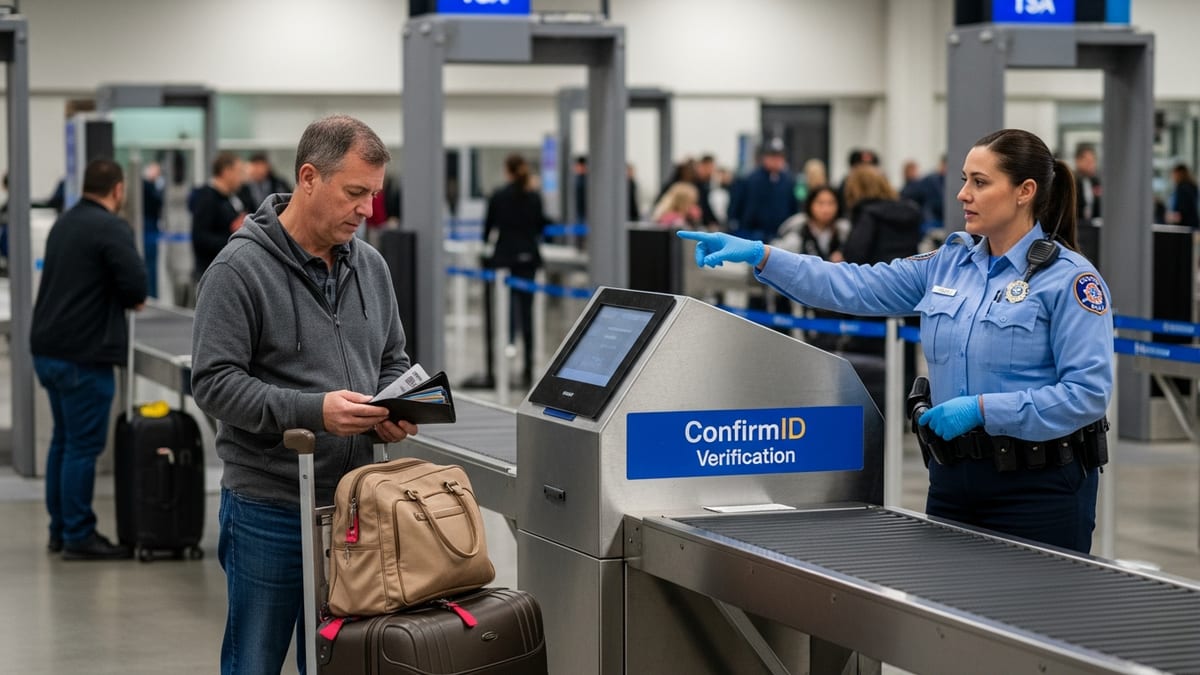
REAL ID rules now fully in force at U.S. airports
Federal REAL ID standards, created after the September 11 attacks, set security requirements for state-issued driver’s licenses and identification cards used for official federal purposes, including boarding commercial flights. After multiple delays, those standards are now being enforced at Transportation Security Administration checkpoints across the country. According to federal regulations and agency summaries, REAL ID-compliant cards, U.S. passports, passport cards, certain military IDs and other secure documents are accepted for domestic air travel, while non-compliant state IDs are not.
Government rulemaking and state-level advisories indicate that as of May 7, 2025, agencies including TSA may not accept non-compliant state licenses or IDs for boarding federally regulated commercial aircraft. Travelers who prefer not to obtain a REAL ID can still fly using another approved document, such as a passport, but they can no longer rely on a standard, non-compliant license as their primary identification at the checkpoint.
Publicly available data from states such as California and Massachusetts show that, even after years of outreach, a sizable minority of residents still hold traditional licenses that do not meet REAL ID standards. Federal analyses published in the Federal Register anticipated that incomplete adoption could cause longer lines, confusion and delays at security checkpoints, particularly during busy travel seasons.
New TSA ConfirmID option comes with a $45 price tag
To manage travelers who arrive at the airport without an acceptable ID, the Transportation Security Administration has introduced a new paid alternative called TSA ConfirmID. Under a notice distributed through official channels and summarized in national reporting, this identity verification option is scheduled to be in use across airports beginning February 1, 2026, following earlier months of full REAL ID enforcement.
According to an agency bulletin and coverage by the Associated Press, passengers who show up with no acceptable document, including those who present a non-REAL ID-compliant license, can choose to pay a $45 fee to use ConfirmID. The system relies on modernized identity checks to establish that the traveler is who they claim to be so that they may continue toward the screening lanes and ultimately board their flight.
Published explanations describe the $45 as a service fee rather than a fine or civil penalty. TSA materials emphasize that the aim is to make the costs of handling non-compliant travelers fall on those individual passengers instead of on taxpayers more broadly. However, consumer advocates note that for families or frequent travelers, the added charge can quickly exceed the cost of simply obtaining a REAL ID or using an existing passport for domestic trips.
What actually happens if your ID is not REAL ID-compliant
Travelers arriving at security this fall with a non-compliant state license should be prepared for extra steps. TSA travel guidance explains that adult passengers are required to show a valid, acceptable photo ID to enter the checkpoint. If the ID presented does not meet REAL ID standards and no alternative document is available, the traveler can be referred into an identity verification process, which now includes the optional ConfirmID pathway in many airports.
Under the ConfirmID model described in public TSA communications, passengers who opt in will be directed to a designated area before the standard screening lanes. After paying the $45 fee, they must provide biographical information and may be asked to present any supporting documents they have on hand. This process is separate from normal document checking and is designed to confirm identity rather than verify citizenship or immigration status.
Reports from early REAL ID enforcement periods indicate that some airports have already experienced additional screening for travelers with non-compliant IDs, even before the fee-based system. Online accounts and agency statements describe manual ID checks, additional questioning and secondary screening when REAL ID-compliant documents were not available. With the nationwide rollout of ConfirmID, those extra steps are expected to be more standardized, but they may also add time to the airport experience, especially during peak fall and holiday travel weekends.
How to avoid paying the $45 at the checkpoint this fall
Travelers who want to sidestep the ConfirmID fee have several options. Federal and state REAL ID resources stress that a REAL ID-compliant license or ID card is not the only way to meet TSA’s requirements. A valid U.S. passport, passport card or certain trusted traveler documents remain acceptable for domestic flights and can be used interchangeably with a REAL ID at the checkpoint.
State motor vehicle agencies and federal REAL ID information pages encourage travelers who primarily fly within the United States to check their current license for the familiar star or other REAL ID indicator in the upper portion of the card. If the marker is missing, the license is likely not compliant, and the holder should consider upgrading well in advance of fall trips. Many states allow appointments for REAL ID issuance and warn that documentation requirements are stricter than for a standard renewal, often including a birth certificate or passport plus proof of Social Security and residency.
Travel experts reviewing the new fee note that, for most travelers, planning ahead remains the simplest way to avoid unexpected charges. Applying for a REAL ID during a regular renewal cycle or ensuring that an existing passport remains valid through upcoming trips can eliminate the need to rely on ConfirmID at the airport. For spontaneous travelers or those with complex documentation issues, understanding the $45 option before arriving at the checkpoint may reduce stress, but it is still likely to be slower and more expensive than presenting compliant ID from the outset.
Why this matters for fall and holiday travel
The introduction of a paid identity verification option comes as airlines and airports prepare for some of the busiest months of the year. Fall breaks, Thanksgiving and the December holidays typically push U.S. passenger volumes toward record levels, and federal impact analyses of REAL ID enforcement have warned that even a modest share of non-compliant travelers could create bottlenecks at security.
DHS rulemaking documents acknowledge that high numbers of travelers appearing at federal checkpoints with non-compliant licenses could cause delays, longer lines and operational challenges. The ConfirmID fee structure is intended in part to manage that risk by encouraging travelers to upgrade their IDs or bring alternate documents rather than assuming they can rely on ad hoc screening.
For passengers, the stakes are practical as well as financial. A family of four arriving at an airport this fall with non-compliant licenses and no passports could be looking at more than $180 in identity verification fees, on top of airfare, baggage charges and other travel costs. Travel industry observers expect that as awareness of the ConfirmID charge spreads, more travelers will prioritize securing REAL ID-compliant documents before the peak holiday rush, potentially smoothing out what might otherwise be a disruptive transition at the nation’s checkpoints.
Associated Press coverage of REAL ID fee and ConfirmID
Associated Press explainer on flying without REAL ID
Federal Register: REAL ID enforcement rule and impact analysis