


More news on this day
The U.S. Department of Transportation has begun piloting an artificial intelligence powered air traffic management tool in the busy Washington, D.C. region, positioning the technology as a new way to identify congestion earlier and reduce the flight delays and cancellations that routinely disrupt U.S. airline travel.
Get the latest news straight to your inbox!
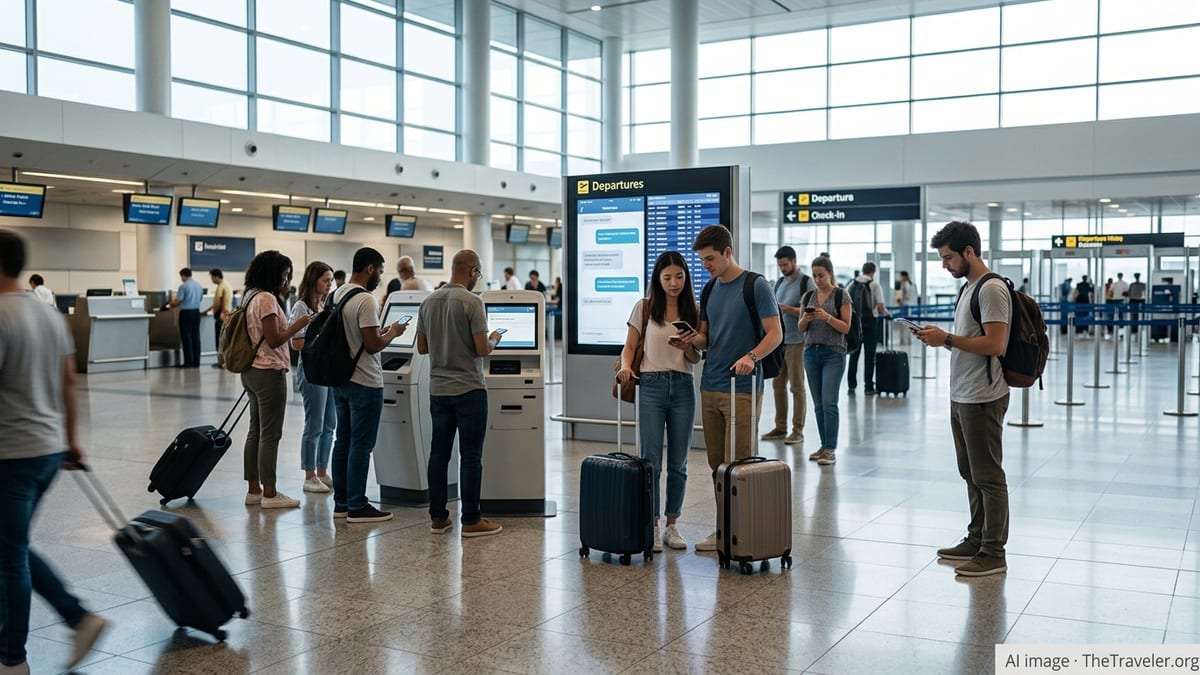
SMART launches in Washington airspace as first testbed
According to publicly available information from the Department of Transportation and the Federal Aviation Administration, the new platform is known as SMART, short for Strategic Management of Airspace, Routes and Trajectories. The system draws on work under the FAA’s broader NextGen modernization program and is being introduced first in the National Capital Region, covering key Washington area airports and surrounding airspace.
Reports indicate that the 90 day pilot centers on the three primary commercial airports serving the region, an area that routinely experiences some of the country’s most intense traffic and weather related disruptions. By focusing the initial rollout on a single, complex corridor, officials are aiming to test how the tool performs against real world schedule banks, convective storms and heavy business travel while keeping the deployment geographically contained.
Publicly released descriptions describe SMART as sitting inside the FAA’s Air Traffic Control System Command Center environment rather than in individual control towers. That positioning means the software is intended to support high level flow management decisions about which routes and programs to run across the network, rather than replacing the tactical instructions that controllers issue to pilots during takeoff, landing and taxi.
Coverage from national outlets and aviation trade press notes that the pilot follows several months of technical testing and industry consultation. Airlines, pilot groups and air traffic controllers have been watching closely, both for the potential operational benefits and for how the technology will be integrated into existing procedures.
AI engine aims to centralize data and forecast bottlenecks
At the core of SMART is an AI supported engine that brings together roughly 200 data streams into a single interface, according to detailed descriptions released by the Transportation Department. These feeds include airline schedules, filed flight plans, en route traffic flows, weather radar and forecasts, airport runway and gate capacity, and air traffic controller staffing metrics.
The system uses machine learning models to analyze how those factors interact across time, producing predictions of traffic demand and available capacity at different points in the National Airspace System. Publicly available fact sheets indicate that the goal is to identify where demand is likely to exceed capacity hours in advance, particularly when storms, convective weather or unplanned constraints threaten to create gridlock.
When the software flags a potential bottleneck, it can generate alternative routing and spacing strategies for decision makers at the command center. These can include options for rerouting flows around bad weather, adjusting departure times, balancing arrival banks across multiple airports, or changing how many flights are funneled through a particular sector.
Reports emphasize that SMART presents these as options rather than directives. Human traffic management coordinators retain responsibility for deciding whether and how to implement any suggested plan, consistent with existing safety protocols and union agreements.
Targeting chronic delays, cancellations and missed connections
The pilot comes at a time when air travelers have grown accustomed to rolling delays, missed connections and last minute cancellations, particularly during peak summer and holiday travel periods. Federal statistics show that weather and air traffic volume remain two of the leading contributors to delayed operations, often compounding one another when thunderstorms or low visibility conditions hit already crowded corridors.
According to published coverage of the SMART rollout, one of the platform’s key promises is to make those disruptions less severe by acting earlier. By identifying where storms or imbalances are likely to cause congestion, the system is expected to help the FAA and airlines adjust schedules before aircraft and crews are locked into place. That kind of preemptive planning could reduce the need for extended ground delay programs that keep passengers waiting at gates or on taxiways.
Public information from the FAA’s technology initiatives indicates that SMART is designed to support the agency’s shift toward so called trajectory based operations, which focus on managing flights based on their full four dimensional path through time and space rather than a series of discrete clearances. In practice, that could mean more predictable routings, better use of available altitudes and a smoother flow of arrivals into congested hubs.
Travel industry observers note that even modest reductions in average delay minutes can have outsized benefits for passengers, particularly when it comes to preserving tight connections and avoiding overnight misconnects. If the pilot demonstrates that early, AI assisted planning reduces the number and length of major disruption events, the tool could eventually shape how airline schedules are built in weather prone regions.
Scope of the pilot reflects both ambition and caution
While the Department of Transportation has described SMART in ambitious terms, recent reporting highlights that the initial deployment is intentionally limited in scope following feedback from airlines and other stakeholders. Industry groups raised questions about how extensively the AI engine would be integrated into day to day operations and how its recommendations would interact with existing dispatch and control responsibilities.
Coverage of those discussions indicates that, for now, SMART will function primarily as an advisory system used by specialists at the command center. The tool will focus on offering rerouting suggestions and scenario analysis when traffic is already backed up or when major weather systems threaten to snarl operations, rather than continuously adjusting flows under normal conditions.
Publicly available materials also stress that the tool does not automate radio communications with pilots, separation responsibility, or the issuance of clearances. Controllers in towers and en route centers will continue to use established procedures and systems such as the En Route Automation Modernization platform, with SMART providing a higher level view of strategic options.
This staged approach mirrors how other advanced decision support tools have been introduced in the National Airspace System, with limited pilots, human oversight and iterative refinements before any broader integration. Observers note that confining the first test to the Washington region allows the FAA to gather data on performance, safety margins and traveler outcomes before committing to a national rollout.
What travelers can expect in the coming months
For passengers flying into and out of the Washington, D.C. region during the 90 day pilot, the presence of SMART in the background is unlikely to be immediately obvious. Tickets, boarding processes and gate interactions will look the same. Aircraft will still be guided by human controllers, and weather systems will still occasionally cause long lines of aircraft waiting to depart.
Where travelers may begin to notice change, if the pilot performs as intended, is in the frequency and severity of cascading disruptions. Public information suggests that one aim is to reduce marathon delay days when storms in one part of the country trigger rolling cancellations and missed connections hundreds of miles away. A more strategic, data driven view of flows could help keep some of those secondary effects in check.
Travelers and industry analysts will also be watching how quickly any lessons from the Washington deployment filter to other congested corridors, including New York, Chicago, Atlanta and major West Coast hubs. The Department of Transportation has signaled that wider deployment would depend on pilot results, safety assessments and continued collaboration with airlines, pilots and controller organizations.
As the pilot unfolds, publicly available information is expected to include performance metrics such as changes in delay minutes, on time arrival rates and the number of large scale traffic management initiatives required during major weather events. For now, SMART represents one of the most visible tests of how artificial intelligence could quietly reshape the experience of moving through some of the world’s busiest skies.