


More news on this day
John Glenn Columbus International Airport saw dozens of flight delays on Tuesday, September 22, 2026, according to publicly available flight-tracking data, creating a choppy travel day even as cancellations appeared limited.
Get the latest news straight to your inbox!
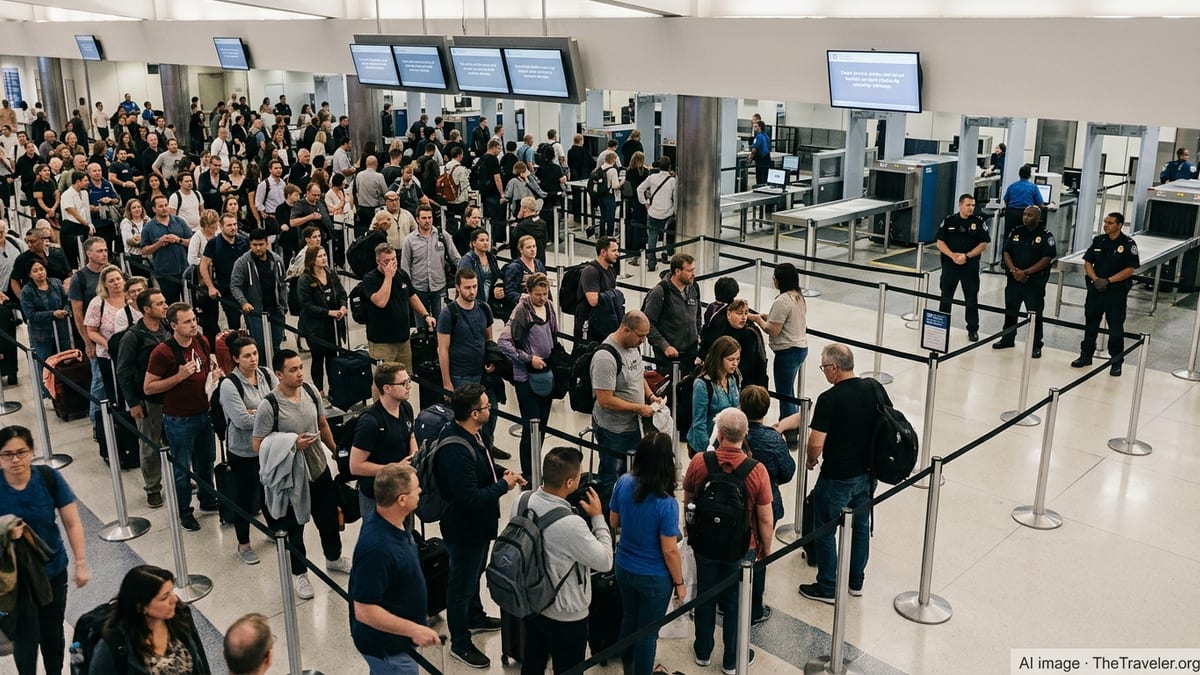
What travelers are seeing at CMH today
Flight-tracking dashboards showed a noticeable spike in disruptions at CMH, with delay counts reaching into the dozens at points during the day. One widely used tracker’s airport-specific snapshot listed 26 delays and zero cancellations at the time it was checked, a sign that many flights were still operating but running behind schedule.
Another flight-tracking platform characterized conditions as “minor problems,” while still flagging a high share of delayed flights for the day and an average delay measured in the tens of minutes. The differing figures reflect how various services define and tally delays in real time, but the overall picture was consistent: many departures and arrivals were not moving on schedule.
For passengers, this kind of disruption can cascade quickly, especially for itineraries that depend on tight connections through hubs such as Chicago O’Hare, Atlanta, Charlotte, or Dallas-Fort Worth. Even when the CMH departure itself is only modestly late, inbound aircraft and crew scheduling can ripple across the network.
Weather and air-traffic status: mixed signals, real-world impacts
The Federal Aviation Administration’s airport-status page for CMH showed the airport as “On Time” during an update window, an indication that the national system was not listing broad, airport-wide air-traffic delay programs for Columbus at that moment.
At the same time, aviation weather observations and forecasts tied to CMH indicated low cloud ceilings in the area, conditions that can contribute to spacing aircraft farther apart on approach and departure. When ceilings drop, airports can remain open and operating while still experiencing rolling delays that are not always reflected as a formal FAA delay program.
The result for travelers can be confusing: the airport may not be under a headline “delay” designation, but individual flights can still run late due to localized weather, aircraft arriving behind schedule from other cities, or airline-specific operational factors.
Why cancellations can stay low even when delays rise
It is possible to have a delay-heavy day with few cancellations, particularly when the disruption driver is low ceilings, intermittent showers, or congestion that slows the flow without shutting it down. Airlines often try to protect the schedule by holding flights, swapping aircraft where possible, or building in extra time rather than canceling outright.
Publicly available Department of Transportation reporting frameworks also highlight that disruptions can fall into broad buckets such as air-carrier issues, the National Aviation System, and weather. That taxonomy matters less to passengers in the moment than the practical outcome: whether the inbound aircraft is available and whether the crew can remain within duty-time limits.
Travelers watching delay boards should keep in mind that a “delayed” status can be updated multiple times. A flight may slip by 20 minutes, then another 30, then longer, especially late in the day when earlier delays compound and gate availability tightens.
What to do right now if your CMH flight is affected
For near-term decisions, the most reliable move is to track your specific flight in your airline’s app and on the airport’s flight-status tools, and to recheck frequently. Real-time trackers can show the inbound aircraft and whether it has departed its prior station, which often provides a clearer picture than a single posted delay time.
If you are checking bags, consider arriving with added buffer time when delays are widespread, since irregular operations can produce longer lines at ticket counters and customer-service desks. Security conditions can also shift with the bank of departures; CMH publishes estimated checkpoint wait times and notes that on delayed nights, the latest TSA will remain open is 10 p.m.
Drivers should also plan extra time on the roadway approaching the terminal. CMH Next construction has brought periodic traffic pattern changes around the airport, including updated routing and ongoing work that can slow access during busy periods, particularly if passengers are being dropped off close to departure times.
Looking ahead: construction changes around the terminal area
Separate from airside delays, landside access at John Glenn has been evolving as CMH Next work continues. The airport has posted updates about roadway shifts and signage intended to guide drivers through new patterns, and travelers who have not been to CMH recently may find the approach to the terminal looks different than earlier in the year.
With construction activity ongoing, travelers picking up arriving passengers may want to confirm the preferred waiting area and follow posted signs rather than relying on past routines. When flight times are moving targets, a smoother pickup plan can reduce the stress of repeated laps around the terminal.
As Tuesday’s disruptions showed, even when cancellations are minimal, a delay-heavy day can still change the travel math. Rechecking gate assignments, boarding times, and inbound aircraft status before leaving home remains the simplest way to avoid long waits on the wrong side of the terminal.