


More news on this day
Firefighters and quick-acting bystanders in Rancho Cordova, California, pulled a driver from a pickup truck trapped on light-rail tracks just seconds before an oncoming train slammed into the vehicle, according to regional news reports and public statements from local agencies.
Get the latest news straight to your inbox!
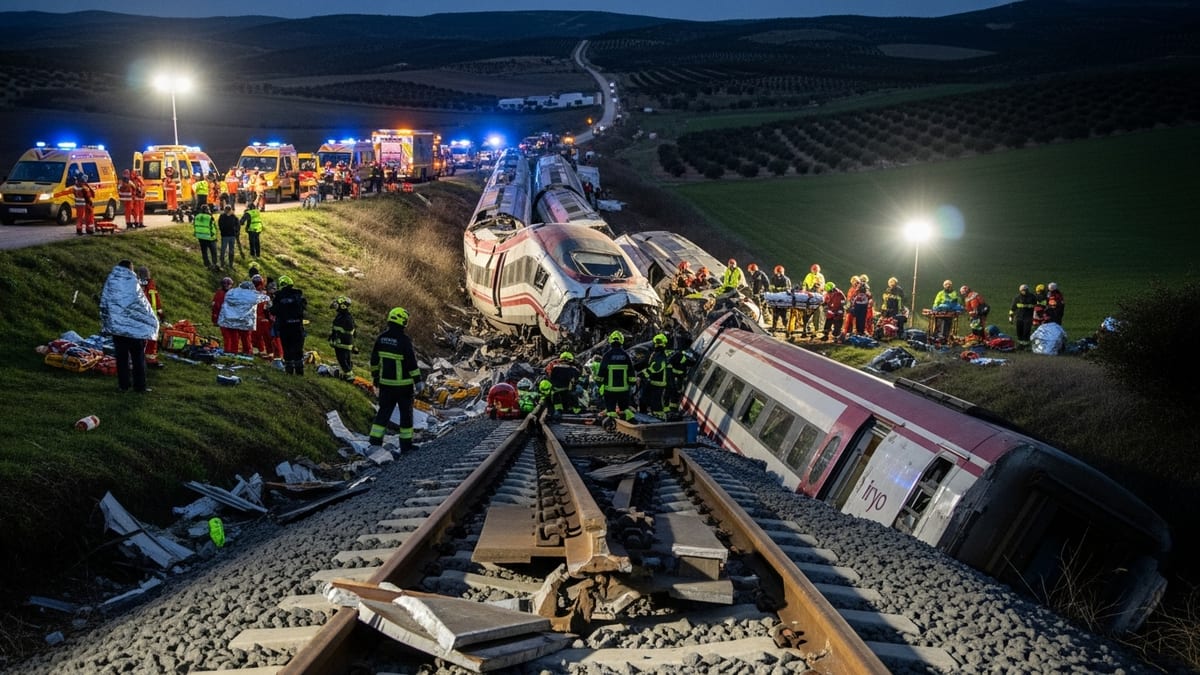
Truck Struck on Gold Line Tracks in Rancho Cordova
Reports indicate the incident took place on the Sacramento Regional Transit District Gold Line near Rancho Cordova on Friday, July 3, 2026. A pickup truck became immobilized on the tracks at a grade crossing as a light-rail train approached the area. Video and photos shared on social media and in local coverage show the truck positioned across the rails with warning signals active as emergency crews arrived.
Publicly available information describes a tense sequence in which the driver remained inside the disabled truck while the train closed in. Firefighters responding to the call moved quickly toward the vehicle, assisted by several bystanders who had gathered near the crossing. The collision occurred only moments after rescuers removed the driver from the cab, leaving the truck to absorb the full force of the impact.
The train, part of the SacRT Gold Line service running through the eastern suburbs of Sacramento, remained upright after the crash but sustained visible front-end damage. Initial coverage from local outlets notes that none of the passengers or crew on board reported serious injuries, while the truck was heavily damaged and pushed along the tracks.
Seconds to Spare as Firefighters and Bystanders Act
Footage circulated online and described in news accounts portrays a narrow escape. Fire crews can be seen working rapidly at the driver’s side of the truck, with bystanders nearby assisting, just as the warning bells and crossing signals continue. The urgency of the situation becomes clear as rescuers pull the driver away and move toward the shoulder of the roadway.
Published coverage describes the train striking the abandoned truck within seconds of the rescue, sending debris into the air and briefly engulfing the crossing area in dust and smoke. Observers at the scene recorded the sequence on mobile phones, later sharing it with local broadcasters and on social platforms, where the dramatic timing drew widespread attention.
Accounts from the scene indicate that the driver, once removed from the truck, was helped further away from the tracks as a precaution. The close timing between the extrication and the collision has been highlighted by commentators as an example of how coordinated action by professional responders and civilians can change the outcome of a potentially fatal crash.
Injuries, Service Disruptions and Ongoing Review
Local news reports state that the truck driver was transported to a hospital for evaluation, with early indications suggesting non-life-threatening injuries. No serious injuries among train passengers were immediately reported, though several individuals were assessed at the scene as a routine measure. Emergency responders remained at the crossing for an extended period to secure the area and check for secondary hazards.
The collision led to significant delays on the Gold Line, with trains halted in both directions while crews cleared the wreckage and inspected the track and overhead power systems. Replacement bus service and detours were arranged to move riders around the blocked stretch. Publicly available service updates from the transit system indicated that regular operations resumed after inspections confirmed that the rail infrastructure remained safe.
Investigative work is expected to focus on how the truck came to be stopped on the rails and whether any mechanical, environmental or human factors were involved. According to open records and standard practice in similar incidents, agencies typically review crossing signal performance, sightlines, vehicle data and any available onboard video from the train to reconstruct the event.
Rail Crossing Safety Back in the Spotlight
The Rancho Cordova crash has added to an ongoing national conversation about safety at rail crossings, particularly where roads intersect busy commuter and light-rail lines. Transportation safety data show that vehicles continuing onto tracks after warning devices activate remain a persistent cause of collisions, despite gates, bells and signage intended to prevent such encounters.
Advocacy groups and transportation analysts often point to this type of crash as evidence that infrastructure improvements and public education both play important roles. Raised medians, additional signage, improved lighting and upgraded barrier systems are among measures frequently discussed in policy forums when similar incidents occur. In some regions, local governments have invested in grade separation projects to eliminate certain crossings altogether.
In the Sacramento area, the visibility of the Rancho Cordova incident has prompted renewed interest in how motorists respond when signals begin to flash and gates start to descend. Commentators have emphasized that even a brief hesitation on the tracks can be critical when a train is approaching at speed, as braking distances for rail vehicles are far longer than for cars and trucks.
Public Response Highlights Everyday Heroism
The rapid actions of firefighters and nearby Good Samaritans have drawn praise in regional media coverage and online discussions. Viewers who watched the widely shared video clips noted how close the rescuers remained to the truck in the final moments before impact, underscoring the personal risk involved in pulling the driver to safety.
Commentaries on social media and opinion segments on local broadcasts have framed the incident as an example of everyday heroism at an otherwise routine suburban crossing. The presence of trained responders was critical, but observers have also highlighted the willingness of bystanders to assist, hold back traffic and follow instructions as the scene unfolded.
As investigators continue to piece together the events leading up to the crash, the footage of firefighters and residents working side by side has provided a powerful visual narrative. For many viewers, the image of the empty truck being struck seconds after the driver’s rescue has become a vivid reminder of both the risks at rail crossings and the potential impact of decisive action in a moment of crisis.