


More news on this day
Firefighters and bystanders in Pennsylvania pulled a driver from a pickup truck stuck on railroad tracks only moments before an oncoming train slammed into the vehicle, according to early regional news and public-safety reports.
Get the latest news straight to your inbox!
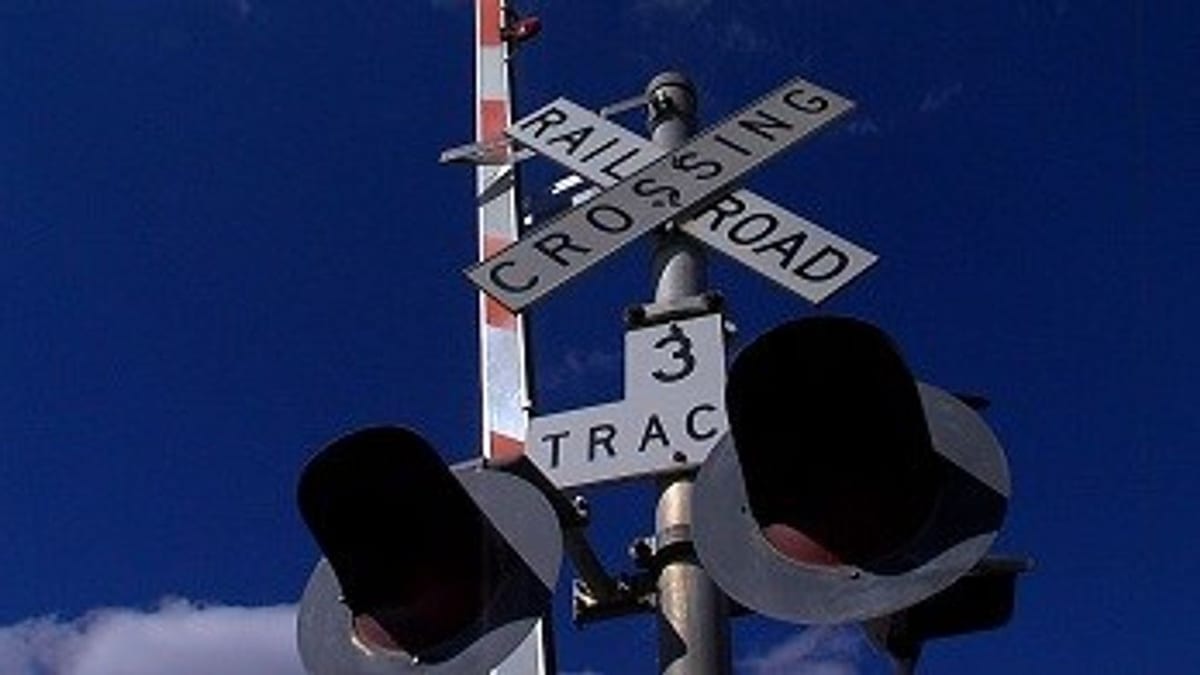
Truck Struck After Dramatic Trackside Rescue
Initial coverage from regional Pennsylvania outlets indicates that the crash unfolded at a rail crossing where a pickup truck became immobilized on the tracks as a freight train approached. Video and still images shared through local news partners and social media show the truck positioned squarely in the path of the train, with warning lights and crossing arms activated before impact.
Reports indicate that firefighters, already nearby or quickly dispatched to the scene, reached the stranded vehicle as the train closed in. Witness descriptions compiled by local media describe a frantic effort in which firefighters and bystanders worked together to release the driver from the damaged truck and drag the person clear of the tracks.
Within seconds of the rescue, the oncoming train struck the unoccupied vehicle and pushed it down the line, scattering debris around the crossing. Images from the aftermath show the truck heavily damaged, underscoring how little time rescuers had to act.
Regional coverage notes that the driver survived and received medical evaluation after the incident. Early information suggests no serious injuries were reported among the rescuers or train crew, though the violent collision caused significant disruption around the crossing.
Rail Crossing Safety Once Again in the Spotlight
The near miss is drawing renewed attention to safety at rail crossings, a longstanding concern in Pennsylvania and across the United States. Publicly available state emergency-management summaries and transportation data have for years documented collisions between trains and vehicles at grade crossings in both urban and rural communities.
Safety advocates often highlight that train stopping distances are measured in long stretches of track, not in feet, meaning that once an engineer sees a vehicle on the rails, there is rarely enough time to halt the train before impact. In this case, published images and descriptions suggest that the engineer had little choice but to sound the horn and attempt to slow as much as possible before striking the abandoned truck.
Transportation-safety analyses frequently point to driver behavior as a key factor, with some motorists attempting to beat the train or proceeding onto the tracks even when gates are coming down. Investigations into previous incidents in Pennsylvania have also noted that confusing road geometry, weather, and visibility limitations can contribute to drivers mistakenly ending up on or too close to the tracks.
Railroads, municipalities, and state agencies have invested in upgraded warning systems, improved signage, and public awareness campaigns urging drivers to stop well back from crossings when lights begin flashing. The Pennsylvania crash is likely to feed into ongoing discussions over whether additional engineering changes or enforcement measures are needed at specific crossings.
Questions Remain About How the Truck Became Trapped
As of the latest published reports, details on exactly how the truck became stuck on the tracks remain limited. Local news coverage notes that investigators are reviewing factors such as the approach angles to the crossing, the condition of the roadway surface, and whether the driver may have misjudged either the location of the tracks or the speed of the approaching train.
Officials typically examine skid marks, vehicle damage, witness statements, and any available camera footage when reconstructing such events. In some past Pennsylvania incidents, state and federal reviews have focused on whether the geometry of the road and tracks created situations in which vehicles could bottom out or stall as they attempted to cross.
Published transportation-safety research points out that large vehicles, such as pickups towing trailers or commercial trucks, can be particularly vulnerable to becoming stuck if the profile of the crossing is steep or uneven. Early descriptions of the crash suggest that the truck was fully immobilized when rescuers arrived, leaving little opportunity for the driver to move clear without outside help.
Findings from the eventual investigation may influence whether local engineers consider changes at the site, such as resurfacing approaches, adjusting signage, or reevaluating speed limits and sight lines leading into the crossing.
Firefighters and Bystanders Highlighted for Split-Second Decisions
The Pennsylvania incident is already being widely shared as an example of rapid emergency response in a high-risk environment. Publicly available coverage emphasizes that the time between the arrival of rescuers at the truck and the collision itself appears to have been measured in seconds, not minutes.
Accounts describe firefighters moving directly to the stranded pickup, working to free the driver from the cab, and physically pulling the person away from the tracks as the train bore down. Bystanders, some of whom were already near the crossing when the truck became stuck, reportedly assisted by alerting oncoming traffic, calling emergency services, or helping move the driver to a safer area.
Training materials used by many departments in Pennsylvania emphasize coordinated responses at roadway and rail incidents, including the need to balance rescuer safety with the urgency of removing trapped occupants. In this case, video and photographic evidence suggest that those on scene faced a narrow window in which failing to act could have resulted in a fatal outcome for the driver.
Fire-service organizations often use such cases to reinforce the importance of constant situational awareness, clear communication among responders, and familiarity with rail infrastructure in their coverage areas. The Pennsylvania rescue is likely to be discussed in future training sessions as a real-world illustration of both the risks and rewards of decisive action near active tracks.
Travel Impacts and Ongoing Emphasis on Rail Awareness
The collision caused service interruptions along the affected rail line while crews assessed damage, inspected track conditions, and removed the wrecked truck from the area. Commuters and freight operations experienced delays as trains were held or rerouted during the clearance and inspection process.
Travelers in communities served by the line were advised through local media and transit alerts to expect residual delays until normal operations could resume. In some past Pennsylvania rail incidents, inspections and repairs have taken several hours or more, depending on the extent of track damage and whether any hazardous materials were involved. Early reporting in this case suggests that the main concern centered on vehicle debris and routine track checks.
Public-information campaigns in the state frequently stress that motorists should never attempt to drive around closing gates or remain on the tracks while waiting for traffic to move. Safety messages urge drivers who find themselves stuck on or near the rails to evacuate immediately, move away at an angle in the direction of the oncoming train, and contact emergency services and railroad dispatch using posted crossing identification numbers when possible.
For travelers planning routes through Pennsylvania communities with busy rail corridors, the incident serves as a reminder of how quickly a routine drive can intersect with heavy rail traffic. Transportation agencies continue to promote a simple message at crossings across the region: treat every warning signal as if a train is closer and moving faster than it appears.