


More news on this day
President Donald Trump’s decision to pause new strikes on Iran has eased fears of an immediate escalation in the Gulf, but air travel in and out of the United Arab Emirates remains under close scrutiny after months of regional attacks and intermittent disruptions.
Get the latest news straight to your inbox!
Pause in Strikes, But a War That Is Still Active
Trump’s latest announcement that he is holding off on further strikes comes after days of intense speculation over potential attacks on Iranian energy and infrastructure sites. Publicly available information indicates that the pause follows contacts with regional partners and efforts to outline parameters for a broader deal to end the Iran war, now in its fifth month.
The decision does not mark a formal ceasefire. Reports from major international outlets describe ongoing exchanges between Iran and various regional actors, including missile and drone activity that has periodically affected Gulf airspace. The current pause is framed as conditional and reversible, tied to whether negotiations show tangible progress.
For residents in the UAE, the distinction is critical. The risk of sudden shifts in the security environment remains, and airlines, airports and aviation regulators continue to treat the situation as fluid rather than resolved.
How UAE Airspace and Airports Are Adapting
Since coordinated United States and Israeli strikes on Iran in late February, Iran has launched multiple missile and drone attacks across the region, including on targets in and around the UAE. Public records highlight incidents where air defences in the Emirates intercepted significant numbers of drones and ballistic missiles, and at least one attack led to a temporary closure at Dubai International Airport earlier in the conflict.
Despite these pressures, UAE airports have largely maintained operations, with disruptions concentrated in short-lived suspensions, diversions and delays when attacks or heightened alerts were underway. Aviation coverage shows that Dubai and Abu Dhabi have relied on layered air defence systems and close coordination with global airlines to keep major hubs running even during peak tension.
The current pause in new United States strikes may reduce the likelihood of immediate retaliatory fire, but authorities in the region are not treating it as a guarantee of stability. Travelers can expect that precautionary measures, including occasional ground stops or reroutes, will remain part of the operating environment as long as the broader conflict continues.
What Emirates, Etihad and Other Carriers Are Doing
Major UAE-based airlines such as Emirates and Etihad have spent months adjusting schedules, routings and contingency plans around the Iran war. Earlier phases of the conflict saw selective suspensions of services to affected countries, extended flying times on some routes to avoid higher-risk airspace, and pre-planned diversion options in case of sudden closures.
Recent industry reporting suggests that carriers have become more adept at managing this volatility, using real-time risk assessments, alternative flight paths and coordination with international aviation bodies. The pause announced by Trump offers some breathing room for planners, but does not fundamentally change the need for heightened vigilance given the possibility of resumed strikes or fresh attacks by Iranian-aligned groups.
Passengers are likely to see continued emphasis on flexibility. Airlines have generally offered options such as fee waivers for date changes on certain routes during spikes in tension, and many have encouraged travelers to keep contact details updated so that last-minute schedule changes can be communicated quickly.
Practical Guidance for UAE Residents Traveling Now
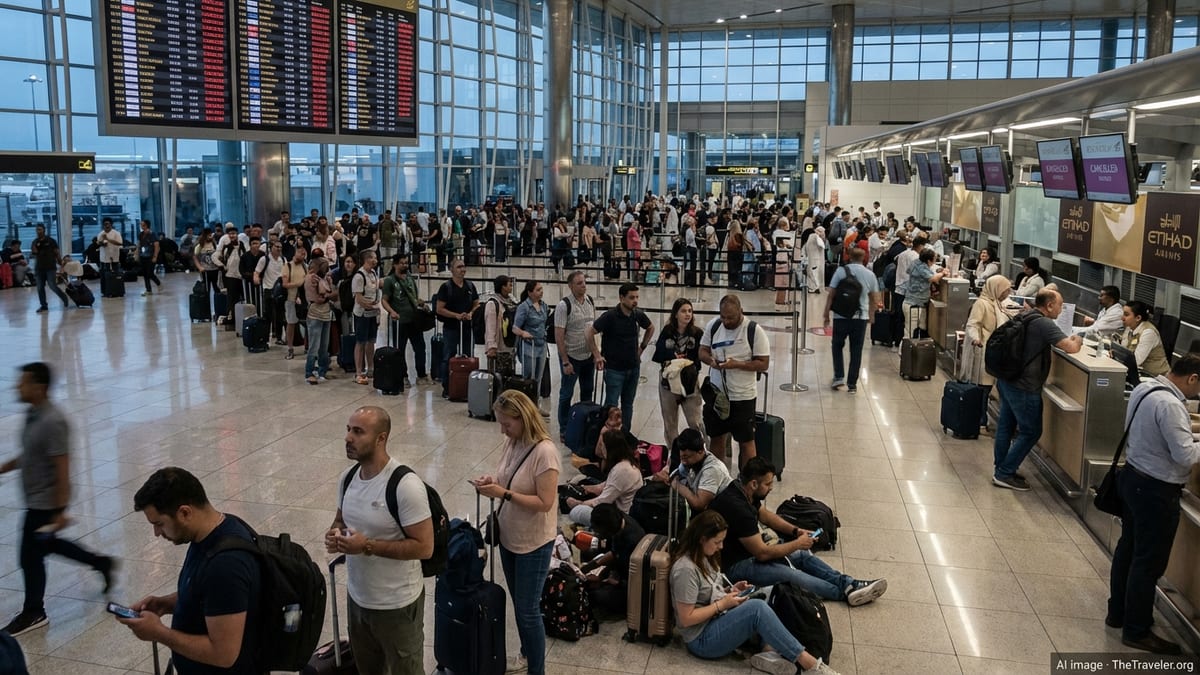
For UAE residents preparing to fly in or out of the country, the immediate message is one of cautious normality. Flights are operating and airports remain busy, but the regional backdrop is less predictable than in peacetime. Travelers should build extra margin into their plans, especially for long-haul connections that depend on tight transfer windows.
Publicly available advisories from foreign governments have repeatedly warned that sudden airspace closures, diversions or cancellations are possible across the Gulf when tensions spike. Even with the current pause in planned United States strikes, these advisories have not yet shifted markedly, reflecting concern that Iran or allied groups could still target regional infrastructure if talks stall.
Residents are encouraged to monitor airline notifications on the day of travel, arrive at the airport early, and consider travel insurance that explicitly covers disruption linked to conflict or security issues. Those with nonessential trips to neighboring hotspots may wish to reassess their timing while the diplomatic picture remains uncertain.
What to Watch in the Coming Days
The key variable for UAE travel in the near term will be whether the pause on new United States strikes evolves into a more durable de-escalation or proves to be a brief interruption in a wider campaign. Published analysis notes that previous pauses in this conflict have sometimes been followed by renewed action when negotiations faltered.
Observers are also watching Iran’s posture toward Gulf states that host foreign forces or provide logistical support. Earlier in the war, Iran launched strikes and drone attacks across multiple Arab countries, including the UAE, Kuwait and Saudi Arabia, in what analysts described as an effort to pressure regional governments. Any sign that such attacks are resuming or expanding would quickly be reflected in aviation risk assessments.
For now, the message to UAE residents is to stay informed but not alarmed. The skies over Dubai and Abu Dhabi remain open, and airlines are working to keep passengers moving. Yet with the Iran war still unresolved, each new diplomatic move in Washington or Tehran will continue to ripple through flight paths, timetables and travel plans across the Gulf.