


More news on this day
Rail passengers faced severe disruption after a large fire near railway tracks forced a complete suspension of services into one of London’s busiest mainline stations, with images shared on social media showing flames and smoke close to overhead wires and signalling equipment.
Get the latest news straight to your inbox!
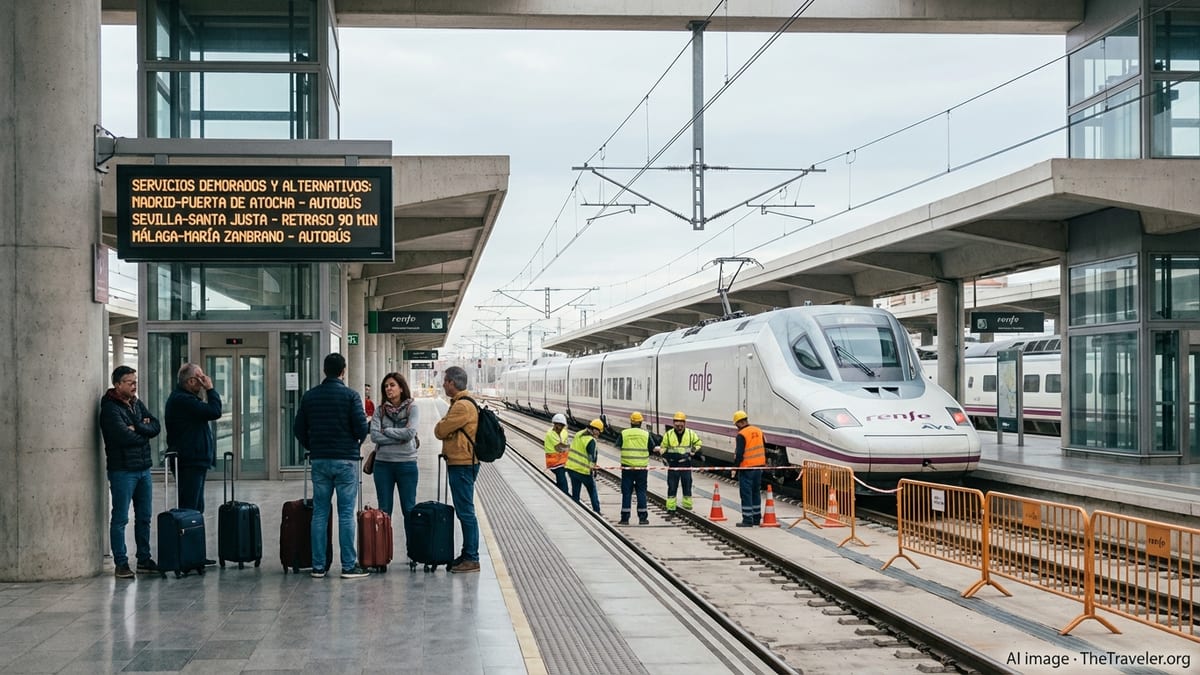
Services suspended as flames spread beside the line
Reports from rail operators and local media indicate that the fire broke out beside the approach tracks to a central London terminus during a busy travel period, quickly affecting multiple lines feeding into the station. Services on key commuter and regional routes were brought to a standstill as control rooms halted trains rather than risk sending them through the affected section.
Initial information suggests that the blaze started in trackside vegetation and debris close to the railway boundary, although a full investigation into the origin and spread of the fire is expected to follow. Images and video circulating online show a wall of flame running parallel to the tracks, with dense smoke visible above the surrounding buildings.
Rail staff moved to hold trains outside the affected corridor while emergency crews attended the scene. Some services were terminated short of London and others were diverted to alternative termini where capacity allowed, but the complex web of timetabled movements into the capital meant that knock-on disruption quickly spread well beyond the immediate area.
Long-distance passengers heading for central London were advised to remain on trains until further instructions were given, while those planning to board at intermediate stations were warned of rolling cancellations and significant delays.
Impact on commuters, airport links and regional routes
The affected station is among the capital’s main rail gateways and a critical interchange for commuters from densely populated suburbs, longer-distance intercity travellers and visitors heading to and from major airports. The suspension of all services into the hub led to crowded concourses at neighbouring London termini as passengers attempted to re-route on other operators.
Information screens and public announcements at outer suburban stations showed a growing list of cancellations, with some services marked as “no estimate” for restart while assessments continued. According to publicly available journey-planning data, disruption extended across multiple commuter corridors, including routes normally used by office workers heading to central business districts and government offices.
Airport travellers were among those most affected, as the halted services included trains that form part of longer itineraries to and from major international gateways via central London connections. Travel advice published by rail operators suggested that some passengers might miss onward flights or be required to seek alternative transport by Underground, bus, coach or taxi, often adding significant journey time.
Even passengers not directly using the affected station felt the impact, as trains were turned short or re-routed to relieve congestion on certain approaches. This created an uneven pattern of service, with some lines experiencing overcrowding while others saw long gaps between trains.
Safety checks and infrastructure assessments under way
Publicly available information from infrastructure managers indicates that electricity to some lines near the fire was isolated to allow emergency services to work close to the tracks, a step that inevitably prolonged the stoppage but reduced the risk to personnel on site. Overhead line equipment, gantries and signalling cabinets in the vicinity are being inspected for heat damage.
Specialist engineers are expected to assess the condition of ballast, sleepers and cable troughs once the fire is fully extinguished and the area cooled. Even if visible damage appears limited, plastic trunking, signal wiring and communications lines can be compromised by intense heat and smoke, requiring repair or replacement before normal operations can safely resume.
Network control logs typically require a staged process after such incidents, beginning with a cautious reopening of a single line at reduced speed, followed by gradual restoration of additional tracks as inspections are completed. This means that, even after the flames are brought under control, passengers are likely to face extended delays while equipment is tested and sign-off is obtained for full line speeds.
Rail observers note that trackside fires close to complex junctions are particularly disruptive, as they often affect key sets of points and signals that govern movements into and out of busy termini. Any damage to these systems can have an outsized effect on timetable reliability for several days.
Travel advice and options for affected passengers
Journey planners and live departure boards show widespread cancellations and alterations on routes serving the affected hub, and rail operators are advising passengers to check services before travelling and to allow significantly more time for journeys. Some tickets are being accepted on alternative routes within the London area, including other mainline stations that still have capacity.
Travellers already in central London are being encouraged, where possible, to use Underground and bus links between termini to complete disrupted trips. Those starting journeys from outer suburbs may find that local stopping services run by different operators offer the most reliable way to reach alternative London stations, though these services are also expected to be busier than normal.
Passengers with flexible tickets are being advised through public channels to consider delaying non-essential journeys until later in the day, when the extent of the damage and likely duration of disruption should be clearer. Refunds and fee-free changes are likely to be available in line with standard rail industry policies when severe disruption prevents passengers from completing planned trips.
Tourists unfamiliar with the network are being urged via official travel updates to pay close attention to station announcements and to seek information from staffed help points before boarding. Rail commentators suggest that those connecting to long-distance or international services should build in additional contingency time or explore coach options if travel is time-critical.
Questions over resilience as rail network faces summer pressures
The incident has renewed attention on the vulnerability of London’s rail approaches to localised infrastructure problems, including lineside fires, trespass, signalling failures and overhead line damage. Analysts note that a relatively small stretch of track can bring a major hub to a standstill when there are limited diversionary routes into central London.
Recent summers have seen an uptick in reports of vegetation and ballast fires near railways, often linked to prolonged dry periods and higher temperatures. Rail infrastructure managers have responded with additional vegetation clearance and targeted patrols, but the sheer length of the network and the density of development around key approaches make complete prevention difficult.
Travel industry observers point out that such incidents not only disrupt daily commuting patterns but can also undermine confidence in rail for leisure and business trips, particularly for overseas visitors trying to navigate the network for the first time. The timing of this disruption, during a busy travel season, is likely to intensify debate around investment in resilience measures, from upgraded power systems to more flexible track layouts at key junctions.
As inspections continue and services gradually resume, attention is expected to focus on how quickly normal operations can be restored and what lessons might be applied across other busy approaches into London’s rail termini.