


More news on this day
Travelers passing through Kuwait International Airport on June 4 are facing renewed disruption as regional flight tracking data and aviation reports point to extensive delays and cancellations affecting services to Dubai, Muscat, Riyadh, and Amman operated by major Gulf carriers.
Get the latest news straight to your inbox!
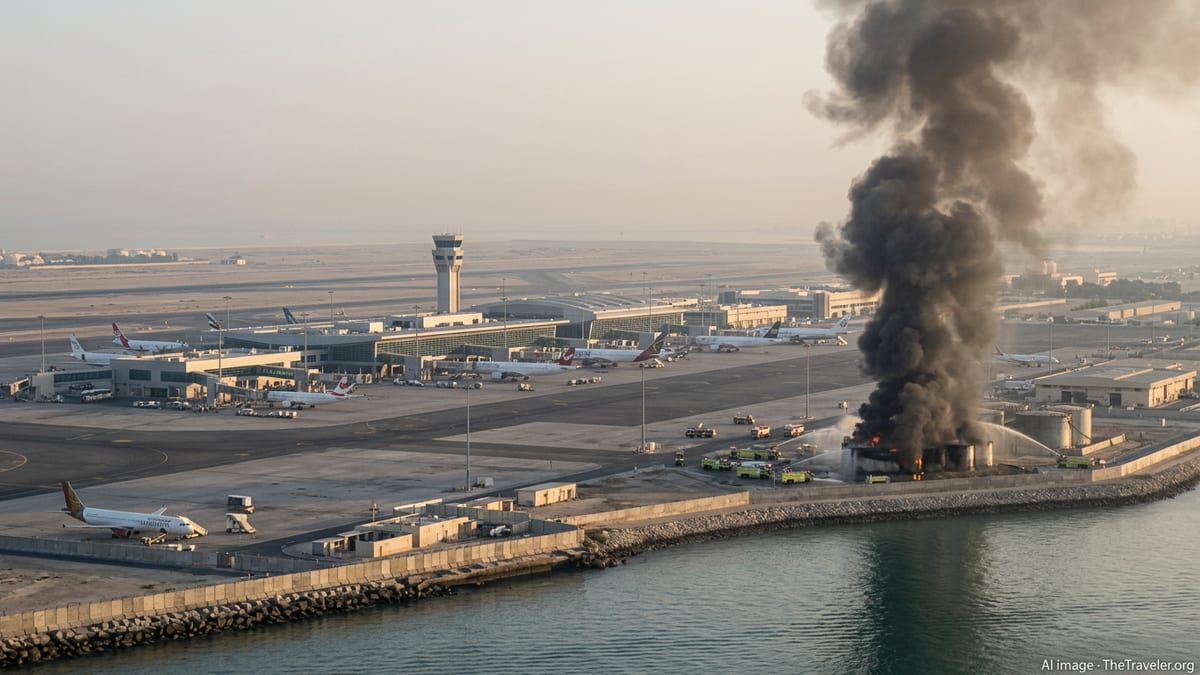
Drone Attack Aftermath Disrupts Reopened Kuwait Hub
The latest wave of disruption comes just days after a drone strike on Kuwait International Airport on June 3, which temporarily forced a shutdown of airspace and diverted traffic across the region. Publicly available aviation briefings describe Kuwait as one of several Middle East hubs hit by aerial attacks in recent weeks, triggering successive closures and a complex restart of operations.
Airport and airline updates indicate that Kuwait International has gradually resumed activity at its main terminals, with local carriers restoring core routes. However, the return of flights has been uneven, particularly for foreign airlines, and the system remains fragile. Even limited interruptions are rippling across already stressed schedules and tight aircraft rotations.
The current pattern of disruption is layered on months of instability for Kuwait’s main gateway, which had already been operating under heightened security and capacity constraints. Travelers using Kuwait as a transit point to the United Arab Emirates, Oman, Saudi Arabia, and Jordan now face renewed uncertainty over whether services will operate as planned.
Gulf Air, Emirates, FlyDubai and Qatar Airways Hit by Delays and Cancellations
Against this volatile backdrop, regional data compiled from flight information platforms and news coverage shows that services operated by Gulf Air, Emirates, FlyDubai, and Qatar Airways are among those most affected on routes linking Kuwait with Dubai, Muscat, Riyadh, and Amman. Across the four carriers, at least 24 departures and arrivals on these city pairs have been delayed, with a further 11 flights canceled or removed from schedules over a short operating window.
Several of the affected services appear to involve aircraft and crews repositioning through Kuwait to major hubs such as Dubai International and Hamad International in Doha. When airspace closures or security checks slow movements in or out of Kuwait, departure banks further down the line can be pushed back, compounding disruption for passengers who may never set foot in the country itself.
On Kuwait to Dubai routes, records for recent days show a number of flights scrubbed outright or re-timed, while some services to Riyadh and Amman have been consolidated or shifted to alternative days. Connections to Muscat, often operated as part of wider Gulf network patterns, have also seen changing departure times and prolonged delays, adding to uncertainty for travelers relying on onward long-haul links.
Although precise totals vary by tracking source and time of query, the emerging picture is one of sustained operational strain rather than isolated one-off incidents. Persistent gaps in regular timetables suggest that several carriers are still adjusting to route restrictions, airspace constraints, and aircraft availability.
Passengers Confront Missed Connections, Rerouting and Last-Minute Changes
For travelers, the operational challenges are translating into long waits and complicated rerouting. Accounts shared on public forums by passengers flying between Kuwait and Dubai in recent weeks describe last-minute cancellations and difficulty obtaining rebooking options on Emirates and FlyDubai, with some travelers advised that only Kuwait-based airlines were currently operating reliably on certain segments.
Similar experiences have been reported by passengers attempting to travel via Kuwait to or from Amman and Riyadh, where changes to schedules have led to missed onward flights or forced overnight stops. Some travelers report switching to alternative routings through Bahrain or Saudi Arabia when direct services into Kuwait or onward to their final destination became uncertain.
In addition to outright cancellations, extended delays are creating knock-on issues. Long waits in terminals, uncertainty over baggage handling for disrupted journeys, and confusion over which flights are actually operating are recurring themes in publicly available traveler reports. Even when aircraft eventually depart, altered timings can invalidate pre-booked ground transport or hotel stays at the destination.
The situation is especially challenging for passengers who booked complex multi-leg itineraries across different airlines. When one segment is delayed or canceled from Kuwait, downstream segments on separate tickets may not be automatically protected, leaving travelers to negotiate changes or new purchases on their own.
Airlines Adjust Networks as Kuwait Rebuilds Connectivity
While travelers grapple with the immediate effects of disruption, airlines are continuing to recalibrate their networks around Kuwait. Coverage from regional business outlets and aviation analysts indicates that local carriers Kuwait Airways and Jazeera Airways have prioritized restoring high-demand routes, including services to Dubai, Riyadh, and Amman, as terminal capacity comes back online.
Foreign carriers appear to be taking a more cautious approach. Gulf Air, Emirates, FlyDubai, and Qatar Airways have all been managing wider regional challenges over recent months, including previous airspace closures around Dubai and Doha and shifting risk assessments for overflight corridors. These broader network pressures are shaping how quickly and fully Kuwait is reintegrated into their schedules.
For some airlines, temporary measures such as consolidating frequencies, operating larger aircraft on fewer flights, or keeping selected routes on hold remain part of the operating playbook. Industry commentary suggests that full normalization of schedules through Kuwait may depend not only on infrastructure readiness at the airport, but also on a sustained period of regional stability that allows carriers to plan rotations with confidence.
In the meantime, aviation data shows a patchwork of partial resumptions, with certain destinations reinstated while others continue to see irregular or limited service. For travelers to and from Kuwait, especially those bound for Dubai, Muscat, Riyadh, and Amman on Gulf-based airlines, the result is an environment where timetables can change quickly and previously reliable daily services may not yet be fully restored.
What Travelers Can Do as Disruptions Continue
With schedules in flux, publicly available travel advisories and airline notices consistently emphasize the importance of checking flight status as close as possible to departure. Passengers are being encouraged to monitor airline apps, SMS updates, and airport information boards on the day of travel, and to allow extra time at the airport in case of additional security checks or last-minute gate changes.
Travel experts writing in regional consumer columns recommend, where feasible, booking through-tickets on a single carrier or alliance, rather than separate point-to-point segments, to increase the likelihood of automatic protection in the event of missed connections. Flexible or changeable fares may also offer better value in a volatile operational environment than strictly nonrefundable options.
For those with imminent travel involving Kuwait and the broader Gulf, the pattern of repeated airspace closures and incremental resumptions suggests that disruption could continue intermittently. Until flight operations at Kuwait International Airport and neighboring hubs settle into a more stable rhythm, travelers heading to or from Dubai, Muscat, Riyadh, and Amman may need to build in contingency time and remain prepared for sudden adjustments to their plans.