


More news on this day
Thousands of passengers across the Gulf region remain stranded after recent drone and missile strikes on Kuwait International Airport triggered the suspension of at least 15 flights and forced multiple regional carriers to divert or cancel services linking Kuwait with key hubs in the United Arab Emirates, Qatar, Saudi Arabia, Egypt and beyond.
Get the latest news straight to your inbox!
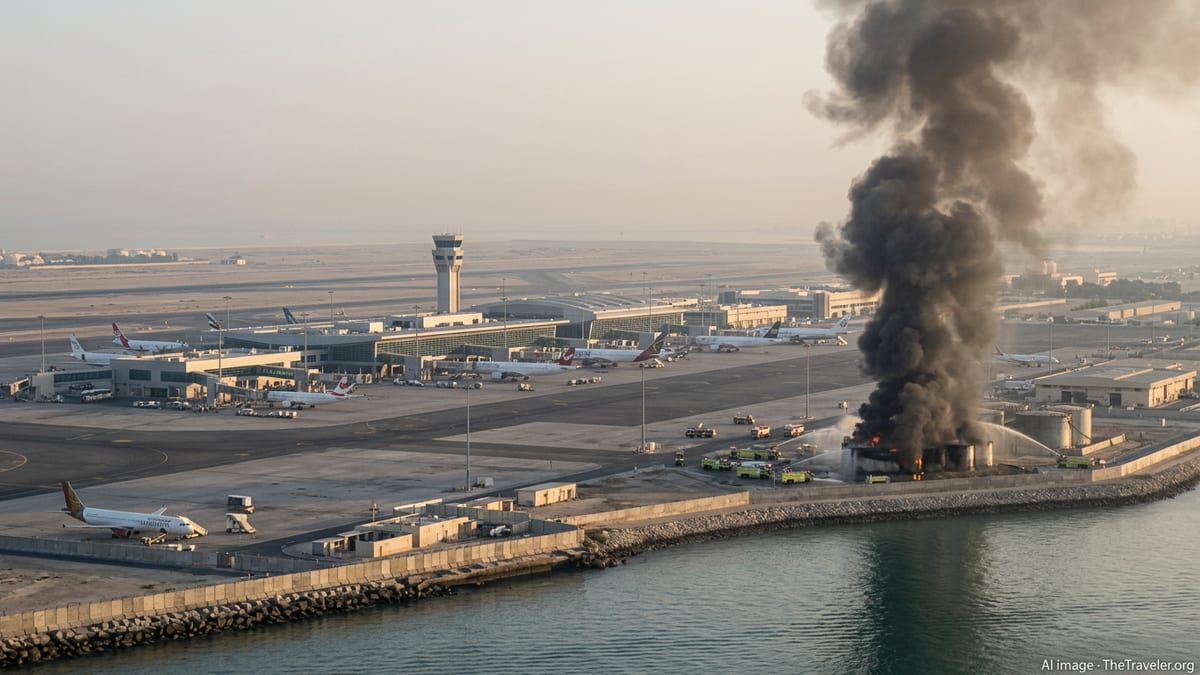
Drone Strikes Shut Key Gulf Hub and Trigger Emergency Response
Publicly available information from regional outlets indicates that Kuwait International Airport’s main Terminal 1 suffered significant damage in an Iranian drone and missile attack in recent days, prompting Kuwait’s aviation authorities to activate an emergency response plan and halt all commercial operations. Reports describe structural damage to airport facilities and note that air traffic has been diverted to alternative airports pending security and technical assessments.
The strikes follow a broader campaign of aerial attacks on Kuwait’s primary aviation hub that has been documented since late February 2026, contributing to a prolonged suspension of regular civilian flights. Earlier coverage in April already highlighted empty departure and arrival boards and an absence of scheduled flights, underscoring how deeply the disruption has affected Kuwait’s role as a regional connector.
While authorities and airport operators continue technical inspections, the immediate impact has been a near standstill in passenger traffic through Kuwait City, forcing airlines, tour operators and travelers to improvise alternative routes throughout the Gulf and wider Middle East.
For travelers on the ground, the closure has translated into extended waits at terminals, last minute rebookings and, in many cases, unexpected detours via secondary hubs in Saudi Arabia, Bahrain and the United Arab Emirates.
FlyDubai, IndiGo, Gulf Air, Oman Air and Qatar Airways Cut Kuwait Links
Schedules and airline updates compiled by regional travel providers show that carriers including FlyDubai, IndiGo, Gulf Air, Oman Air and Qatar Airways have all curtailed services involving Kuwait following the latest airport shutdown. While the precise mix of cancellations and diversions varies by airline, at least 15 flights involving Kuwait and major regional hubs appear to have been suspended in the immediate aftermath.
Low cost operator FlyDubai, which typically runs busy shuttle services between Dubai and Kuwait, has been rerouting passengers via Dubai International Airport with Kuwait segments removed from its timetables on affected days. Flight-planning documents indicate that some daily rotations have been temporarily withdrawn, leaving travelers reliant on rebooked itineraries through other Gulf capitals.
India based IndiGo, which serves Kuwait from major Indian cities and relies heavily on Gulf expatriate traffic, has likewise reduced Kuwait bound services and shifted capacity toward alternative points in the region. Seats originally allocated to Kuwait routes are being reassigned to destinations that remain fully operational, complicating options for passengers attempting to return to or depart from Kuwait.
Full service Gulf carriers such as Bahrain based Gulf Air, Oman Air in Muscat and Qatar Airways in Doha have also adjusted their networks. Published operational circulars show Kuwait legs dropped or replaced with substitute routings through Jeddah, Dammam or other Saudi and Bahraini gateways, leaving passengers with longer journey times and additional connections.
Major Routes to the UAE, Qatar, Saudi Arabia and Egypt Disrupted
The suspension of flights at Kuwait International Airport has produced ripple effects across some of the Gulf’s most heavily traveled corridors. Routes linking Kuwait with Dubai and Abu Dhabi in the United Arab Emirates, Doha in Qatar, major Saudi cities and Cairo in Egypt have all seen reduced frequencies and, in some cases, complete temporary withdrawal.
Travel data platforms that normally list multiple daily options between Kuwait and major Gulf hubs now show limited or no nonstop services on several key routes. Instead, itineraries commonly involve an enforced detour, such as flying from Kuwait’s temporary alternatives in Saudi Arabia or Bahrain onward to Doha or Dubai, rather than the straightforward point to point journeys travelers are accustomed to.
For Egypt bound passengers, the disruption has constrained direct options between Kuwait and Cairo, a high volume labor and family travel market. Airlines have been channeling traffic via Riyadh, Jeddah, Manama or Muscat, adding costs and hours in transit for workers and families attempting to reach home or return to job postings in the Gulf.
The network impact extends beyond the Middle East. Kuwait’s closure complicates itineraries onward to South Asia, Southeast Asia and Europe that previously relied on short feeder legs into major Gulf super hubs. Travelers connecting from Kuwait to long haul services operated by carriers such as Qatar Airways or Emirates now face the prospect of repositioning flights from alternative airports before even beginning their main journey.
Kuwait Airways and Jazeera Airways Reroute via Neighboring Hubs
Local carriers Kuwait Airways and Jazeera Airways have faced particular operational challenges as their primary base remains effectively offline. Public statements and operational notices show Kuwait Airways consolidating activity through foreign airports, including moving portions of its network to Saudi Arabia’s Dammam for both regional and long haul connections.
Jazeera Airways, which operates from a dedicated terminal at Kuwait International Airport, has focused first on immediate passenger safety, evacuating terminals and cancelling scheduled services during the height of the closure. Follow up updates indicate that the airline has been working with regional partners and airport operators to position aircraft and crew at alternative locations so that at least some flights can be relaunched from neighboring states.
These measures have helped maintain partial connectivity for Kuwait based travelers, but they also mean that passengers must begin or end their journeys outside the country. For many residents, this requires overland travel to Saudi Arabia or other Gulf states ahead of their flights, adding complexity and cost to trips that previously began within a short drive of Kuwait City.
The reliance on external hubs underlines Kuwait’s current dependence on partner airports to sustain essential travel flows for business, medical treatment and family visits while its main gateway remains under repair.
What Stranded Travelers Can Expect in the Coming Days
Passenger advisories from airlines and airport operators across the region stress that schedules involving Kuwait are subject to rapid change as technical inspections progress and security assessments are updated. Travelers with bookings touching Kuwait or involving FlyDubai, IndiGo, Gulf Air, Oman Air, Qatar Airways and other affected airlines are being urged through public channels to monitor airline apps, SMS alerts and regional media for the latest information.
In practice, many passengers are being offered rebooking on alternative routings via Saudi Arabia, Bahrain, the United Arab Emirates or Qatar, subject to seat availability. Some carriers are providing fee waivers or travel vouchers for those willing to postpone trips until greater clarity emerges on the timeline for restoring normal operations at Kuwait International Airport.
Industry analysts following the situation note that repairs to key terminal infrastructure and a full review of runway and airspace safety will likely determine how fast airlines can rebuild their Kuwait schedules. Even once limited operations resume, it may take time before the breadth of pre crisis services, including high frequency shuttles and late night banked departures, fully returns.
Until then, the Gulf’s intricate web of air links will continue to work around a missing node, with Kuwait’s travelers bearing the brunt of longer journeys, uncertain departure times and a dependence on neighboring hubs as the region waits for its damaged airport to reopen at scale.