


More news on this day
A drone sighting that briefly disrupted operations near a runway serving Las Vegas has refocused US attention on the growing security risk from small unmanned aircraft around commercial airports, and on how counter-drone technology and new federal rules are beginning to reshape both airport security and the passenger experience.
Get the latest news straight to your inbox!
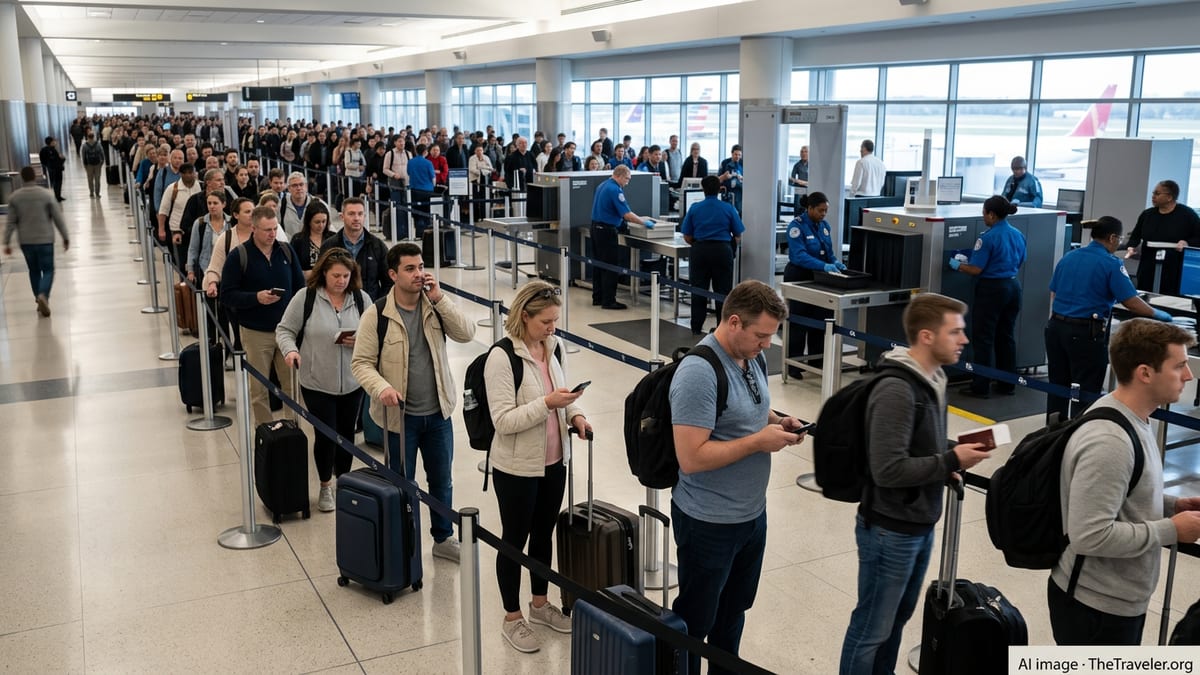
A Las Vegas Scare Highlights a Growing National Problem
Reports from late 2024 and early 2025 describe a drone spotted in close proximity to air traffic near Las Vegas, prompting a temporary runway disruption at Harry Reid International Airport. While the incident was contained without injury or damage, aviation observers note that even short interruptions can cascade into wider delays, missed connections and diversions across the national network.
The Las Vegas episode is part of a broader pattern. Publicly available Federal Aviation Administration data show hundreds of drone sightings reported by pilots, air traffic controllers and other aviation personnel near US airports each year. Federal summaries indicate that many reports involve drones flying well above legal altitude limits or inside controlled airspace where special authorization is required.
Aviation safety specialists point out that even a small drone can pose a hazard if it collides with an engine, windshield or rotor, particularly during takeoff and landing when pilots have less time and altitude to react. Near-misses and unverified sightings are therefore treated as potential threats, leading airports to slow or halt traffic while authorities investigate.
The Las Vegas disruption also underlined another concern: the difficulty of quickly determining whether a sighted object is a harmless hobby drone, a misidentified aircraft or a deliberate attempt to probe airport defenses. That uncertainty is pushing federal agencies and airports to accelerate investments in detection systems, standardized response plans and new legal authorities.
From Ad Hoc Shutdowns to Structured Counter-Drone Programs
Historically, many US airports had little choice but to suspend operations when a drone was reported in sensitive airspace, because they lacked both the technology and the legal authority to track or disable it. Recent federal efforts aim to move beyond such ad hoc responses toward more structured counter-drone programs.
US law now directs the Federal Aviation Administration to work with security agencies to test and evaluate drone detection and mitigation systems at a limited number of airports. Public documents outlining this program describe a focus on ensuring that any radar, radio-frequency or kinetic countermeasures do not interfere with navigation aids, communications or other critical systems on which commercial flights depend.
FAA research plans through 2028 emphasize live testing of sensor networks, data fusion tools and automated alerting in active airport environments. The agency’s airport technology research branch is studying how detection grids can distinguish legitimate operations from errant or hostile drones, and how alerts should be routed to air traffic control, airport operations centers and security personnel in real time.
At the same time, draft and enacted federal measures are expanding counter-drone authority for certain agencies and exploring pilot programs that would allow selected state or local law-enforcement partners to operate approved mitigation systems on behalf of airports. Policy papers show that these initiatives are explicitly framed as a response to emerging threats around critical infrastructure, including major passenger hubs.
How Passenger Travel Is Quietly Changing
For travelers moving through US airports, most of these changes are subtle. There are no dedicated “drone security” lanes, and the most visible layers of screening still occur at security checkpoints. Yet behind the scenes, passenger journeys are increasingly shaped by drone-related risk planning.
Operational manuals and federal guidance encourage airports to treat confirmed or credible drone threats in the same category as other security incidents that can trigger ground stops. That means passengers may notice more frequent, short-notice departure holds or go-arounds, particularly at busy hubs, even when weather and mechanical factors seem normal.
Airlines and airport operators are also updating their communication playbooks. Instead of referencing specific security events, carriers may cite “airspace restrictions” or “traffic management initiatives” when explaining delays seeded by drone sightings. Industry analysts suggest that such wording balances the need to inform passengers with the imperative to avoid spreading alarm over incidents that often end without confirmation of an actual drone.
On the preventive side, airports are expanding public messaging around restricted airspace and acceptable drone use near cities that rely heavily on tourism, such as Las Vegas. Travelers bringing recreational drones in checked or carry-on luggage may encounter clearer guidance about where they can and cannot fly once they leave the terminal, including reminders of criminal penalties for operating near runways or flight paths.
Technology, Remote ID and the Push for Better Data
One of the most significant shifts behind the Las Vegas incident and similar episodes is the adoption of Remote ID requirements for many drones operating in US airspace. Remote ID is designed to broadcast a drone’s identity and location to authorized receivers, functioning as a kind of digital license plate.
Airport-focused research indicates that pairing Remote ID information with specialized receivers placed around airfields can help distinguish between compliant operators and potentially dangerous flights. In practice, this means that when a drone is spotted near a runway, detection systems may be able to correlate the sighting with a known aircraft and registered pilot, or flag it as an unidentified object lacking required signals.
Federal audits and technical papers, however, note that coverage gaps remain. Not all drones are required to transmit Remote ID, and not all airports yet have the infrastructure or legal authority to receive and act on those signals. As a result, many reported sightings still originate from the human eye, and investigators often struggle to verify details after the fact.
To close these gaps, the FAA is testing integration between low-altitude drone traffic management tools and traditional air traffic systems. Early trials described in government reports involve fusing data from ground-based sensors, commercial radar, Remote ID receivers and pilot reports to build a more accurate real-time picture of the airspace around airports. The goal is to reduce both false alarms and missed threats, allowing a more proportionate response than blanket closures.
Lawmakers Race to Keep Pace With Emerging Risks
The Las Vegas runway disruption arrived as Congress and federal agencies were already debating how far to extend and revise counter-drone authorities. Legislative proposals introduced in 2024 seek to renew expiring powers for certain federal entities to detect and mitigate threatening drones, while also creating structured pilot programs for state-level partners around critical sites, including airports.
Committee reports describe a desire to balance three priorities: safety of the traveling public, protection of civil liberties and privacy, and continued growth of the commercial drone industry. Lawmakers have highlighted the risk that overbroad mitigation efforts could inadvertently interfere with legitimate operations, from aerial photography to time-sensitive deliveries.
Oversight bodies have also urged the FAA and security agencies to clarify roles and responsibilities in airport incidents. Recent government reviews note that multiple federal and local entities may be involved when a drone is reported near a runway, potentially slowing decision-making. Recommendations emphasize the need for clear protocols that define who can order a ground stop, who can attempt to disable a drone, and how any such actions are coordinated with pilots in the air.
For passengers, these legal debates may seem distant, but their outcomes will shape how airports respond to the next Las Vegas-style scare. As counter-drone technologies mature and authorities expand, travelers are likely to see more resilient operations, with shorter disruptions when incidents occur, even as security teams take unmanned aircraft threats more seriously than ever.